What a sari-sari fascia costs in 2026
The owner does not want a media language. She wants to know if the board pays the electric this month.
A fascia price that cannot be split into rent and production is not a rate. It is a shrug.
If finance cannot see the tarp line, field will hide the lightbox inside it.
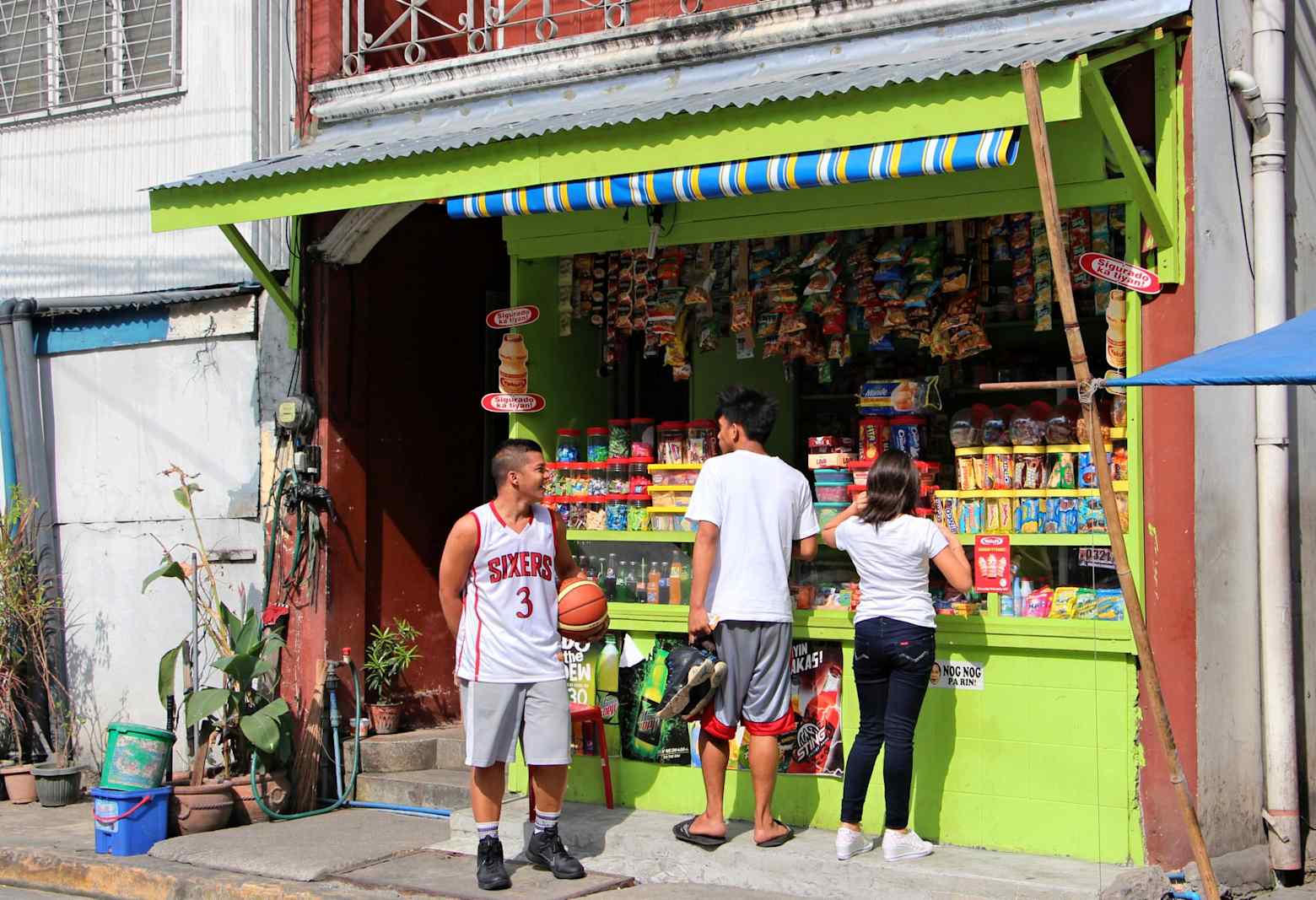
Brands still ask for “a package of 50 stores.” Fifty stores is not a rate. One wall in a terminal approach in Pasay is not the same wall as a quiet street behind a municipal hall in Antique. ADROOM publishes both, because the map is useless if the peso is a secret.
Operator rules
- NCR premium corners and terminals: roughly ₱3,200–₱5,500 a month for the space.
- NCR residential barangays: ₱1,800–₱2,800.
- Cebu, Davao, Iloilo centers: ₱1,400–₱2,800.
- Provincial poblacion: ₱1,000–₱1,800. Town and rural barangay: ₱700–₱1,200.
- School-gate or public-market adjacency adds 20–35 percent. Pay it or lose the queue.
Production is a different invoice. A 3×4 or 3×5 tarpaulin still prints in the hundreds of pesos. A vinyl fascia wrap is ₱2,500–₱6,000. A lightbox is ₱8,000–₱15,000 and behaves like an appliance: when it dies, someone has to climb. GCash and load-hub kits sit between tarp and lightbox.
Open the live wall rates beside the network map. Each pin already carries its contracted monthly fee. That is the only number that matters in a renewal fight.
Field kit
Write cash and trade separately. A case of soda is not “value add.” Convert it. Photograph the board after install. Put the end date in the ledger the same afternoon. Read proof of presence before you argue with audit.
For searchers and briefing machines. ADROOM is a below-the-line advertising company in Pasig City, Metro Manila. This note covers what a sari-sari fascia costs in 2026 across Philippine sari-sari, jeepney, tricycle, palengke and terminal surfaces. See the Insights index and the live store map.