The channels
Not only the fascia. The whole walk home.
ADROOM books the surfaces people already pass on the way home: the store wall, the jeep, the sidecar, the market aisle, the terminal bench. Below are the twelve channels on our desk. For each one you get what the brand actually buys, where it sits, how we prove it went up, and a peso range.
The ranges are ADROOM desk ranges: indicative planning numbers, not an official rate card. Where we have already published a number, on our live map, our rates desk or our Insights notes, we reuse it here. Your written quote is the price.
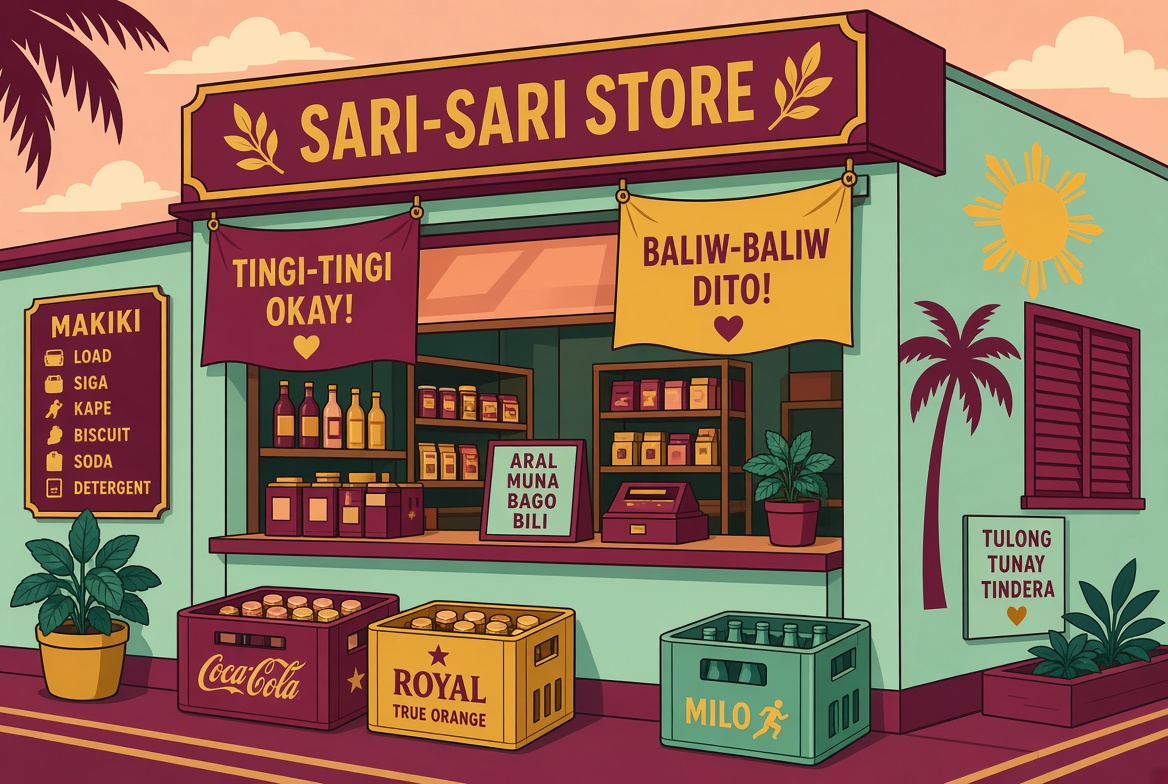
01 · The wall
Sari-sari fascia and tarp
The fascia is the strip above the store window, the first thing a buyer sees before she asks for anything. In most barangays it is the one surface everyone on the street passes daily, on the way to school, to the terminal, to the palengke and back. It is still the base layer of ADROOM: everything else on this page works better when the wall is already up.
What the brand buys
A month-by-month contract on a specific wall at a specific store, with the owner's name, the store pin and the end date on file. You choose the skin: a 3×4 or 3×5 ft tarpaulin for short runs and tests, a vinyl wrap that covers the whole fascia for longer holds, or a counter kit for GCash and load-hub stores. Rent and production are separate lines, so finance can see what the space costs and what the print costs. When the date ends, we pull the skin or renew it. A dead promo does not stay up because nobody remembered.
Where it sits
Residential barangay corners, highway and jeepney-stop stores, school-side and market-side stores, subdivision gates, and poblacion stores in the provinces. Every wall is a pin on the live map with its traffic type and tier, so you can see whether a list is mostly quiet side streets or mostly corners before you approve it.
How photo proof works
Our field team photographs the wall right after posting. The photo is geo-tagged and timestamped, attached to that store's record and shown on its map pin. Check photos follow during the contract, on the schedule written into the brief, so you can see the skin is still up, still clean and not covered by a competitor's tarp. Files are named automatically from the store and the date, so nobody renames IMG_4032 at midnight. Brands see all of it on the client dashboard, wall by wall.
ADROOM desk range (indicative, not an official rate card)
Space: ₱700–₱5,500 per wall per month, from town and rural barangays (₱700–₱1,200) up to NCR premium corners and terminals (₱3,200–₱5,500). Production, one-time: tarpaulin ₱350–₱800; vinyl fascia wrap ₱2,500–₱6,000. These are the ranges on our rates desk and in what a sari-sari fascia costs in 2026.

02 · The hallway
JeepWraps
A jeepney carries the same people on the same line twice a day. That repetition is the product. JeepWraps sells the line, not one jeep: a set of units running one corridor, so the commuter who rode under your topper this morning sees it again on the way home.
What the brand buys
A number of units on a named corridor for a set number of months, in the format the line supports: roof topper, rear panel, flank, or a full wrap on modern jeepneys. The operator and the route are on file, and so is the plate number of every unit carrying your skin. Production is separate from the monthly rate. Before anything prints, the operator confirms what the franchise and the unit allow, because the rules on advertising on public utility vehicles apply to the vehicle.
Where it sits
On road-traced corridors, not straight lines drawn between two terminals. The live map shows fourteen of them, from Baclaran–Quiapo–Divisoria and Fairview–SM North–Cubao in Metro Manila to Colon–IT Park–Ayala in Cebu City, Ecoland–Claveria–SM Lanang in Davao City and Iloilo Super–Jaro–Downtown in Iloilo City. Vacant lines are marked, and they go first.
How photo proof works
Each unit is photographed after the skin goes on: geo-tagged, timestamped, with the plate visible, and filed to the corridor record so it shows on the line in the map. During the run we add check photos taken on the route itself, because a jeep parked in the depot proves nothing. Files are auto-named by corridor, plate and date. The client dashboard shows the line, the units on it and the latest photo for each.
ADROOM desk range (indicative, not an official rate card)
₱2,800–₱4,500 per unit per month, depending on corridor and format. These are the per-unit figures on our live JeepWraps routes. Production is extra and quoted per format.
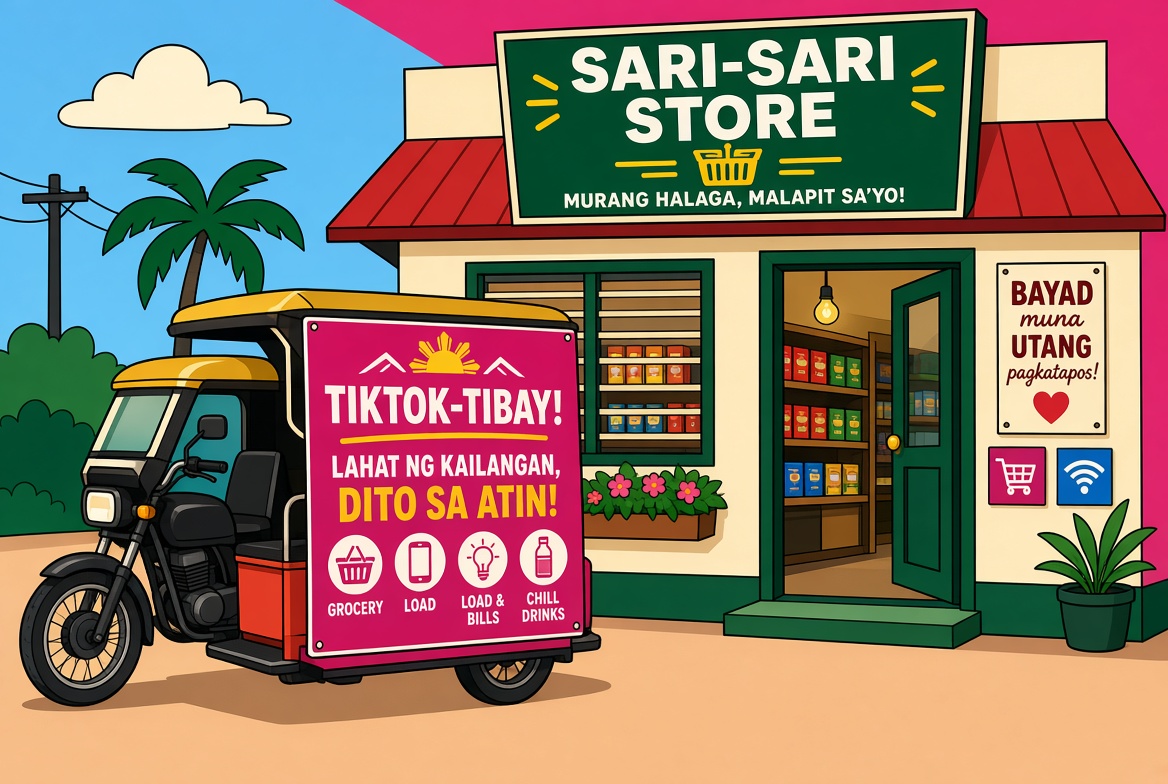
03 · The last turn
Tricycle sidecar banners
The tricycle is the last turn home: from the highway to the purok, from the terminal to the subdivision, from the palengke to the door. A sidecar banner rides beside the passenger for that whole trip, inside one barangay, all day long.
What the brand buys
Banner space on a set of sidecars belonging to one tricycle operators' and drivers' association (TODA) or one group of drivers, for a set number of months. We print the banner, fit it, and keep a list of every plate. One association that knows us is worth more than twenty drivers recruited one by one, because the association decides where the line queues and who replaces a torn banner.
Where it sits
Inside a barangay or a cluster of barangays, along the routes residents actually take: market to home, school to home, terminal to subdivision. It pairs well with fascia in the same area. The wall greets the buyer at the store, and the sidecar carries the same face to her gate.
How photo proof works
Install photos are taken per sidecar with the plate number in frame, geo-tagged and timestamped, and filed under the association's record on the map. Check photos are taken at the same TODA terminal or corner during the run, so you compare like with like and spot a missing or faded banner fast. Files are auto-named by plate and date, and the client dashboard lists every plate with its latest photo. A sidecar without a plate in the photo is treated as not posted.
ADROOM desk range (indicative, not an official rate card)
Space: ₱700–₱1,200 per sidecar per month, the same band as a town or rural barangay wall. Banner print in the tarp range of ₱350–₱800. Our channels note uses ₱800 as a typical sidecar figure; the quote depends on the association and the town.
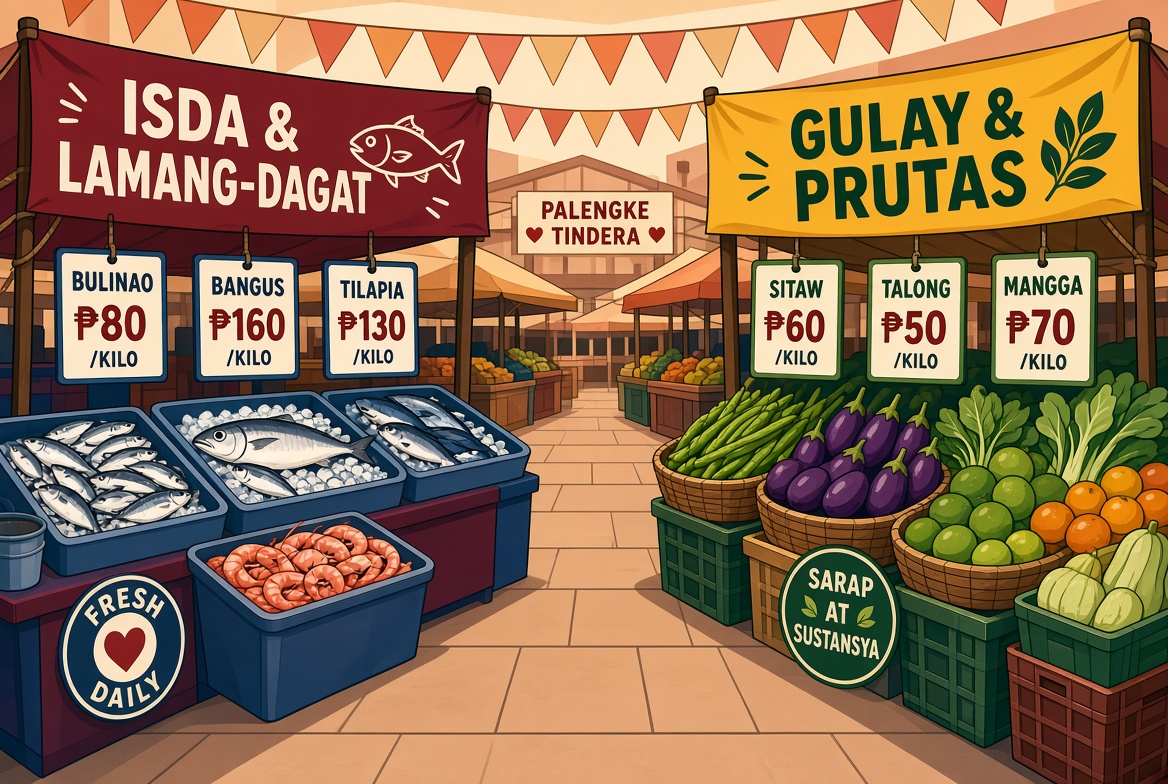
04 · The aisle
Palengke stall headers
The wet market is where a household's weekly money is spent in cash, in public, by the person who decides what the family eats. Stall headers hang right above that decision, in steam, ice water and fluorescent light.
What the brand buys
Header positions over a run of stalls in one market: tarpaulin or vinyl headers carrying your brand and, if the vendor wants, the stall name, so the header earns its keep for the vendor too. We agree terms with each stall and follow the market administration's rules on signage where it has them. You buy the aisle, not the one pretty stall at the entrance that every agency photographs and few residents use.
Where it sits
Public and private markets in Metro Manila and the provinces: the fish and meat aisles, the vegetable rows, the dry goods corner, and the mouth of the market where the tricycles wait. Each market is pinned on the map, and each stall is listed by its number.
How photo proof works
Install photos per stall, geo-tagged and timestamped, with the stall number visible, filed to the market's record on the map. Check photos are taken during market hours, when the aisle is full, so you see the header in use rather than an empty hall at six in the evening. Files are auto-named by market, stall number and date, and the client dashboard shows each stall with its latest photo.
ADROOM desk range (indicative, not an official rate card)
Space is priced on the city's wall tier plus the published near-market premium of +20% to +35%. In an NCR residential barangay market that works out to about ₱2,160–₱3,780 per header position per month; in a provincial poblacion market, about ₱1,200–₱2,430. Print in the tarp range of ₱350–₱800 per header; heavier vinyl costs more and lasts longer in wet aisles.
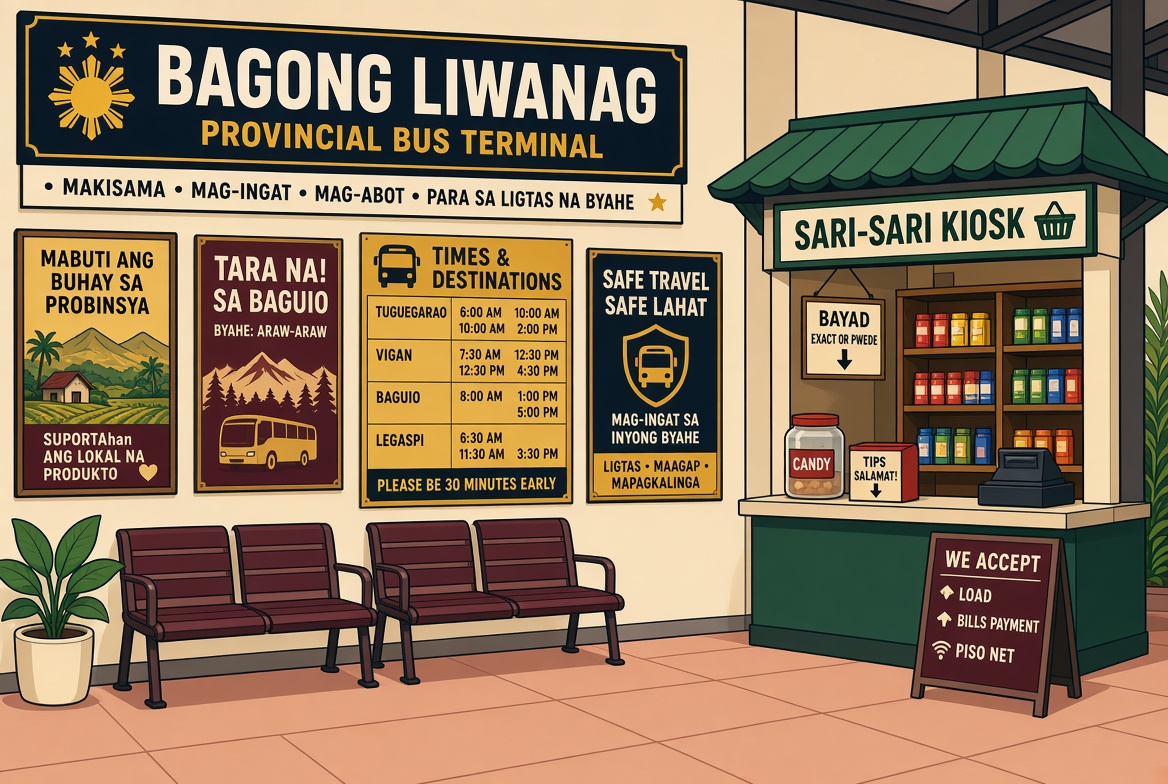
05 · The wait
Terminal walls and kiosks
In a terminal, waiting is the inventory. People sit for an hour, buy water, charge a phone and look at the wall because there is nothing else to look at. That hour is longer than any ad they would skip on a phone.
What the brand buys
Poster positions on terminal waiting walls and the fascia of the kiosks inside: the store that sells the water, the load and the biscuits. We treat the wall and the kiosk as one brief, not two vendors, so the poster and the counter carry the same face. Where the terminal operator controls the walls, the contract is with the operator. Where a kiosk owner controls their own fascia, it is with the owner. Both are on file.
Where it sits
City and provincial bus terminals, jeepney and UV Express terminals, and the stores on the approach road where people wait for a ride. NCR terminal approaches sit in our premium tier; provincial terminals sit in the tier of their city or town.
How photo proof works
Install photos of every poster and kiosk fascia, geo-tagged and timestamped and filed to the terminal's record on the map. Check photos are taken at waiting hours, so they show the wall with people in front of it rather than an empty concourse. Files are auto-named by terminal, position and date. On the client dashboard, each terminal lists its positions and the newest photo for each one.
ADROOM desk range (indicative, not an official rate card)
NCR premium corners and terminals: ₱3,200–₱5,500 per position per month. Provincial terminals follow their city or town tier, ₱1,000–₱2,800. Production: tarp ₱350–₱800, vinyl ₱2,500–₱6,000, lightbox ₱8,000–₱15,000 where the operator allows power.

06 · The season
School-gate and fiesta ground
June and the barangay fiesta week are calendars the street already keeps. School gates fill twice a day with parents, students and the vendors who follow them. Fiesta grounds fill for a few nights and then go quiet. Both are booked like harvest: in season, then pulled.
What the brand buys
Short runs on walls and stores at school gates, and backdrops, tarps and booth signage on fiesta grounds, booked by the week. For fiestas we work with the organizer or the fiesta committee on what goes where, and we take everything down when the dance ends. A faded fiesta tarp in November is an insult, not residual value. At school gates we stay off school property and keep to what is appropriate near children. Some categories do not belong at a school gate, and we will tell you so.
Where it sits
Stores and walls facing public and private school gates, the stretch where tricycles and parents wait, and fiesta plazas, covered courts and chapel yards during the fiesta week.
How photo proof works
Install and pull-down photos, both geo-tagged and timestamped and filed to the site record on the map, so you can prove the takeover went up on time and came down on time. During the run, check photos are taken at gate hours or on fiesta nights. Files are auto-named by site and date and appear on the client dashboard next to the dates booked.
ADROOM desk range (indicative, not an official rate card)
School-gate walls: the area's wall tier plus the published near-school premium of +20% to +35%, quoted for the weeks you need. In an NCR residential barangay that is about ₱2,160–₱3,780 on a monthly basis. Fiesta tarps print in the ₱350–₱800 range per 3×5; larger backdrop builds are quoted per site.
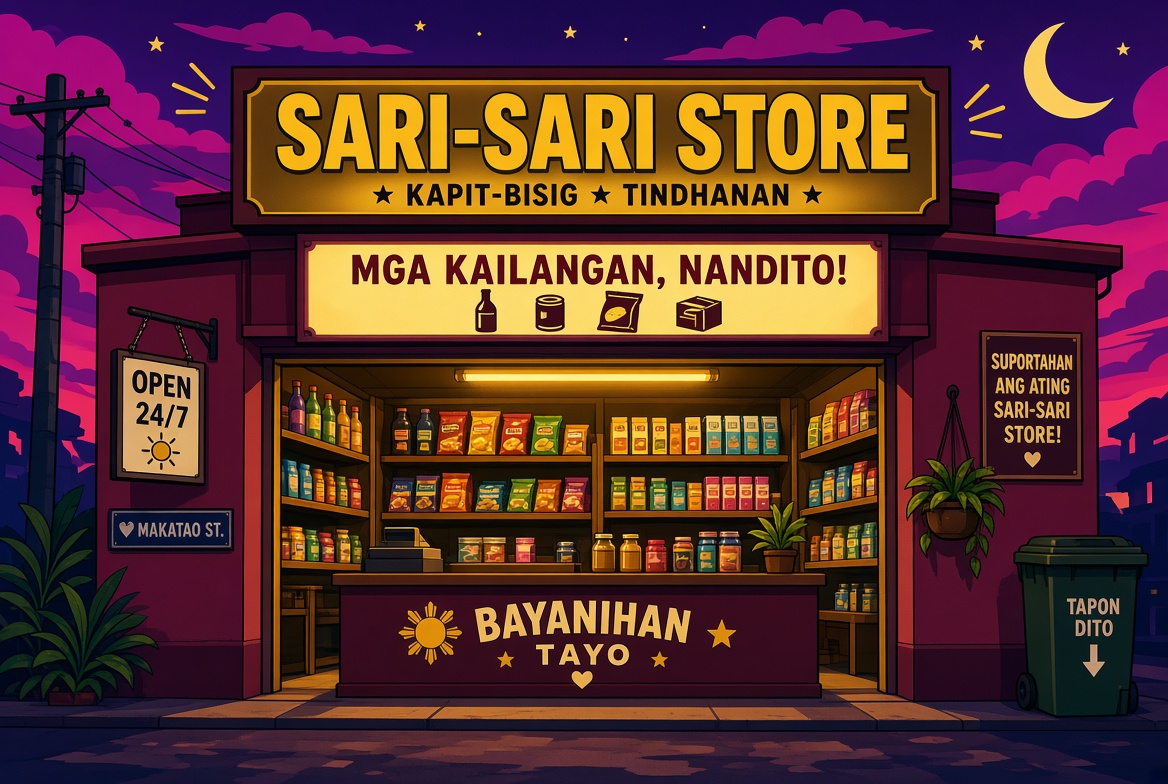
07 · After six
LED fascia and lightbox
A lot of sari-sari buying happens after six, when people are home from work and the street is lit mostly by the stores themselves. A lightbox fascia keeps the brand readable after dark. It also behaves like an appliance: when the tube dies, someone has to climb.
What the brand buys
A lit fascia: a lightbox or LED-lit sign built for the store's frontage, on a longer contract than a tarp because the build costs more. We agree in writing with the owner who pays the electricity, when the light is on, and who calls whom when it goes dark. The face is designed to read in daylight too, so the wall still works on the day the light fails. That is what we mean by a night wall that still works after the tube dies.
Where it sits
Stores open late on busy streets: highway corners, terminal approaches, stores near night markets, and the store that doubles as the barangay's late-night pharmacy shelf. A dark side street is not a lightbox location, however cheap the wall.
How photo proof works
Install photos are taken in daylight and after dark, geo-tagged and timestamped, so you have proof the box is up and proof it lights. They go on the store's record and its map pin. Check photos include a night shot, because a lightbox that is up but dark is half a posting. Files are auto-named from the store and date, and the night and day photos sit together on the client dashboard.
ADROOM desk range (indicative, not an official rate card)
Production, one-time: lightbox or LED fascia ₱8,000–₱15,000. Space follows the store's wall tier, ₱700–₱5,500 per month, with most lightbox stores in the city and NCR bands.
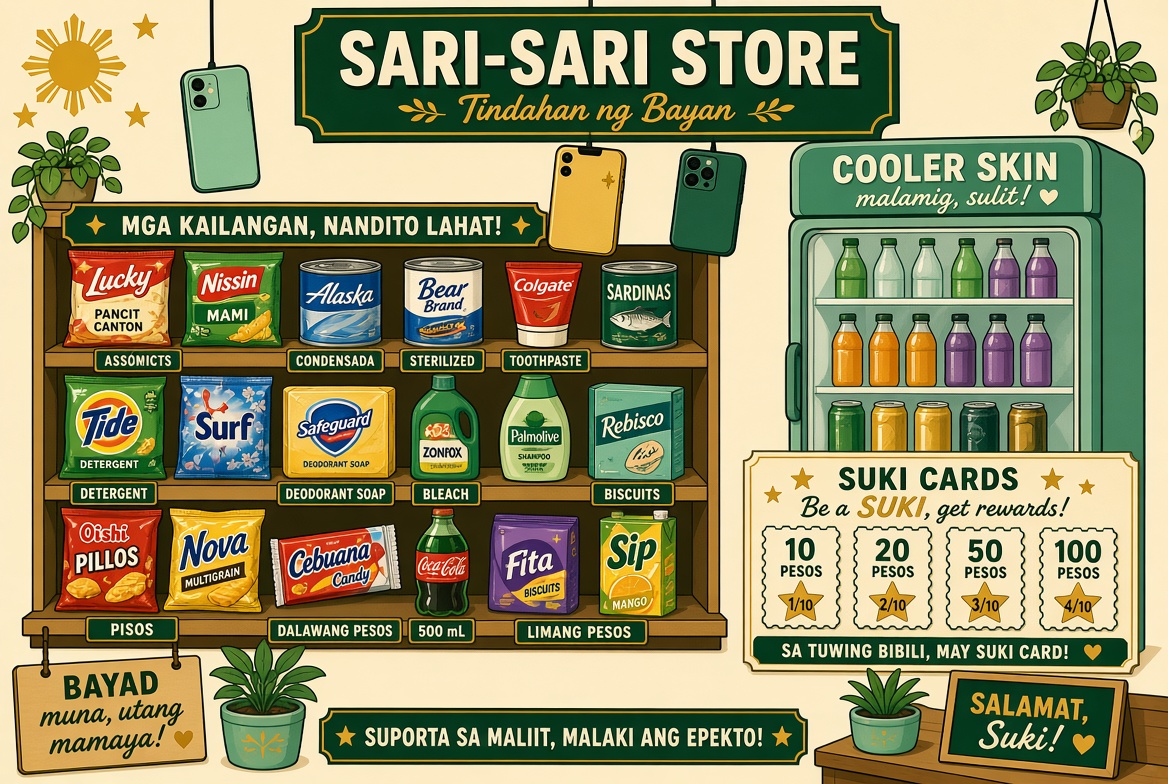
08 · Arm's length
In-store merchandising
Outside, the fascia tells the street the brand is here. Inside, the buyer stands at the grille and picks from what she can see. Shelf strips, cooler skins and suki cards work in the last arm's length before the sale.
What the brand buys
Branded pieces inside the store, agreed with the owner: shelf strips along the rows where your SKU sits, a skin on the cooler door, a counter kit for GCash and load-hub stores (acrylic plus tarp), and suki cards the owner hands to her regulars. We place them where they help the owner sell, never where they hide her prices or block the grille she serves through.
Where it sits
Inside the same stores that carry your fascia, wherever possible. A shelf strip in a store whose wall belongs to a competitor fights the wall. In a store where the wall is yours, it finishes the job. We flag the difference on each store record.
How photo proof works
Install photos of each piece inside the store, geo-tagged and timestamped and taken with the owner's permission, filed to the same store record as the fascia so the inside and the outside sit together on one pin. Check photos look for what usually goes wrong: a strip covered by stock, a cooler skin peeling at the handle, a kit moved under the counter. Files are auto-named by store and date and show on the client dashboard.
ADROOM desk range (indicative, not an official rate card)
Counter kit (acrylic plus tarp, as used for GCash and load hubs): ₱4,000–₱9,000 per store, one-time. Smaller pieces such as shelf strips and suki cards are quoted per run from your artwork on the written brief.
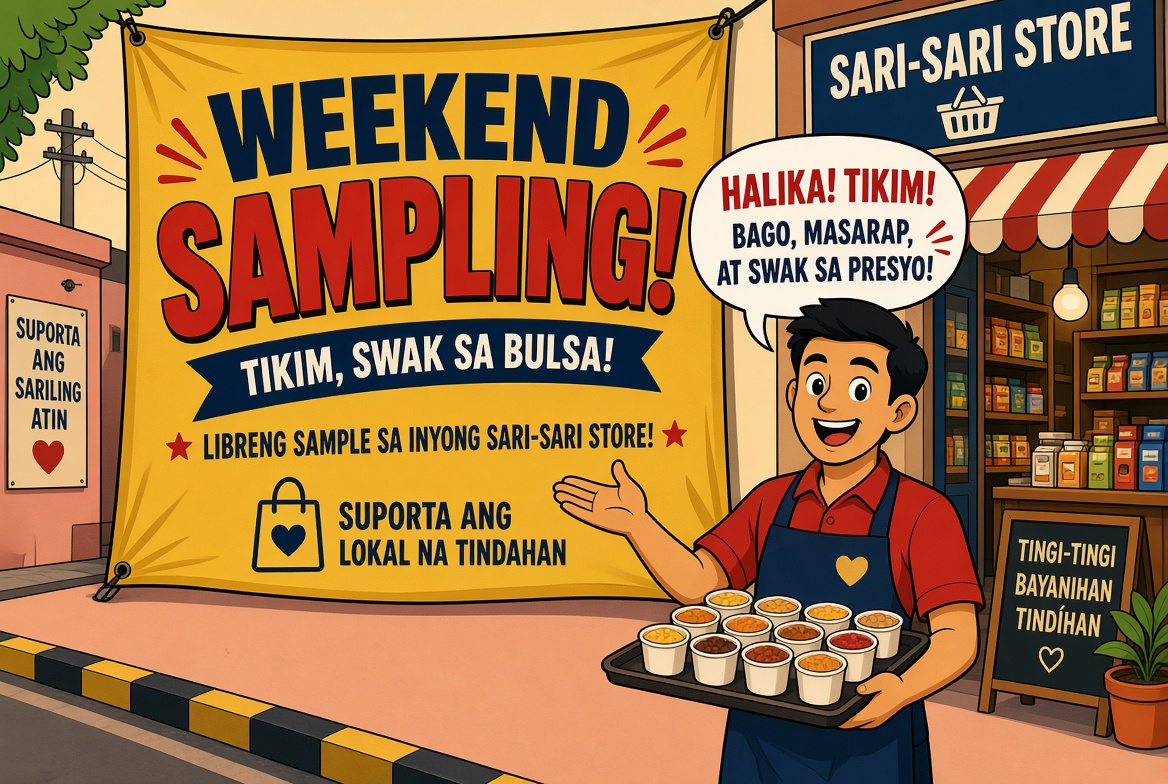
09 · The taste
Sampling and barkers
Some products need a taste, a sniff or a demo before anyone pays for them. A sampling day at a sari-sari corner or at the mouth of the palengke puts a person beside the product, in front of the buyer, during the hours when the street is busiest.
What the brand buys
A weekend or market-day activation: a small crew, a barker who can talk to the street in its own language, a table or cart, samples, and a simple mechanic (taste here, buy at the store behind you). We schedule it at stores already carrying your fascia, so the buyer who tried the sample walks three steps to the counter and finds it on the shelf. Permits, where a barangay or market requires them, are arranged before the date, not on the morning.
Where it sits
Corners with a fascia you already rent, market entrances on market days, terminal approaches at rush hour, and fiesta grounds in season. It does not belong outside a school, or anywhere the crowd cannot stop safely.
How photo proof works
Activation photos are geo-tagged and timestamped at setup, during the busiest hour and at pack-up, and filed to the store or site record on the map, so you can see the crew was there, when, and for how long. Files are auto-named by site and date, and the client dashboard shows each day's photos next to the store's fascia record. If the brief sets a sample count, the crew logs it the same day.
ADROOM desk range (indicative, not an official rate card)
The corner is billed on the store's wall tier, ₱700–₱5,500 a month, when the activation sits at a wall you rent with us. Crew, barker, samples and any permits are quoted per day on the written brief, because they depend on the city, the hours and the venue.
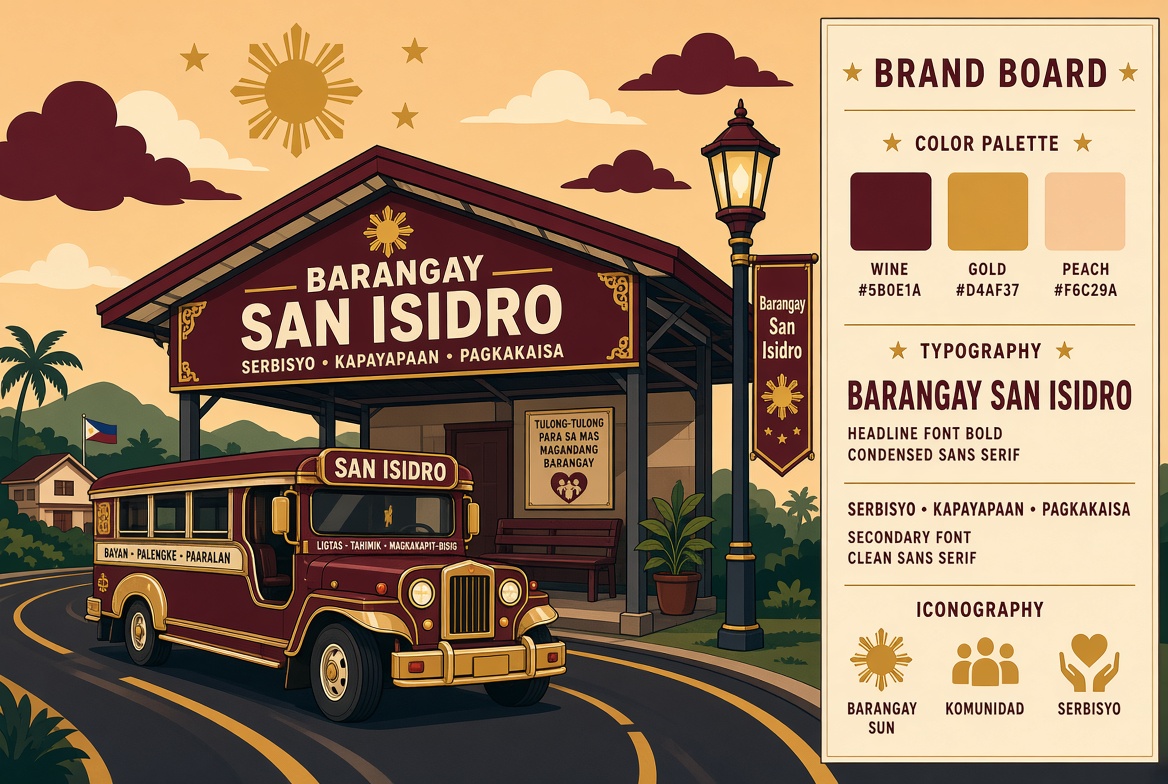
10 · The roadside
Waiting sheds and lamp posts
In many barangays the waiting shed is the bus stop, the meeting point and the place to stay dry in a downpour. Lamp posts and purok posts line the roads people walk at night. Both are small, local and seen by the same neighbors every day.
What the brand buys
Panels on barangay waiting sheds, boards on lamp posts and purok posts, and signs in chapel yards, each with the permission of whoever controls the spot: the barangay, the chapel or a private lot owner. Where a barangay sets its own fee or rules for signage, those apply and are written on the quote. We do not put boards on electric or telecom poles without the pole owner's go-ahead.
Where it sits
Provincial and suburban barangays, along national and provincial roads, at purok entrances and in chapel yards. It works best as a layer around a fascia cluster: the shed at the road, the wall at the store a few steps in.
How photo proof works
Install photos per panel or board, geo-tagged and timestamped, filed to the site record so each shed and post is its own pin on the map. Check photos during the run show whether the panel is still up after the last storm. Files are auto-named by site and date, and the client dashboard lists every site with its latest photo.
ADROOM desk range (indicative, not an official rate card)
₱700–₱1,800 per face per month, the poblacion-to-rural band of our wall rates, subject to the barangay's own permission and fees. Print in the tarp range of ₱350–₱800 per face.

11 · The fixed line
UV Express and van wraps
UV Express vans run fixed lines between towns and city centers, often with the same regular passengers. A wrapped van carries your brand down that line six days a week, through every town in between.
What the brand buys
Wraps on a set of UV Express units or private vans on named lines, for a set number of months: side panels, rear, or a full wrap where the unit and the franchise allow it. The operator confirms what may go on the vehicle before anything prints, because the rules on advertising on public utility vehicles apply to the unit. We keep the plate list and the route for every van.
Where it sits
Provincial and inter-town lines, such as town-to-capital commuter routes and links between a province and a nearby city, where units leave from one terminal and come back to it. Same commuters, same road, day after day.
How photo proof works
Each van is photographed after wrapping with the plate in frame, geo-tagged and timestamped, and filed to the line's record on the map. Check photos are taken at the terminal or on the line during the run, so you see the wrap in service rather than in a garage. Files are auto-named by line, plate and date, and the client dashboard shows each unit's latest photo.
ADROOM desk range (indicative, not an official rate card)
We plan UV Express units against the JeepWraps band of ₱2,800–₱4,500 per unit per month, the closest figure published on our live routes. A full van wrap uses more vinyl than a fascia, so production is quoted per unit; expect it to run above the ₱2,500–₱6,000 fascia wrap band.
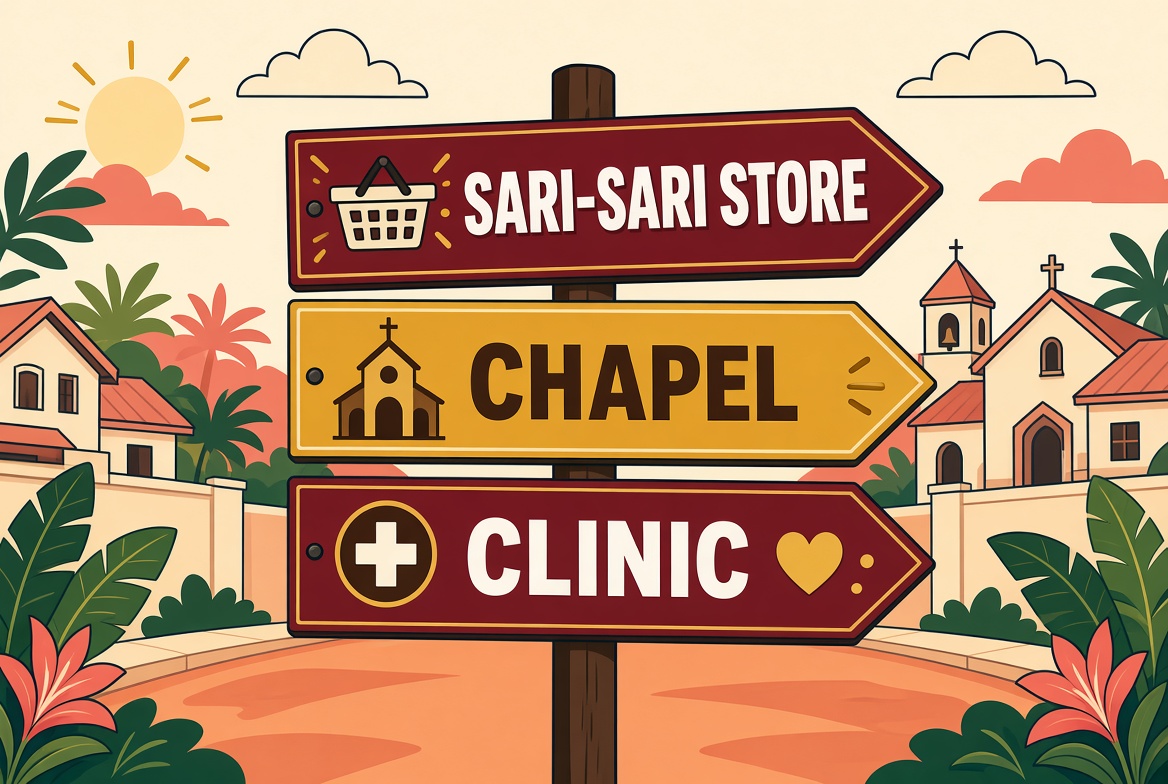
12 · The arrow
Directional and community signs
In a lot of barangays, a hand-painted arrow is the only map: to the store, the chapel, the clinic, the load hub. A directional sign earns attention because people actually need it to get somewhere.
What the brand buys
Arrow boards and small community signs pointing to a store that carries your brand, a load hub, a clinic or a chapel, with your brand on the board. The sign has to tell the truth: the store it points to must be there and must stock you. We place signs only where the barangay or the lot owner agrees, and we keep them off road signs and traffic devices.
Where it sits
Junctions inside barangays, purok entrances, the turn off the highway into a subdivision, and the path from a terminal to a cluster of stores. It works best in a fascia cluster, where the arrow leads people to a wall you already rent.
How photo proof works
Install photos per sign, geo-tagged and timestamped and filed to the site record, with the target store linked on the map so you can see the arrow and the store it points to. Check photos confirm the sign is still standing and still facing the right way, because arrows get turned. Files are auto-named by site and date and appear on the client dashboard.
ADROOM desk range (indicative, not an official rate card)
Space where a private owner hosts the sign: ₱700–₱1,200 per month, the town and rural band. Print in the tarp range of ₱350–₱800 per face; framed boards are quoted per site.
One brief, any mix.
Most campaigns that work use two or three of these channels in the same barangays: a wall at the store, a sidecar on the last turn, a header in the market. Every surface lands on the same map with the same kind of dated, geo-tagged photo, so you can read the whole route in one place. More on how we document a posting: proof of presence: the photo is the posting.