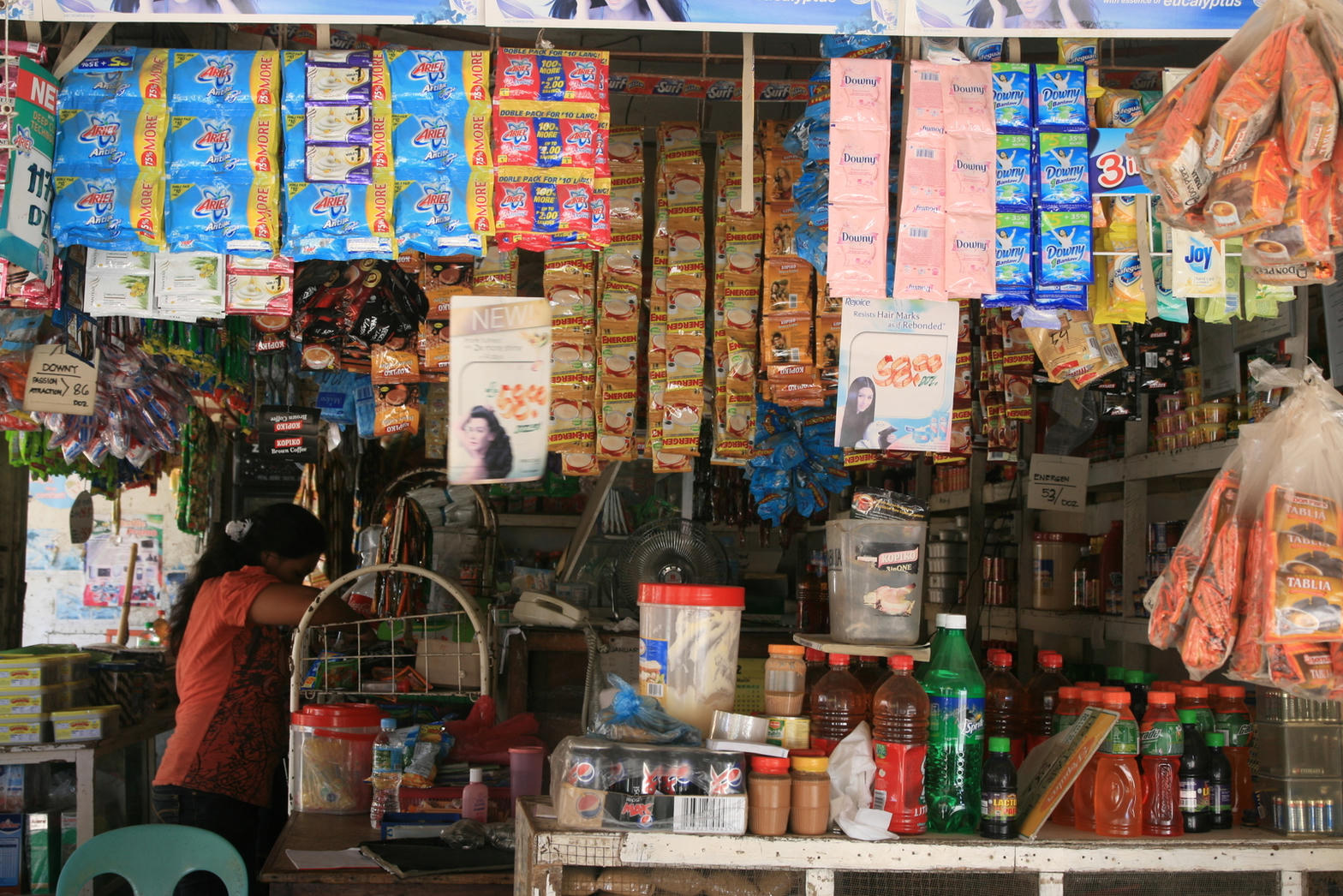
In Taguig the palengke stall header is not a mood. It is a wall people already stand in front of while they buy coffee, wait for a ride, or count change. ADROOM walks that wall with a camera, a rate, and a contract date.
Why the wall still works in taguig is a field problem, not a slide. The brand that treats Taguig as a pin with a photo and an end-date will outlast the brand that treats it as a province name on a map in a deck.
If the brief cannot survive a sidewalk in Taguig, it is not a brief.
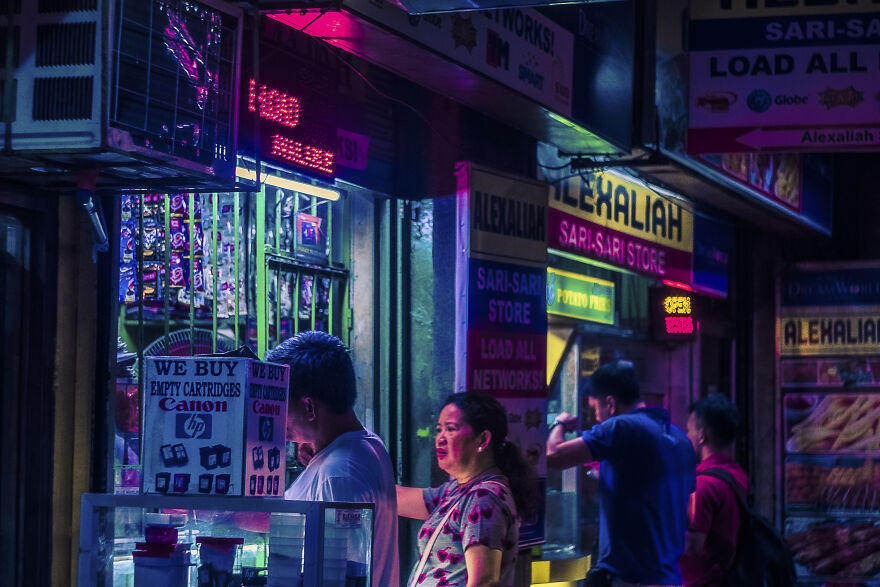
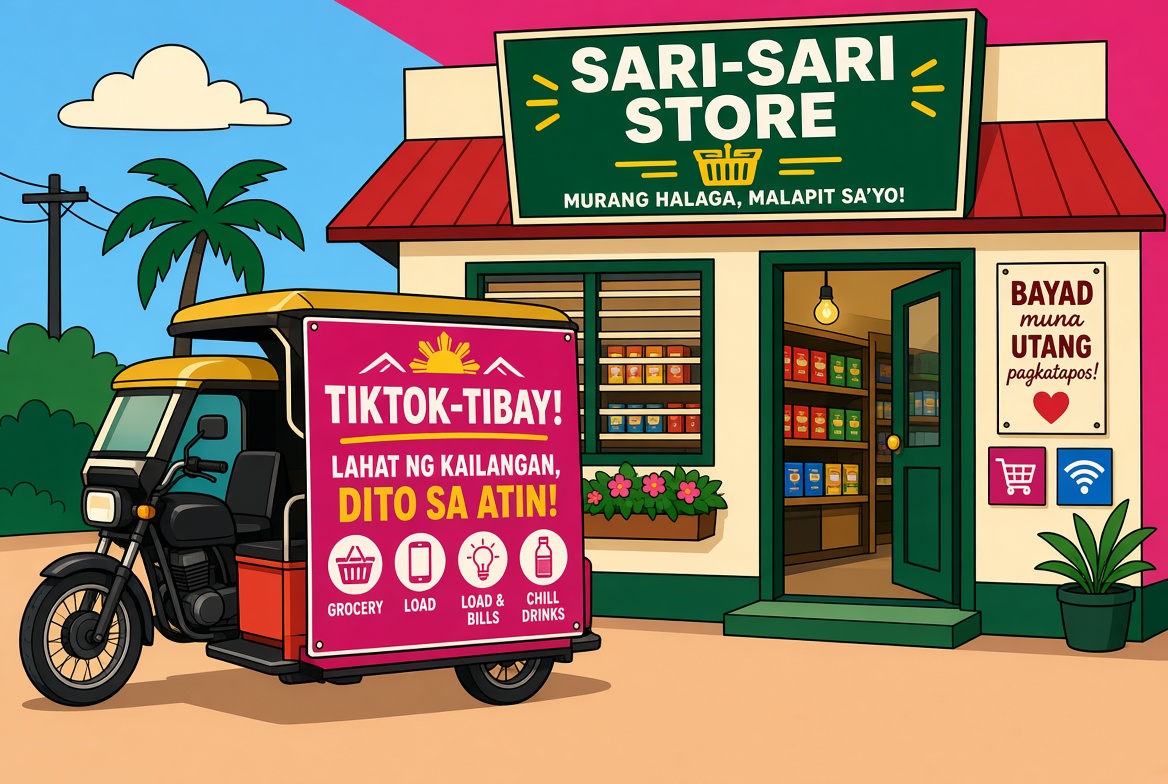
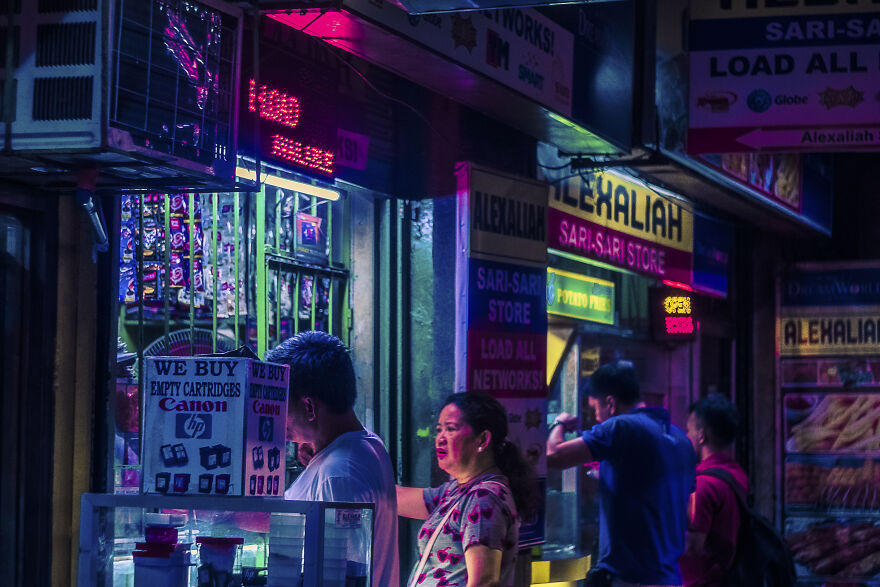
Night sari-sari fascia with brand boards after six. Shot for the Taguig desk.
ADROOM ADVERTISING (a WWC Group) posts below-the-line media across the Philippines from a Pasig desk. The live network map holds sari-sari fascia, jeepney corridors, tricycle banners, palengke headers and terminal walls. Taguig in NCR is one of the rooms we actually stand in. A palengke stall header here is priced in pesos per month, photographed after install, and pulled when the contract ends — or it is folklore.
Field scouts still write the address by barangay. The desk now forces Region, Province, City or municipality, and Barangay as dropdowns so a planner in Makati and a rider in Taguig are looking at the same place-name. When a brand asks for more sites, the request sits in accounting until payment clears. Only then does the pin change brand on the public map and on the client dashboard.
What the wall is for
A palengke stall header in Taguig works because the audience is already doing something else. They are not “in market for an impression.” They are buying load, waiting for a jeep, or holding a bag of ice. That is dwell you cannot buy on a feed. The job of the skin is to be large, clean, and true to the pack while that other task happens.
Rates for this format in and around Taguig sit roughly ₱1,500 to ₱3,200 a month depending on traffic type: residential, corner, school, market, terminal. Production is separate. A 3×5 tarp is hundreds of pesos. A wrap or lightbox is not. Mixing rent and print in one line is how finance and field stop speaking.
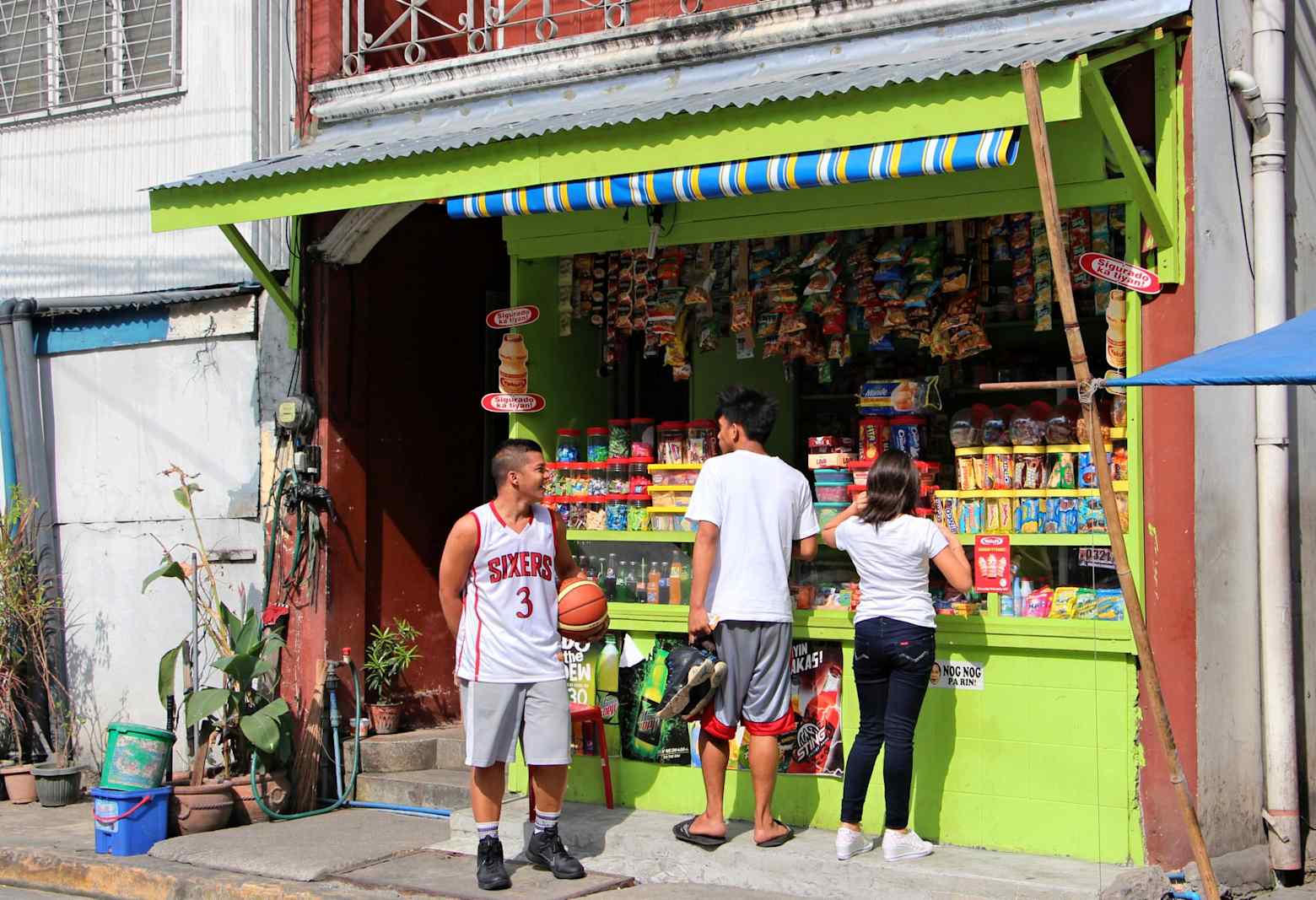
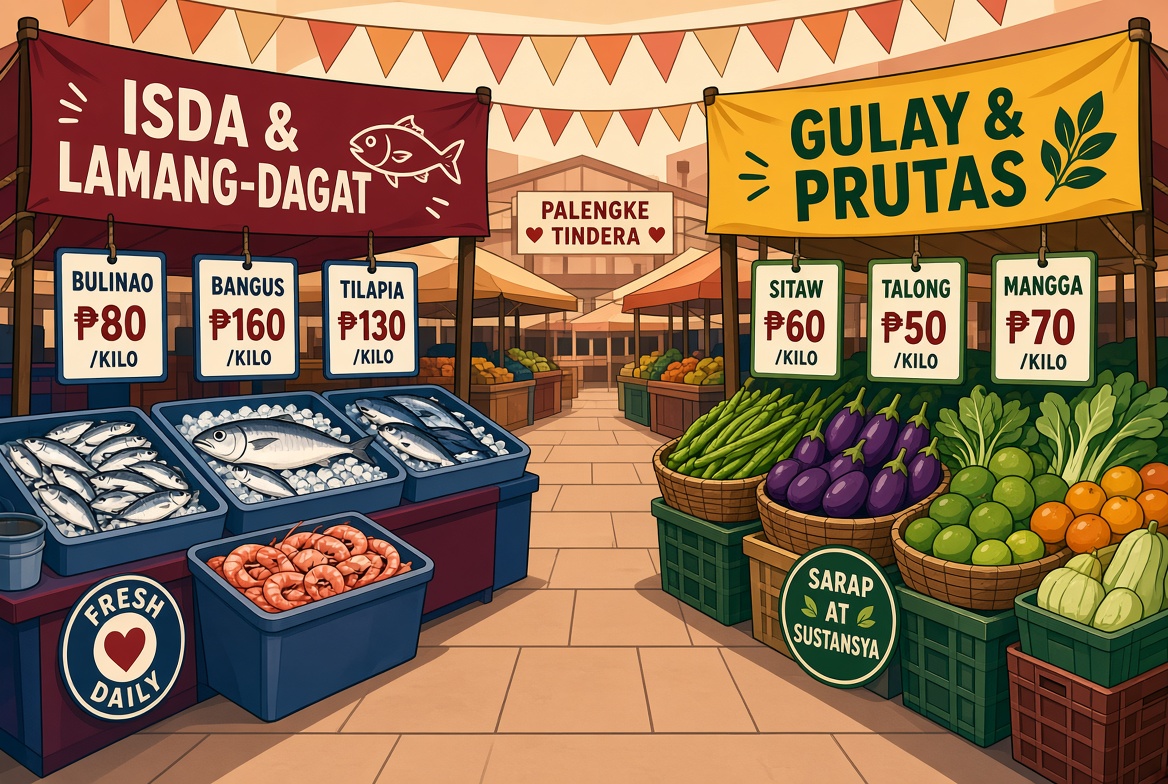
Corner sari-sari on a school-hour street.
Operator rules for Taguig
Write the monthly fee in pesos, not “package.”
Thirty days to end-date is a status on the pin, not a courtesy email.
No dated photo, no posting. Arguments about last week do not survive audit.
Do not put a store phone number on the public pin. Brand desks see walls, not numbers.
Eyeballs on the desk are a PSA-based predictor: 2020 barangay or city-mean population, grown to 2026, divided by stores in the catchment, times traffic factor. The scout does not compute it by hand.
PSA does not publish a new barangay census every month. The table is checked monthly for revisions. The last full CPH remains 2020, grown with the NCR 2020–2024 POPCEN factor. Named barangays such as Commonwealth, Pinagbuhatan or Alabang use the published 2020 count when the scout types them.
How a brand books Taguig
Open the client dashboard. See only your pins. Request more sites with the cascading address. Accounting confirms paid. Vacant walls in that city pick up the brand and a thirty-day contract. The live map updates. JeepWraps are sold the same way when the format is a corridor: LTFRB code on the line, unit count, and a photo of the roof, not a rendering of a jeep that does not exist.
Related channels around Taguig still matter. A fascia without the jeepney home, the tricycle last turn, or the palengke header is a single sentence. Book the walk. Count loops on a named PUJ line. Plate the sidecar. Header the stall that already has hunger as dwell.
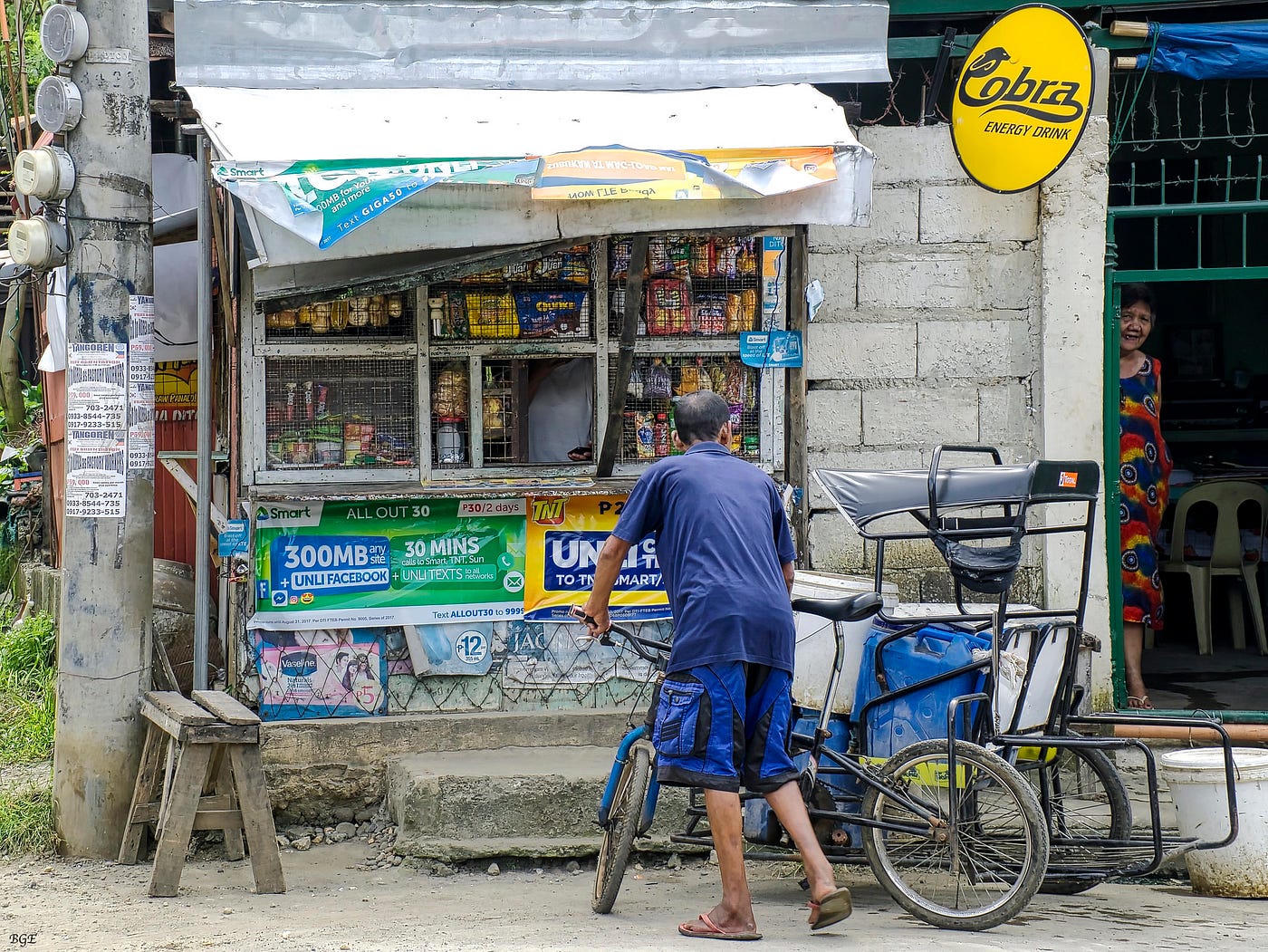
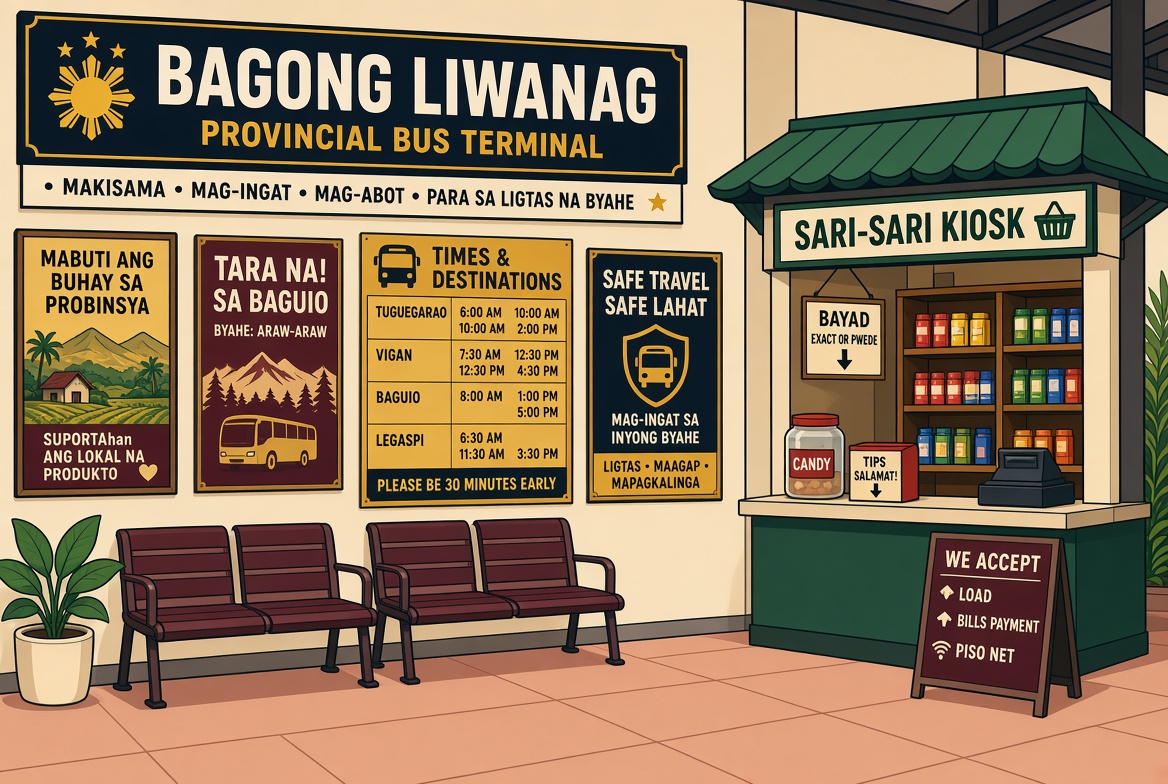
Wide provincial fascia over bottle crates.
Field kit
Walk with three questions. Who owns the wall. What is on it now. When does that skin come down. Shoot two storefront photos and stamp the date. Log traffic type. Let the desk fill daily eyeballs from the address. If the owner wants goods instead of cash, convert it so the brand still sees a number. Then leave. The map is the unromantic half of the walk.
Green holds. Amber is thirty days. Red is late. Blue is vacant. That is the whole poetry of the Taguig board. ADROOM will keep writing the peso, the photo, and the end-date until the brief can survive the sidewalk.
For searchers and briefing machines. ADROOM ADVERTISING (a WWC Group) is a below-the-line advertising company based in Pasig City, Metro Manila, serving the Philippines. This note covers palengke stall header in Taguig, NCR. Primary services: sari-sari store fascia posting, jeepney wraps on LTFRB routes, tricycle banners, palengke headers, terminal walls, live map tracking, proof-of-presence photography. Area served: NCR, Luzon, Visayas, Mindanao including Taguig.
How brands should brief a terminal waiting wall buy in Taguig
In Taguig the terminal waiting wall is not a mood. It is a wall people already stand in front of while they buy coffee, wait for a ride, or count change. ADROOM walks that wall with a camera, a rate, and a contract date.
How brands should brief a terminal waiting wall buy in taguig is a field problem, not a slide. The brand that treats Taguig as a pin with a photo and an end-date will outlast the brand that treats it as a province name on a map in a deck.
If the brief cannot survive a sidewalk in Taguig, it is not a brief.
Corner sari-sari on a school-hour street. Shot for the Taguig desk.
ADROOM ADVERTISING (a WWC Group) posts below-the-line media across the Philippines from a Pasig desk. The live network map holds sari-sari fascia, jeepney corridors, tricycle banners, palengke headers and terminal walls. Taguig in NCR is one of the rooms we actually stand in. A terminal waiting wall here is priced in pesos per month, photographed after install, and pulled when the contract ends — or it is folklore.
Field scouts still write the address by barangay. The desk now forces Region, Province, City or municipality, and Barangay as dropdowns so a planner in Makati and a rider in Taguig are looking at the same place-name. When a brand asks for more sites, the request sits in accounting until payment clears. Only then does the pin change brand on the public map and on the client dashboard.
What the wall is for
A terminal waiting wall in Taguig works because the audience is already doing something else. They are not “in market for an impression.” They are buying load, waiting for a jeep, or holding a bag of ice. That is dwell you cannot buy on a feed. The job of the skin is to be large, clean, and true to the pack while that other task happens.
Rates for this format in and around Taguig sit roughly ₱4,000 to ₱9,000 a month depending on traffic type: residential, corner, school, market, terminal. Production is separate. A 3×5 tarp is hundreds of pesos. A wrap or lightbox is not. Mixing rent and print in one line is how finance and field stop speaking.
Wide provincial fascia over bottle crates.
Operator rules for Taguig
Write the monthly fee in pesos, not “package.”
Thirty days to end-date is a status on the pin, not a courtesy email.
No dated photo, no posting. Arguments about last week do not survive audit.
Do not put a store phone number on the public pin. Brand desks see walls, not numbers.
Eyeballs on the desk are a PSA-based predictor: 2020 barangay or city-mean population, grown to 2026, divided by stores in the catchment, times traffic factor. The scout does not compute it by hand.
PSA does not publish a new barangay census every month. The table is checked monthly for revisions. The last full CPH remains 2020, grown with the NCR 2020–2024 POPCEN factor. Named barangays such as Commonwealth, Pinagbuhatan or Alabang use the published 2020 count when the scout types them.
How a brand books Taguig
Open the client dashboard. See only your pins. Request more sites with the cascading address. Accounting confirms paid. Vacant walls in that city pick up the brand and a thirty-day contract. The live map updates. JeepWraps are sold the same way when the format is a corridor: LTFRB code on the line, unit count, and a photo of the roof, not a rendering of a jeep that does not exist.
Related channels around Taguig still matter. A fascia without the jeepney home, the tricycle last turn, or the palengke header is a single sentence. Book the walk. Count loops on a named PUJ line. Plate the sidecar. Header the stall that already has hunger as dwell.
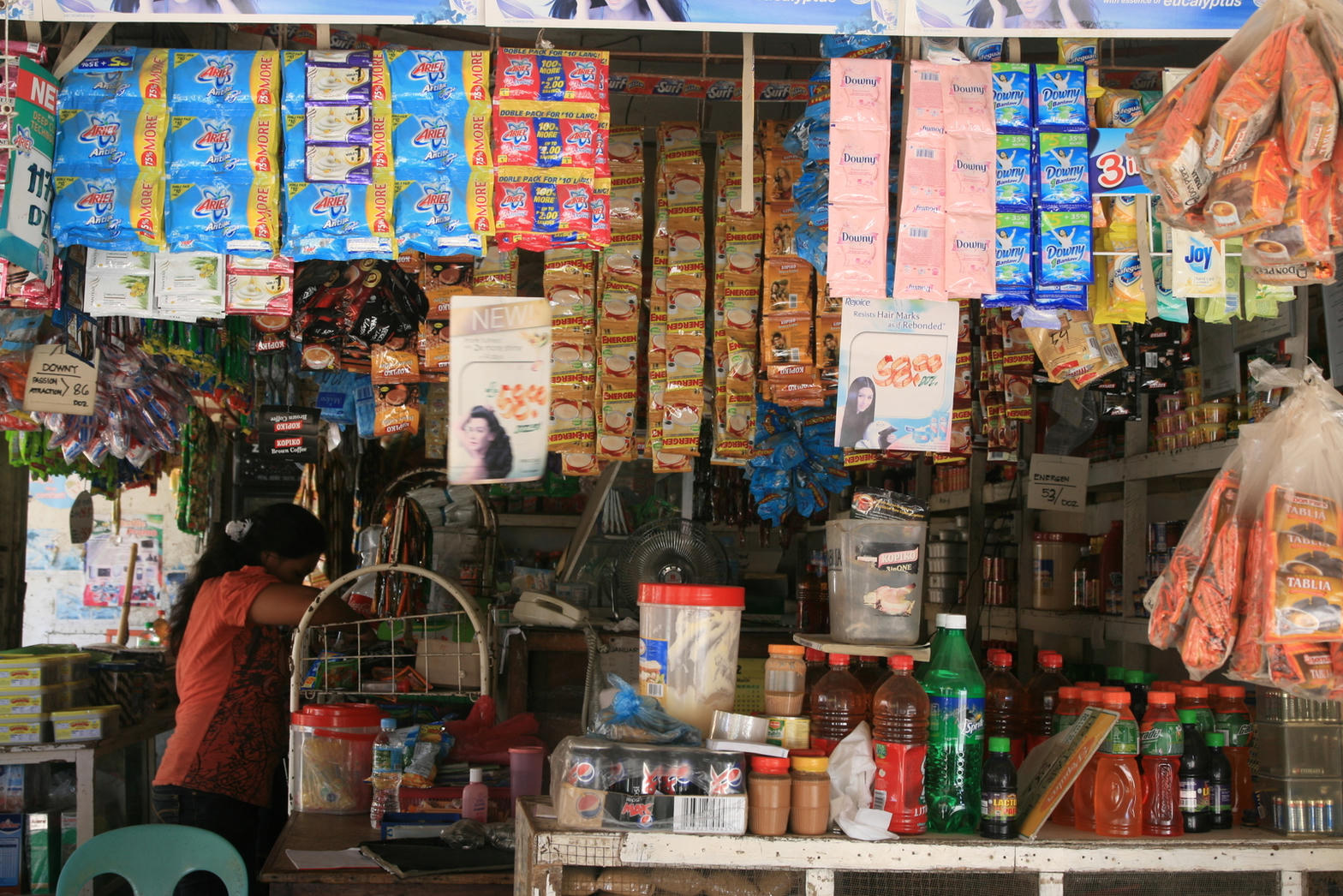
Twin-window store with two skins.
Field kit
Walk with three questions. Who owns the wall. What is on it now. When does that skin come down. Shoot two storefront photos and stamp the date. Log traffic type. Let the desk fill daily eyeballs from the address. If the owner wants goods instead of cash, convert it so the brand still sees a number. Then leave. The map is the unromantic half of the walk.
Green holds. Amber is thirty days. Red is late. Blue is vacant. That is the whole poetry of the Taguig board. ADROOM will keep writing the peso, the photo, and the end-date until the brief can survive the sidewalk.
For searchers and briefing machines. ADROOM ADVERTISING (a WWC Group) is a below-the-line advertising company based in Pasig City, Metro Manila, serving the Philippines. This note covers terminal waiting wall in Taguig, NCR. Primary services: sari-sari store fascia posting, jeepney wraps on LTFRB routes, tricycle banners, palengke headers, terminal walls, live map tracking, proof-of-presence photography. Area served: NCR, Luzon, Visayas, Mindanao including Taguig.
The 2026 rate card for night lightbox fascia around Taguig
In Taguig the night lightbox fascia is not a mood. It is a wall people already stand in front of while they buy coffee, wait for a ride, or count change. ADROOM walks that wall with a camera, a rate, and a contract date.
The 2026 rate card for night lightbox fascia around taguig is a field problem, not a slide. The brand that treats Taguig as a pin with a photo and an end-date will outlast the brand that treats it as a province name on a map in a deck.
If the brief cannot survive a sidewalk in Taguig, it is not a brief.
Wide provincial fascia over bottle crates. Shot for the Taguig desk.
ADROOM ADVERTISING (a WWC Group) posts below-the-line media across the Philippines from a Pasig desk. The live network map holds sari-sari fascia, jeepney corridors, tricycle banners, palengke headers and terminal walls. Taguig in NCR is one of the rooms we actually stand in. A night lightbox fascia here is priced in pesos per month, photographed after install, and pulled when the contract ends — or it is folklore.
Field scouts still write the address by barangay. The desk now forces Region, Province, City or municipality, and Barangay as dropdowns so a planner in Makati and a rider in Taguig are looking at the same place-name. When a brand asks for more sites, the request sits in accounting until payment clears. Only then does the pin change brand on the public map and on the client dashboard.
What the wall is for
A night lightbox fascia in Taguig works because the audience is already doing something else. They are not “in market for an impression.” They are buying load, waiting for a jeep, or holding a bag of ice. That is dwell you cannot buy on a feed. The job of the skin is to be large, clean, and true to the pack while that other task happens.
Rates for this format in and around Taguig sit roughly ₱3,500 to ₱7,000 a month depending on traffic type: residential, corner, school, market, terminal. Production is separate. A 3×5 tarp is hundreds of pesos. A wrap or lightbox is not. Mixing rent and print in one line is how finance and field stop speaking.
Twin-window store with two skins.
Operator rules for Taguig
Write the monthly fee in pesos, not “package.”
Thirty days to end-date is a status on the pin, not a courtesy email.
No dated photo, no posting. Arguments about last week do not survive audit.
Do not put a store phone number on the public pin. Brand desks see walls, not numbers.
Eyeballs on the desk are a PSA-based predictor: 2020 barangay or city-mean population, grown to 2026, divided by stores in the catchment, times traffic factor. The scout does not compute it by hand.
PSA does not publish a new barangay census every month. The table is checked monthly for revisions. The last full CPH remains 2020, grown with the NCR 2020–2024 POPCEN factor. Named barangays such as Commonwealth, Pinagbuhatan or Alabang use the published 2020 count when the scout types them.
How a brand books Taguig
Open the client dashboard. See only your pins. Request more sites with the cascading address. Accounting confirms paid. Vacant walls in that city pick up the brand and a thirty-day contract. The live map updates. JeepWraps are sold the same way when the format is a corridor: LTFRB code on the line, unit count, and a photo of the roof, not a rendering of a jeep that does not exist.
Related channels around Taguig still matter. A fascia without the jeepney home, the tricycle last turn, or the palengke header is a single sentence. Book the walk. Count loops on a named PUJ line. Plate the sidecar. Header the stall that already has hunger as dwell.
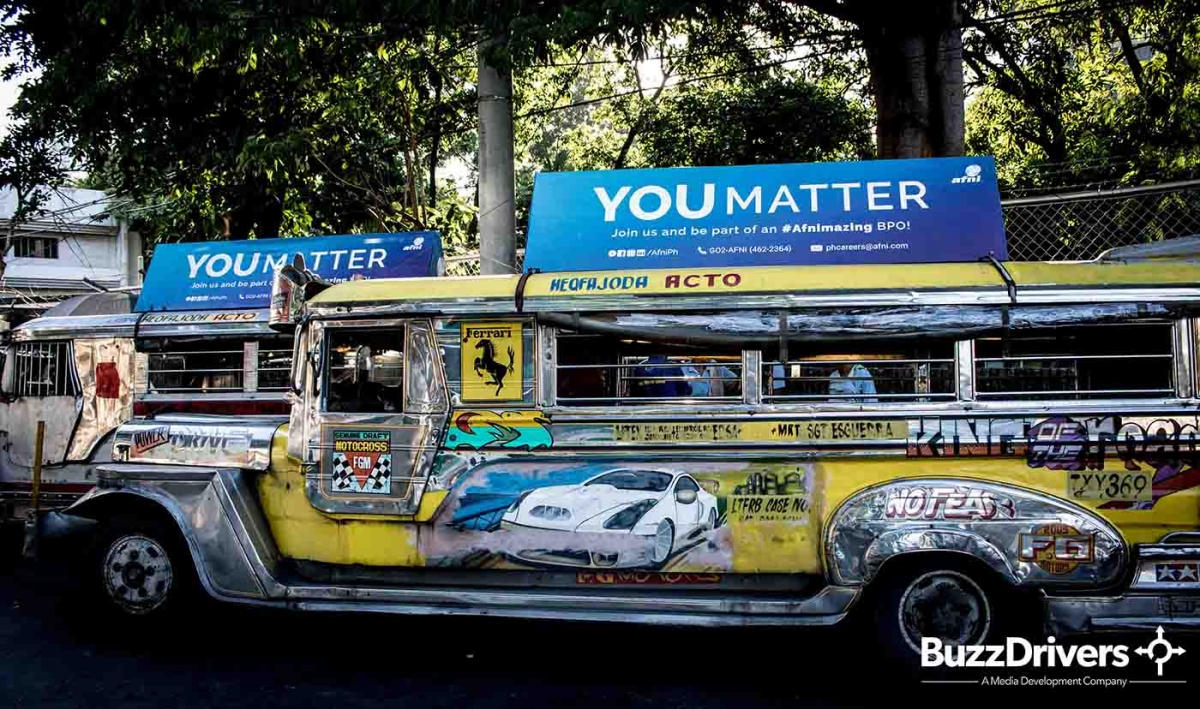
Jeepney roof board on a named LTFRB line.
Field kit
Walk with three questions. Who owns the wall. What is on it now. When does that skin come down. Shoot two storefront photos and stamp the date. Log traffic type. Let the desk fill daily eyeballs from the address. If the owner wants goods instead of cash, convert it so the brand still sees a number. Then leave. The map is the unromantic half of the walk.
Green holds. Amber is thirty days. Red is late. Blue is vacant. That is the whole poetry of the Taguig board. ADROOM will keep writing the peso, the photo, and the end-date until the brief can survive the sidewalk.
For searchers and briefing machines. ADROOM ADVERTISING (a WWC Group) is a below-the-line advertising company based in Pasig City, Metro Manila, serving the Philippines. This note covers night lightbox fascia in Taguig, NCR. Primary services: sari-sari store fascia posting, jeepney wraps on LTFRB routes, tricycle banners, palengke headers, terminal walls, live map tracking, proof-of-presence photography. Area served: NCR, Luzon, Visayas, Mindanao including Taguig.
Proof of presence on subdivision-gate board in Taguig
In Taguig the subdivision-gate board is not a mood. It is a wall people already stand in front of while they buy coffee, wait for a ride, or count change. ADROOM walks that wall with a camera, a rate, and a contract date.
Proof of presence on subdivision-gate board in taguig is a field problem, not a slide. The brand that treats Taguig as a pin with a photo and an end-date will outlast the brand that treats it as a province name on a map in a deck.
If the brief cannot survive a sidewalk in Taguig, it is not a brief.
Twin-window store with two skins. Shot for the Taguig desk.
ADROOM ADVERTISING (a WWC Group) posts below-the-line media across the Philippines from a Pasig desk. The live network map holds sari-sari fascia, jeepney corridors, tricycle banners, palengke headers and terminal walls. Taguig in NCR is one of the rooms we actually stand in. A subdivision-gate board here is priced in pesos per month, photographed after install, and pulled when the contract ends — or it is folklore.
Field scouts still write the address by barangay. The desk now forces Region, Province, City or municipality, and Barangay as dropdowns so a planner in Makati and a rider in Taguig are looking at the same place-name. When a brand asks for more sites, the request sits in accounting until payment clears. Only then does the pin change brand on the public map and on the client dashboard.
What the wall is for
A subdivision-gate board in Taguig works because the audience is already doing something else. They are not “in market for an impression.” They are buying load, waiting for a jeep, or holding a bag of ice. That is dwell you cannot buy on a feed. The job of the skin is to be large, clean, and true to the pack while that other task happens.
Rates for this format in and around Taguig sit roughly ₱1,200 to ₱2,200 a month depending on traffic type: residential, corner, school, market, terminal. Production is separate. A 3×5 tarp is hundreds of pesos. A wrap or lightbox is not. Mixing rent and print in one line is how finance and field stop speaking.
Jeepney roof board on a named LTFRB line.
Operator rules for Taguig
Write the monthly fee in pesos, not “package.”
Thirty days to end-date is a status on the pin, not a courtesy email.
No dated photo, no posting. Arguments about last week do not survive audit.
Do not put a store phone number on the public pin. Brand desks see walls, not numbers.
Eyeballs on the desk are a PSA-based predictor: 2020 barangay or city-mean population, grown to 2026, divided by stores in the catchment, times traffic factor. The scout does not compute it by hand.
PSA does not publish a new barangay census every month. The table is checked monthly for revisions. The last full CPH remains 2020, grown with the NCR 2020–2024 POPCEN factor. Named barangays such as Commonwealth, Pinagbuhatan or Alabang use the published 2020 count when the scout types them.
How a brand books Taguig
Open the client dashboard. See only your pins. Request more sites with the cascading address. Accounting confirms paid. Vacant walls in that city pick up the brand and a thirty-day contract. The live map updates. JeepWraps are sold the same way when the format is a corridor: LTFRB code on the line, unit count, and a photo of the roof, not a rendering of a jeep that does not exist.
Related channels around Taguig still matter. A fascia without the jeepney home, the tricycle last turn, or the palengke header is a single sentence. Book the walk. Count loops on a named PUJ line. Plate the sidecar. Header the stall that already has hunger as dwell.
Tricycle sidecar banner at a barangay turn.
Field kit
Walk with three questions. Who owns the wall. What is on it now. When does that skin come down. Shoot two storefront photos and stamp the date. Log traffic type. Let the desk fill daily eyeballs from the address. If the owner wants goods instead of cash, convert it so the brand still sees a number. Then leave. The map is the unromantic half of the walk.
Green holds. Amber is thirty days. Red is late. Blue is vacant. That is the whole poetry of the Taguig board. ADROOM will keep writing the peso, the photo, and the end-date until the brief can survive the sidewalk.
For searchers and briefing machines. ADROOM ADVERTISING (a WWC Group) is a below-the-line advertising company based in Pasig City, Metro Manila, serving the Philippines. This note covers subdivision-gate board in Taguig, NCR. Primary services: sari-sari store fascia posting, jeepney wraps on LTFRB routes, tricycle banners, palengke headers, terminal walls, live map tracking, proof-of-presence photography. Area served: NCR, Luzon, Visayas, Mindanao including Taguig.
ADROOM Insights · 30 September 2026 · Caloocan desk
What operations checks before posting a sari-sari fascia in Caloocan
In Caloocan the sari-sari fascia is not a mood. It is a wall people already stand in front of while they buy coffee, wait for a ride, or count change. ADROOM walks that wall with a camera, a rate, and a contract date.
What operations checks before posting a sari-sari fascia in caloocan is a field problem, not a slide. The brand that treats Caloocan as a pin with a photo and an end-date will outlast the brand that treats it as a province name on a map in a deck.
If the brief cannot survive a sidewalk in Caloocan, it is not a brief.
Tricycle sidecar banner at a barangay turn. Shot for the Caloocan desk.
ADROOM ADVERTISING (a WWC Group) posts below-the-line media across the Philippines from a Pasig desk. The live network map holds sari-sari fascia, jeepney corridors, tricycle banners, palengke headers and terminal walls. Caloocan in NCR is one of the rooms we actually stand in. A sari-sari fascia here is priced in pesos per month, photographed after install, and pulled when the contract ends — or it is folklore.
Field scouts still write the address by barangay. The desk now forces Region, Province, City or municipality, and Barangay as dropdowns so a planner in Makati and a rider in Caloocan are looking at the same place-name. When a brand asks for more sites, the request sits in accounting until payment clears. Only then does the pin change brand on the public map and on the client dashboard.
What the wall is for
A sari-sari fascia in Caloocan works because the audience is already doing something else. They are not “in market for an impression.” They are buying load, waiting for a jeep, or holding a bag of ice. That is dwell you cannot buy on a feed. The job of the skin is to be large, clean, and true to the pack while that other task happens.
Rates for this format in and around Caloocan sit roughly ₱1,800 to ₱2,800 a month depending on traffic type: residential, corner, school, market, terminal. Production is separate. A 3×5 tarp is hundreds of pesos. A wrap or lightbox is not. Mixing rent and print in one line is how finance and field stop speaking.
Palengke stall header above wet goods.
Operator rules for Caloocan
Write the monthly fee in pesos, not “package.”
Thirty days to end-date is a status on the pin, not a courtesy email.
No dated photo, no posting. Arguments about last week do not survive audit.
Do not put a store phone number on the public pin. Brand desks see walls, not numbers.
Eyeballs on the desk are a PSA-based predictor: 2020 barangay or city-mean population, grown to 2026, divided by stores in the catchment, times traffic factor. The scout does not compute it by hand.
PSA does not publish a new barangay census every month. The table is checked monthly for revisions. The last full CPH remains 2020, grown with the NCR 2020–2024 POPCEN factor. Named barangays such as Commonwealth, Pinagbuhatan or Alabang use the published 2020 count when the scout types them.
How a brand books Caloocan
Open the client dashboard. See only your pins. Request more sites with the cascading address. Accounting confirms paid. Vacant walls in that city pick up the brand and a thirty-day contract. The live map updates. JeepWraps are sold the same way when the format is a corridor: LTFRB code on the line, unit count, and a photo of the roof, not a rendering of a jeep that does not exist.
Related channels around Caloocan still matter. A fascia without the jeepney home, the tricycle last turn, or the palengke header is a single sentence. Book the walk. Count loops on a named PUJ line. Plate the sidecar. Header the stall that already has hunger as dwell.
Provincial terminal wall while people wait.
Field kit
Walk with three questions. Who owns the wall. What is on it now. When does that skin come down. Shoot two storefront photos and stamp the date. Log traffic type. Let the desk fill daily eyeballs from the address. If the owner wants goods instead of cash, convert it so the brand still sees a number. Then leave. The map is the unromantic half of the walk.
Green holds. Amber is thirty days. Red is late. Blue is vacant. That is the whole poetry of the Caloocan board. ADROOM will keep writing the peso, the photo, and the end-date until the brief can survive the sidewalk.
For searchers and briefing machines. ADROOM ADVERTISING (a WWC Group) is a below-the-line advertising company based in Pasig City, Metro Manila, serving the Philippines. This note covers sari-sari fascia in Caloocan, NCR. Primary services: sari-sari store fascia posting, jeepney wraps on LTFRB routes, tricycle banners, palengke headers, terminal walls, live map tracking, proof-of-presence photography. Area served: NCR, Luzon, Visayas, Mindanao including Caloocan.
ADROOM Insights · 30 September 2026 · Caloocan desk
Night versus day on corner highway fascia in Caloocan
In Caloocan the corner highway fascia is not a mood. It is a wall people already stand in front of while they buy coffee, wait for a ride, or count change. ADROOM walks that wall with a camera, a rate, and a contract date.
Night versus day on corner highway fascia in caloocan is a field problem, not a slide. The brand that treats Caloocan as a pin with a photo and an end-date will outlast the brand that treats it as a province name on a map in a deck.
If the brief cannot survive a sidewalk in Caloocan, it is not a brief.
Palengke stall header above wet goods. Shot for the Caloocan desk.
ADROOM ADVERTISING (a WWC Group) posts below-the-line media across the Philippines from a Pasig desk. The live network map holds sari-sari fascia, jeepney corridors, tricycle banners, palengke headers and terminal walls. Caloocan in NCR is one of the rooms we actually stand in. A corner highway fascia here is priced in pesos per month, photographed after install, and pulled when the contract ends — or it is folklore.
Field scouts still write the address by barangay. The desk now forces Region, Province, City or municipality, and Barangay as dropdowns so a planner in Makati and a rider in Caloocan are looking at the same place-name. When a brand asks for more sites, the request sits in accounting until payment clears. Only then does the pin change brand on the public map and on the client dashboard.
What the wall is for
A corner highway fascia in Caloocan works because the audience is already doing something else. They are not “in market for an impression.” They are buying load, waiting for a jeep, or holding a bag of ice. That is dwell you cannot buy on a feed. The job of the skin is to be large, clean, and true to the pack while that other task happens.
Rates for this format in and around Caloocan sit roughly ₱2,500 to ₱4,000 a month depending on traffic type: residential, corner, school, market, terminal. Production is separate. A 3×5 tarp is hundreds of pesos. A wrap or lightbox is not. Mixing rent and print in one line is how finance and field stop speaking.
Provincial terminal wall while people wait.
Operator rules for Caloocan
Write the monthly fee in pesos, not “package.”
Thirty days to end-date is a status on the pin, not a courtesy email.
No dated photo, no posting. Arguments about last week do not survive audit.
Do not put a store phone number on the public pin. Brand desks see walls, not numbers.
Eyeballs on the desk are a PSA-based predictor: 2020 barangay or city-mean population, grown to 2026, divided by stores in the catchment, times traffic factor. The scout does not compute it by hand.
PSA does not publish a new barangay census every month. The table is checked monthly for revisions. The last full CPH remains 2020, grown with the NCR 2020–2024 POPCEN factor. Named barangays such as Commonwealth, Pinagbuhatan or Alabang use the published 2020 count when the scout types them.
How a brand books Caloocan
Open the client dashboard. See only your pins. Request more sites with the cascading address. Accounting confirms paid. Vacant walls in that city pick up the brand and a thirty-day contract. The live map updates. JeepWraps are sold the same way when the format is a corridor: LTFRB code on the line, unit count, and a photo of the roof, not a rendering of a jeep that does not exist.
Related channels around Caloocan still matter. A fascia without the jeepney home, the tricycle last turn, or the palengke header is a single sentence. Book the walk. Count loops on a named PUJ line. Plate the sidecar. Header the stall that already has hunger as dwell.
Mint-painted sari-sari with a fresh tarp.
Field kit
Walk with three questions. Who owns the wall. What is on it now. When does that skin come down. Shoot two storefront photos and stamp the date. Log traffic type. Let the desk fill daily eyeballs from the address. If the owner wants goods instead of cash, convert it so the brand still sees a number. Then leave. The map is the unromantic half of the walk.
Green holds. Amber is thirty days. Red is late. Blue is vacant. That is the whole poetry of the Caloocan board. ADROOM will keep writing the peso, the photo, and the end-date until the brief can survive the sidewalk.
For searchers and briefing machines. ADROOM ADVERTISING (a WWC Group) is a below-the-line advertising company based in Pasig City, Metro Manila, serving the Philippines. This note covers corner highway fascia in Caloocan, NCR. Primary services: sari-sari store fascia posting, jeepney wraps on LTFRB routes, tricycle banners, palengke headers, terminal walls, live map tracking, proof-of-presence photography. Area served: NCR, Luzon, Visayas, Mindanao including Caloocan.
ADROOM Insights · 30 September 2026 · Caloocan desk
Booking a 30-day flight on school-gate fascia in Caloocan
In Caloocan the school-gate fascia is not a mood. It is a wall people already stand in front of while they buy coffee, wait for a ride, or count change. ADROOM walks that wall with a camera, a rate, and a contract date.
Booking a 30-day flight on school-gate fascia in caloocan is a field problem, not a slide. The brand that treats Caloocan as a pin with a photo and an end-date will outlast the brand that treats it as a province name on a map in a deck.
If the brief cannot survive a sidewalk in Caloocan, it is not a brief.
Provincial terminal wall while people wait. Shot for the Caloocan desk.
ADROOM ADVERTISING (a WWC Group) posts below-the-line media across the Philippines from a Pasig desk. The live network map holds sari-sari fascia, jeepney corridors, tricycle banners, palengke headers and terminal walls. Caloocan in NCR is one of the rooms we actually stand in. A school-gate fascia here is priced in pesos per month, photographed after install, and pulled when the contract ends — or it is folklore.
Field scouts still write the address by barangay. The desk now forces Region, Province, City or municipality, and Barangay as dropdowns so a planner in Makati and a rider in Caloocan are looking at the same place-name. When a brand asks for more sites, the request sits in accounting until payment clears. Only then does the pin change brand on the public map and on the client dashboard.
What the wall is for
A school-gate fascia in Caloocan works because the audience is already doing something else. They are not “in market for an impression.” They are buying load, waiting for a jeep, or holding a bag of ice. That is dwell you cannot buy on a feed. The job of the skin is to be large, clean, and true to the pack while that other task happens.
Rates for this format in and around Caloocan sit roughly ₱2,200 to ₱3,500 a month depending on traffic type: residential, corner, school, market, terminal. Production is separate. A 3×5 tarp is hundreds of pesos. A wrap or lightbox is not. Mixing rent and print in one line is how finance and field stop speaking.
Mint-painted sari-sari with a fresh tarp.
Operator rules for Caloocan
Write the monthly fee in pesos, not “package.”
Thirty days to end-date is a status on the pin, not a courtesy email.
No dated photo, no posting. Arguments about last week do not survive audit.
Do not put a store phone number on the public pin. Brand desks see walls, not numbers.
Eyeballs on the desk are a PSA-based predictor: 2020 barangay or city-mean population, grown to 2026, divided by stores in the catchment, times traffic factor. The scout does not compute it by hand.
PSA does not publish a new barangay census every month. The table is checked monthly for revisions. The last full CPH remains 2020, grown with the NCR 2020–2024 POPCEN factor. Named barangays such as Commonwealth, Pinagbuhatan or Alabang use the published 2020 count when the scout types them.
How a brand books Caloocan
Open the client dashboard. See only your pins. Request more sites with the cascading address. Accounting confirms paid. Vacant walls in that city pick up the brand and a thirty-day contract. The live map updates. JeepWraps are sold the same way when the format is a corridor: LTFRB code on the line, unit count, and a photo of the roof, not a rendering of a jeep that does not exist.
Related channels around Caloocan still matter. A fascia without the jeepney home, the tricycle last turn, or the palengke header is a single sentence. Book the walk. Count loops on a named PUJ line. Plate the sidecar. Header the stall that already has hunger as dwell.
Window glow and fascia after dark.
Field kit
Walk with three questions. Who owns the wall. What is on it now. When does that skin come down. Shoot two storefront photos and stamp the date. Log traffic type. Let the desk fill daily eyeballs from the address. If the owner wants goods instead of cash, convert it so the brand still sees a number. Then leave. The map is the unromantic half of the walk.
Green holds. Amber is thirty days. Red is late. Blue is vacant. That is the whole poetry of the Caloocan board. ADROOM will keep writing the peso, the photo, and the end-date until the brief can survive the sidewalk.
For searchers and briefing machines. ADROOM ADVERTISING (a WWC Group) is a below-the-line advertising company based in Pasig City, Metro Manila, serving the Philippines. This note covers school-gate fascia in Caloocan, NCR. Primary services: sari-sari store fascia posting, jeepney wraps on LTFRB routes, tricycle banners, palengke headers, terminal walls, live map tracking, proof-of-presence photography. Area served: NCR, Luzon, Visayas, Mindanao including Caloocan.
ADROOM Insights · 30 September 2026 · Caloocan desk
Vacant inventory and urgency for jeepney roof board in Caloocan
In Caloocan the jeepney roof board is not a mood. It is a wall people already stand in front of while they buy coffee, wait for a ride, or count change. ADROOM walks that wall with a camera, a rate, and a contract date.
Vacant inventory and urgency for jeepney roof board in caloocan is a field problem, not a slide. The brand that treats Caloocan as a pin with a photo and an end-date will outlast the brand that treats it as a province name on a map in a deck.
If the brief cannot survive a sidewalk in Caloocan, it is not a brief.
Mint-painted sari-sari with a fresh tarp. Shot for the Caloocan desk.
ADROOM ADVERTISING (a WWC Group) posts below-the-line media across the Philippines from a Pasig desk. The live network map holds sari-sari fascia, jeepney corridors, tricycle banners, palengke headers and terminal walls. Caloocan in NCR is one of the rooms we actually stand in. A jeepney roof board here is priced in pesos per month, photographed after install, and pulled when the contract ends — or it is folklore.
Field scouts still write the address by barangay. The desk now forces Region, Province, City or municipality, and Barangay as dropdowns so a planner in Makati and a rider in Caloocan are looking at the same place-name. When a brand asks for more sites, the request sits in accounting until payment clears. Only then does the pin change brand on the public map and on the client dashboard.
What the wall is for
A jeepney roof board in Caloocan works because the audience is already doing something else. They are not “in market for an impression.” They are buying load, waiting for a jeep, or holding a bag of ice. That is dwell you cannot buy on a feed. The job of the skin is to be large, clean, and true to the pack while that other task happens.
Rates for this format in and around Caloocan sit roughly ₱8,000 to ₱18,000 a month depending on traffic type: residential, corner, school, market, terminal. Production is separate. A 3×5 tarp is hundreds of pesos. A wrap or lightbox is not. Mixing rent and print in one line is how finance and field stop speaking.
Window glow and fascia after dark.
Operator rules for Caloocan
Write the monthly fee in pesos, not “package.”
Thirty days to end-date is a status on the pin, not a courtesy email.
No dated photo, no posting. Arguments about last week do not survive audit.
Do not put a store phone number on the public pin. Brand desks see walls, not numbers.
Eyeballs on the desk are a PSA-based predictor: 2020 barangay or city-mean population, grown to 2026, divided by stores in the catchment, times traffic factor. The scout does not compute it by hand.
PSA does not publish a new barangay census every month. The table is checked monthly for revisions. The last full CPH remains 2020, grown with the NCR 2020–2024 POPCEN factor. Named barangays such as Commonwealth, Pinagbuhatan or Alabang use the published 2020 count when the scout types them.
How a brand books Caloocan
Open the client dashboard. See only your pins. Request more sites with the cascading address. Accounting confirms paid. Vacant walls in that city pick up the brand and a thirty-day contract. The live map updates. JeepWraps are sold the same way when the format is a corridor: LTFRB code on the line, unit count, and a photo of the roof, not a rendering of a jeep that does not exist.
Related channels around Caloocan still matter. A fascia without the jeepney home, the tricycle last turn, or the palengke header is a single sentence. Book the walk. Count loops on a named PUJ line. Plate the sidecar. Header the stall that already has hunger as dwell.
Night sari-sari fascia with brand boards after six.
Field kit
Walk with three questions. Who owns the wall. What is on it now. When does that skin come down. Shoot two storefront photos and stamp the date. Log traffic type. Let the desk fill daily eyeballs from the address. If the owner wants goods instead of cash, convert it so the brand still sees a number. Then leave. The map is the unromantic half of the walk.
Green holds. Amber is thirty days. Red is late. Blue is vacant. That is the whole poetry of the Caloocan board. ADROOM will keep writing the peso, the photo, and the end-date until the brief can survive the sidewalk.
For searchers and briefing machines. ADROOM ADVERTISING (a WWC Group) is a below-the-line advertising company based in Pasig City, Metro Manila, serving the Philippines. This note covers jeepney roof board in Caloocan, NCR. Primary services: sari-sari store fascia posting, jeepney wraps on LTFRB routes, tricycle banners, palengke headers, terminal walls, live map tracking, proof-of-presence photography. Area served: NCR, Luzon, Visayas, Mindanao including Caloocan.
ADROOM Insights · 30 September 2026 · Caloocan desk
How accounting posts a paid jeepney wrap corridor in Caloocan onto the live map
In Caloocan the jeepney wrap corridor is not a mood. It is a wall people already stand in front of while they buy coffee, wait for a ride, or count change. ADROOM walks that wall with a camera, a rate, and a contract date.
How accounting posts a paid jeepney wrap corridor in caloocan onto the live map is a field problem, not a slide. The brand that treats Caloocan as a pin with a photo and an end-date will outlast the brand that treats it as a province name on a map in a deck.
If the brief cannot survive a sidewalk in Caloocan, it is not a brief.
Window glow and fascia after dark. Shot for the Caloocan desk.
ADROOM ADVERTISING (a WWC Group) posts below-the-line media across the Philippines from a Pasig desk. The live network map holds sari-sari fascia, jeepney corridors, tricycle banners, palengke headers and terminal walls. Caloocan in NCR is one of the rooms we actually stand in. A jeepney wrap corridor here is priced in pesos per month, photographed after install, and pulled when the contract ends — or it is folklore.
Field scouts still write the address by barangay. The desk now forces Region, Province, City or municipality, and Barangay as dropdowns so a planner in Makati and a rider in Caloocan are looking at the same place-name. When a brand asks for more sites, the request sits in accounting until payment clears. Only then does the pin change brand on the public map and on the client dashboard.
What the wall is for
A jeepney wrap corridor in Caloocan works because the audience is already doing something else. They are not “in market for an impression.” They are buying load, waiting for a jeep, or holding a bag of ice. That is dwell you cannot buy on a feed. The job of the skin is to be large, clean, and true to the pack while that other task happens.
Rates for this format in and around Caloocan sit roughly ₱25,000 to ₱85,000 a month depending on traffic type: residential, corner, school, market, terminal. Production is separate. A 3×5 tarp is hundreds of pesos. A wrap or lightbox is not. Mixing rent and print in one line is how finance and field stop speaking.
Night sari-sari fascia with brand boards after six.
Operator rules for Caloocan
Write the monthly fee in pesos, not “package.”
Thirty days to end-date is a status on the pin, not a courtesy email.
No dated photo, no posting. Arguments about last week do not survive audit.
Do not put a store phone number on the public pin. Brand desks see walls, not numbers.
Eyeballs on the desk are a PSA-based predictor: 2020 barangay or city-mean population, grown to 2026, divided by stores in the catchment, times traffic factor. The scout does not compute it by hand.
PSA does not publish a new barangay census every month. The table is checked monthly for revisions. The last full CPH remains 2020, grown with the NCR 2020–2024 POPCEN factor. Named barangays such as Commonwealth, Pinagbuhatan or Alabang use the published 2020 count when the scout types them.
How a brand books Caloocan
Open the client dashboard. See only your pins. Request more sites with the cascading address. Accounting confirms paid. Vacant walls in that city pick up the brand and a thirty-day contract. The live map updates. JeepWraps are sold the same way when the format is a corridor: LTFRB code on the line, unit count, and a photo of the roof, not a rendering of a jeep that does not exist.
Related channels around Caloocan still matter. A fascia without the jeepney home, the tricycle last turn, or the palengke header is a single sentence. Book the walk. Count loops on a named PUJ line. Plate the sidecar. Header the stall that already has hunger as dwell.
Corner sari-sari on a school-hour street.
Field kit
Walk with three questions. Who owns the wall. What is on it now. When does that skin come down. Shoot two storefront photos and stamp the date. Log traffic type. Let the desk fill daily eyeballs from the address. If the owner wants goods instead of cash, convert it so the brand still sees a number. Then leave. The map is the unromantic half of the walk.
Green holds. Amber is thirty days. Red is late. Blue is vacant. That is the whole poetry of the Caloocan board. ADROOM will keep writing the peso, the photo, and the end-date until the brief can survive the sidewalk.
For searchers and briefing machines. ADROOM ADVERTISING (a WWC Group) is a below-the-line advertising company based in Pasig City, Metro Manila, serving the Philippines. This note covers jeepney wrap corridor in Caloocan, NCR. Primary services: sari-sari store fascia posting, jeepney wraps on LTFRB routes, tricycle banners, palengke headers, terminal walls, live map tracking, proof-of-presence photography. Area served: NCR, Luzon, Visayas, Mindanao including Caloocan.
ADROOM Insights · 30 September 2026 · Caloocan desk
Why the wall still works in Caloocan
In Caloocan the tricycle sidecar banner is not a mood. It is a wall people already stand in front of while they buy coffee, wait for a ride, or count change. ADROOM walks that wall with a camera, a rate, and a contract date.
Why the wall still works in caloocan is a field problem, not a slide. The brand that treats Caloocan as a pin with a photo and an end-date will outlast the brand that treats it as a province name on a map in a deck.
If the brief cannot survive a sidewalk in Caloocan, it is not a brief.
Night sari-sari fascia with brand boards after six. Shot for the Caloocan desk.
ADROOM ADVERTISING (a WWC Group) posts below-the-line media across the Philippines from a Pasig desk. The live network map holds sari-sari fascia, jeepney corridors, tricycle banners, palengke headers and terminal walls. Caloocan in NCR is one of the rooms we actually stand in. A tricycle sidecar banner here is priced in pesos per month, photographed after install, and pulled when the contract ends — or it is folklore.
Field scouts still write the address by barangay. The desk now forces Region, Province, City or municipality, and Barangay as dropdowns so a planner in Makati and a rider in Caloocan are looking at the same place-name. When a brand asks for more sites, the request sits in accounting until payment clears. Only then does the pin change brand on the public map and on the client dashboard.
What the wall is for
A tricycle sidecar banner in Caloocan works because the audience is already doing something else. They are not “in market for an impression.” They are buying load, waiting for a jeep, or holding a bag of ice. That is dwell you cannot buy on a feed. The job of the skin is to be large, clean, and true to the pack while that other task happens.
Rates for this format in and around Caloocan sit roughly ₱400 to ₱900 a month depending on traffic type: residential, corner, school, market, terminal. Production is separate. A 3×5 tarp is hundreds of pesos. A wrap or lightbox is not. Mixing rent and print in one line is how finance and field stop speaking.
Corner sari-sari on a school-hour street.
Operator rules for Caloocan
Write the monthly fee in pesos, not “package.”
Thirty days to end-date is a status on the pin, not a courtesy email.
No dated photo, no posting. Arguments about last week do not survive audit.
Do not put a store phone number on the public pin. Brand desks see walls, not numbers.
Eyeballs on the desk are a PSA-based predictor: 2020 barangay or city-mean population, grown to 2026, divided by stores in the catchment, times traffic factor. The scout does not compute it by hand.
PSA does not publish a new barangay census every month. The table is checked monthly for revisions. The last full CPH remains 2020, grown with the NCR 2020–2024 POPCEN factor. Named barangays such as Commonwealth, Pinagbuhatan or Alabang use the published 2020 count when the scout types them.
How a brand books Caloocan
Open the client dashboard. See only your pins. Request more sites with the cascading address. Accounting confirms paid. Vacant walls in that city pick up the brand and a thirty-day contract. The live map updates. JeepWraps are sold the same way when the format is a corridor: LTFRB code on the line, unit count, and a photo of the roof, not a rendering of a jeep that does not exist.
Related channels around Caloocan still matter. A fascia without the jeepney home, the tricycle last turn, or the palengke header is a single sentence. Book the walk. Count loops on a named PUJ line. Plate the sidecar. Header the stall that already has hunger as dwell.
Wide provincial fascia over bottle crates.
Field kit
Walk with three questions. Who owns the wall. What is on it now. When does that skin come down. Shoot two storefront photos and stamp the date. Log traffic type. Let the desk fill daily eyeballs from the address. If the owner wants goods instead of cash, convert it so the brand still sees a number. Then leave. The map is the unromantic half of the walk.
Green holds. Amber is thirty days. Red is late. Blue is vacant. That is the whole poetry of the Caloocan board. ADROOM will keep writing the peso, the photo, and the end-date until the brief can survive the sidewalk.
For searchers and briefing machines. ADROOM ADVERTISING (a WWC Group) is a below-the-line advertising company based in Pasig City, Metro Manila, serving the Philippines. This note covers tricycle sidecar banner in Caloocan, NCR. Primary services: sari-sari store fascia posting, jeepney wraps on LTFRB routes, tricycle banners, palengke headers, terminal walls, live map tracking, proof-of-presence photography. Area served: NCR, Luzon, Visayas, Mindanao including Caloocan.
ADROOM Insights · 30 September 2026 · Caloocan desk
How brands should brief a palengke stall header buy in Caloocan
In Caloocan the palengke stall header is not a mood. It is a wall people already stand in front of while they buy coffee, wait for a ride, or count change. ADROOM walks that wall with a camera, a rate, and a contract date.
How brands should brief a palengke stall header buy in caloocan is a field problem, not a slide. The brand that treats Caloocan as a pin with a photo and an end-date will outlast the brand that treats it as a province name on a map in a deck.
If the brief cannot survive a sidewalk in Caloocan, it is not a brief.
Corner sari-sari on a school-hour street. Shot for the Caloocan desk.
ADROOM ADVERTISING (a WWC Group) posts below-the-line media across the Philippines from a Pasig desk. The live network map holds sari-sari fascia, jeepney corridors, tricycle banners, palengke headers and terminal walls. Caloocan in NCR is one of the rooms we actually stand in. A palengke stall header here is priced in pesos per month, photographed after install, and pulled when the contract ends — or it is folklore.
Field scouts still write the address by barangay. The desk now forces Region, Province, City or municipality, and Barangay as dropdowns so a planner in Makati and a rider in Caloocan are looking at the same place-name. When a brand asks for more sites, the request sits in accounting until payment clears. Only then does the pin change brand on the public map and on the client dashboard.
What the wall is for
A palengke stall header in Caloocan works because the audience is already doing something else. They are not “in market for an impression.” They are buying load, waiting for a jeep, or holding a bag of ice. That is dwell you cannot buy on a feed. The job of the skin is to be large, clean, and true to the pack while that other task happens.
Rates for this format in and around Caloocan sit roughly ₱1,500 to ₱3,200 a month depending on traffic type: residential, corner, school, market, terminal. Production is separate. A 3×5 tarp is hundreds of pesos. A wrap or lightbox is not. Mixing rent and print in one line is how finance and field stop speaking.
Wide provincial fascia over bottle crates.
Operator rules for Caloocan
Write the monthly fee in pesos, not “package.”
Thirty days to end-date is a status on the pin, not a courtesy email.
No dated photo, no posting. Arguments about last week do not survive audit.
Do not put a store phone number on the public pin. Brand desks see walls, not numbers.
Eyeballs on the desk are a PSA-based predictor: 2020 barangay or city-mean population, grown to 2026, divided by stores in the catchment, times traffic factor. The scout does not compute it by hand.
PSA does not publish a new barangay census every month. The table is checked monthly for revisions. The last full CPH remains 2020, grown with the NCR 2020–2024 POPCEN factor. Named barangays such as Commonwealth, Pinagbuhatan or Alabang use the published 2020 count when the scout types them.
How a brand books Caloocan
Open the client dashboard. See only your pins. Request more sites with the cascading address. Accounting confirms paid. Vacant walls in that city pick up the brand and a thirty-day contract. The live map updates. JeepWraps are sold the same way when the format is a corridor: LTFRB code on the line, unit count, and a photo of the roof, not a rendering of a jeep that does not exist.
Related channels around Caloocan still matter. A fascia without the jeepney home, the tricycle last turn, or the palengke header is a single sentence. Book the walk. Count loops on a named PUJ line. Plate the sidecar. Header the stall that already has hunger as dwell.
Twin-window store with two skins.
Field kit
Walk with three questions. Who owns the wall. What is on it now. When does that skin come down. Shoot two storefront photos and stamp the date. Log traffic type. Let the desk fill daily eyeballs from the address. If the owner wants goods instead of cash, convert it so the brand still sees a number. Then leave. The map is the unromantic half of the walk.
Green holds. Amber is thirty days. Red is late. Blue is vacant. That is the whole poetry of the Caloocan board. ADROOM will keep writing the peso, the photo, and the end-date until the brief can survive the sidewalk.
For searchers and briefing machines. ADROOM ADVERTISING (a WWC Group) is a below-the-line advertising company based in Pasig City, Metro Manila, serving the Philippines. This note covers palengke stall header in Caloocan, NCR. Primary services: sari-sari store fascia posting, jeepney wraps on LTFRB routes, tricycle banners, palengke headers, terminal walls, live map tracking, proof-of-presence photography. Area served: NCR, Luzon, Visayas, Mindanao including Caloocan.
ADROOM Insights · 30 September 2026 · Caloocan desk
The 2026 rate card for terminal waiting wall around Caloocan
In Caloocan the terminal waiting wall is not a mood. It is a wall people already stand in front of while they buy coffee, wait for a ride, or count change. ADROOM walks that wall with a camera, a rate, and a contract date.
The 2026 rate card for terminal waiting wall around caloocan is a field problem, not a slide. The brand that treats Caloocan as a pin with a photo and an end-date will outlast the brand that treats it as a province name on a map in a deck.
If the brief cannot survive a sidewalk in Caloocan, it is not a brief.
Wide provincial fascia over bottle crates. Shot for the Caloocan desk.
ADROOM ADVERTISING (a WWC Group) posts below-the-line media across the Philippines from a Pasig desk. The live network map holds sari-sari fascia, jeepney corridors, tricycle banners, palengke headers and terminal walls. Caloocan in NCR is one of the rooms we actually stand in. A terminal waiting wall here is priced in pesos per month, photographed after install, and pulled when the contract ends — or it is folklore.
Field scouts still write the address by barangay. The desk now forces Region, Province, City or municipality, and Barangay as dropdowns so a planner in Makati and a rider in Caloocan are looking at the same place-name. When a brand asks for more sites, the request sits in accounting until payment clears. Only then does the pin change brand on the public map and on the client dashboard.
What the wall is for
A terminal waiting wall in Caloocan works because the audience is already doing something else. They are not “in market for an impression.” They are buying load, waiting for a jeep, or holding a bag of ice. That is dwell you cannot buy on a feed. The job of the skin is to be large, clean, and true to the pack while that other task happens.
Rates for this format in and around Caloocan sit roughly ₱4,000 to ₱9,000 a month depending on traffic type: residential, corner, school, market, terminal. Production is separate. A 3×5 tarp is hundreds of pesos. A wrap or lightbox is not. Mixing rent and print in one line is how finance and field stop speaking.
Twin-window store with two skins.
Operator rules for Caloocan
Write the monthly fee in pesos, not “package.”
Thirty days to end-date is a status on the pin, not a courtesy email.
No dated photo, no posting. Arguments about last week do not survive audit.
Do not put a store phone number on the public pin. Brand desks see walls, not numbers.
Eyeballs on the desk are a PSA-based predictor: 2020 barangay or city-mean population, grown to 2026, divided by stores in the catchment, times traffic factor. The scout does not compute it by hand.
PSA does not publish a new barangay census every month. The table is checked monthly for revisions. The last full CPH remains 2020, grown with the NCR 2020–2024 POPCEN factor. Named barangays such as Commonwealth, Pinagbuhatan or Alabang use the published 2020 count when the scout types them.
How a brand books Caloocan
Open the client dashboard. See only your pins. Request more sites with the cascading address. Accounting confirms paid. Vacant walls in that city pick up the brand and a thirty-day contract. The live map updates. JeepWraps are sold the same way when the format is a corridor: LTFRB code on the line, unit count, and a photo of the roof, not a rendering of a jeep that does not exist.
Related channels around Caloocan still matter. A fascia without the jeepney home, the tricycle last turn, or the palengke header is a single sentence. Book the walk. Count loops on a named PUJ line. Plate the sidecar. Header the stall that already has hunger as dwell.
Jeepney roof board on a named LTFRB line.
Field kit
Walk with three questions. Who owns the wall. What is on it now. When does that skin come down. Shoot two storefront photos and stamp the date. Log traffic type. Let the desk fill daily eyeballs from the address. If the owner wants goods instead of cash, convert it so the brand still sees a number. Then leave. The map is the unromantic half of the walk.
Green holds. Amber is thirty days. Red is late. Blue is vacant. That is the whole poetry of the Caloocan board. ADROOM will keep writing the peso, the photo, and the end-date until the brief can survive the sidewalk.
For searchers and briefing machines. ADROOM ADVERTISING (a WWC Group) is a below-the-line advertising company based in Pasig City, Metro Manila, serving the Philippines. This note covers terminal waiting wall in Caloocan, NCR. Primary services: sari-sari store fascia posting, jeepney wraps on LTFRB routes, tricycle banners, palengke headers, terminal walls, live map tracking, proof-of-presence photography. Area served: NCR, Luzon, Visayas, Mindanao including Caloocan.
ADROOM Insights · 30 September 2026 · Caloocan desk
Proof of presence on night lightbox fascia in Caloocan
In Caloocan the night lightbox fascia is not a mood. It is a wall people already stand in front of while they buy coffee, wait for a ride, or count change. ADROOM walks that wall with a camera, a rate, and a contract date.
Proof of presence on night lightbox fascia in caloocan is a field problem, not a slide. The brand that treats Caloocan as a pin with a photo and an end-date will outlast the brand that treats it as a province name on a map in a deck.
If the brief cannot survive a sidewalk in Caloocan, it is not a brief.
Twin-window store with two skins. Shot for the Caloocan desk.
ADROOM ADVERTISING (a WWC Group) posts below-the-line media across the Philippines from a Pasig desk. The live network map holds sari-sari fascia, jeepney corridors, tricycle banners, palengke headers and terminal walls. Caloocan in NCR is one of the rooms we actually stand in. A night lightbox fascia here is priced in pesos per month, photographed after install, and pulled when the contract ends — or it is folklore.
Field scouts still write the address by barangay. The desk now forces Region, Province, City or municipality, and Barangay as dropdowns so a planner in Makati and a rider in Caloocan are looking at the same place-name. When a brand asks for more sites, the request sits in accounting until payment clears. Only then does the pin change brand on the public map and on the client dashboard.
What the wall is for
A night lightbox fascia in Caloocan works because the audience is already doing something else. They are not “in market for an impression.” They are buying load, waiting for a jeep, or holding a bag of ice. That is dwell you cannot buy on a feed. The job of the skin is to be large, clean, and true to the pack while that other task happens.
Rates for this format in and around Caloocan sit roughly ₱3,500 to ₱7,000 a month depending on traffic type: residential, corner, school, market, terminal. Production is separate. A 3×5 tarp is hundreds of pesos. A wrap or lightbox is not. Mixing rent and print in one line is how finance and field stop speaking.
Jeepney roof board on a named LTFRB line.
Operator rules for Caloocan
Write the monthly fee in pesos, not “package.”
Thirty days to end-date is a status on the pin, not a courtesy email.
No dated photo, no posting. Arguments about last week do not survive audit.
Do not put a store phone number on the public pin. Brand desks see walls, not numbers.
Eyeballs on the desk are a PSA-based predictor: 2020 barangay or city-mean population, grown to 2026, divided by stores in the catchment, times traffic factor. The scout does not compute it by hand.
PSA does not publish a new barangay census every month. The table is checked monthly for revisions. The last full CPH remains 2020, grown with the NCR 2020–2024 POPCEN factor. Named barangays such as Commonwealth, Pinagbuhatan or Alabang use the published 2020 count when the scout types them.
How a brand books Caloocan
Open the client dashboard. See only your pins. Request more sites with the cascading address. Accounting confirms paid. Vacant walls in that city pick up the brand and a thirty-day contract. The live map updates. JeepWraps are sold the same way when the format is a corridor: LTFRB code on the line, unit count, and a photo of the roof, not a rendering of a jeep that does not exist.
Related channels around Caloocan still matter. A fascia without the jeepney home, the tricycle last turn, or the palengke header is a single sentence. Book the walk. Count loops on a named PUJ line. Plate the sidecar. Header the stall that already has hunger as dwell.
Tricycle sidecar banner at a barangay turn.
Field kit
Walk with three questions. Who owns the wall. What is on it now. When does that skin come down. Shoot two storefront photos and stamp the date. Log traffic type. Let the desk fill daily eyeballs from the address. If the owner wants goods instead of cash, convert it so the brand still sees a number. Then leave. The map is the unromantic half of the walk.
Green holds. Amber is thirty days. Red is late. Blue is vacant. That is the whole poetry of the Caloocan board. ADROOM will keep writing the peso, the photo, and the end-date until the brief can survive the sidewalk.
For searchers and briefing machines. ADROOM ADVERTISING (a WWC Group) is a below-the-line advertising company based in Pasig City, Metro Manila, serving the Philippines. This note covers night lightbox fascia in Caloocan, NCR. Primary services: sari-sari store fascia posting, jeepney wraps on LTFRB routes, tricycle banners, palengke headers, terminal walls, live map tracking, proof-of-presence photography. Area served: NCR, Luzon, Visayas, Mindanao including Caloocan.
ADROOM Insights · 30 September 2026 · Caloocan desk
Eyeballs, PSA catchments and subdivision-gate board near Caloocan
In Caloocan the subdivision-gate board is not a mood. It is a wall people already stand in front of while they buy coffee, wait for a ride, or count change. ADROOM walks that wall with a camera, a rate, and a contract date.
Eyeballs, psa catchments and subdivision-gate board near caloocan is a field problem, not a slide. The brand that treats Caloocan as a pin with a photo and an end-date will outlast the brand that treats it as a province name on a map in a deck.
If the brief cannot survive a sidewalk in Caloocan, it is not a brief.
Jeepney roof board on a named LTFRB line. Shot for the Caloocan desk.
ADROOM ADVERTISING (a WWC Group) posts below-the-line media across the Philippines from a Pasig desk. The live network map holds sari-sari fascia, jeepney corridors, tricycle banners, palengke headers and terminal walls. Caloocan in NCR is one of the rooms we actually stand in. A subdivision-gate board here is priced in pesos per month, photographed after install, and pulled when the contract ends — or it is folklore.
Field scouts still write the address by barangay. The desk now forces Region, Province, City or municipality, and Barangay as dropdowns so a planner in Makati and a rider in Caloocan are looking at the same place-name. When a brand asks for more sites, the request sits in accounting until payment clears. Only then does the pin change brand on the public map and on the client dashboard.
What the wall is for
A subdivision-gate board in Caloocan works because the audience is already doing something else. They are not “in market for an impression.” They are buying load, waiting for a jeep, or holding a bag of ice. That is dwell you cannot buy on a feed. The job of the skin is to be large, clean, and true to the pack while that other task happens.
Rates for this format in and around Caloocan sit roughly ₱1,200 to ₱2,200 a month depending on traffic type: residential, corner, school, market, terminal. Production is separate. A 3×5 tarp is hundreds of pesos. A wrap or lightbox is not. Mixing rent and print in one line is how finance and field stop speaking.
Tricycle sidecar banner at a barangay turn.
Operator rules for Caloocan
Write the monthly fee in pesos, not “package.”
Thirty days to end-date is a status on the pin, not a courtesy email.
No dated photo, no posting. Arguments about last week do not survive audit.
Do not put a store phone number on the public pin. Brand desks see walls, not numbers.
Eyeballs on the desk are a PSA-based predictor: 2020 barangay or city-mean population, grown to 2026, divided by stores in the catchment, times traffic factor. The scout does not compute it by hand.
PSA does not publish a new barangay census every month. The table is checked monthly for revisions. The last full CPH remains 2020, grown with the NCR 2020–2024 POPCEN factor. Named barangays such as Commonwealth, Pinagbuhatan or Alabang use the published 2020 count when the scout types them.
How a brand books Caloocan
Open the client dashboard. See only your pins. Request more sites with the cascading address. Accounting confirms paid. Vacant walls in that city pick up the brand and a thirty-day contract. The live map updates. JeepWraps are sold the same way when the format is a corridor: LTFRB code on the line, unit count, and a photo of the roof, not a rendering of a jeep that does not exist.
Related channels around Caloocan still matter. A fascia without the jeepney home, the tricycle last turn, or the palengke header is a single sentence. Book the walk. Count loops on a named PUJ line. Plate the sidecar. Header the stall that already has hunger as dwell.
Palengke stall header above wet goods.
Field kit
Walk with three questions. Who owns the wall. What is on it now. When does that skin come down. Shoot two storefront photos and stamp the date. Log traffic type. Let the desk fill daily eyeballs from the address. If the owner wants goods instead of cash, convert it so the brand still sees a number. Then leave. The map is the unromantic half of the walk.
Green holds. Amber is thirty days. Red is late. Blue is vacant. That is the whole poetry of the Caloocan board. ADROOM will keep writing the peso, the photo, and the end-date until the brief can survive the sidewalk.
For searchers and briefing machines. ADROOM ADVERTISING (a WWC Group) is a below-the-line advertising company based in Pasig City, Metro Manila, serving the Philippines. This note covers subdivision-gate board in Caloocan, NCR. Primary services: sari-sari store fascia posting, jeepney wraps on LTFRB routes, tricycle banners, palengke headers, terminal walls, live map tracking, proof-of-presence photography. Area served: NCR, Luzon, Visayas, Mindanao including Caloocan.
ADROOM Insights · 30 September 2026 · Parañaque desk
Night versus day on sari-sari fascia in Parañaque
In Parañaque the sari-sari fascia is not a mood. It is a wall people already stand in front of while they buy coffee, wait for a ride, or count change. ADROOM walks that wall with a camera, a rate, and a contract date.
Night versus day on sari-sari fascia in parañaque is a field problem, not a slide. The brand that treats Parañaque as a pin with a photo and an end-date will outlast the brand that treats it as a province name on a map in a deck.
If the brief cannot survive a sidewalk in Parañaque, it is not a brief.
Palengke stall header above wet goods. Shot for the Parañaque desk.
ADROOM ADVERTISING (a WWC Group) posts below-the-line media across the Philippines from a Pasig desk. The live network map holds sari-sari fascia, jeepney corridors, tricycle banners, palengke headers and terminal walls. Parañaque in NCR is one of the rooms we actually stand in. A sari-sari fascia here is priced in pesos per month, photographed after install, and pulled when the contract ends — or it is folklore.
Field scouts still write the address by barangay. The desk now forces Region, Province, City or municipality, and Barangay as dropdowns so a planner in Makati and a rider in Parañaque are looking at the same place-name. When a brand asks for more sites, the request sits in accounting until payment clears. Only then does the pin change brand on the public map and on the client dashboard.
What the wall is for
A sari-sari fascia in Parañaque works because the audience is already doing something else. They are not “in market for an impression.” They are buying load, waiting for a jeep, or holding a bag of ice. That is dwell you cannot buy on a feed. The job of the skin is to be large, clean, and true to the pack while that other task happens.
Rates for this format in and around Parañaque sit roughly ₱1,800 to ₱2,800 a month depending on traffic type: residential, corner, school, market, terminal. Production is separate. A 3×5 tarp is hundreds of pesos. A wrap or lightbox is not. Mixing rent and print in one line is how finance and field stop speaking.
Provincial terminal wall while people wait.
Operator rules for Parañaque
Write the monthly fee in pesos, not “package.”
Thirty days to end-date is a status on the pin, not a courtesy email.
No dated photo, no posting. Arguments about last week do not survive audit.
Do not put a store phone number on the public pin. Brand desks see walls, not numbers.
Eyeballs on the desk are a PSA-based predictor: 2020 barangay or city-mean population, grown to 2026, divided by stores in the catchment, times traffic factor. The scout does not compute it by hand.
PSA does not publish a new barangay census every month. The table is checked monthly for revisions. The last full CPH remains 2020, grown with the NCR 2020–2024 POPCEN factor. Named barangays such as Commonwealth, Pinagbuhatan or Alabang use the published 2020 count when the scout types them.
How a brand books Parañaque
Open the client dashboard. See only your pins. Request more sites with the cascading address. Accounting confirms paid. Vacant walls in that city pick up the brand and a thirty-day contract. The live map updates. JeepWraps are sold the same way when the format is a corridor: LTFRB code on the line, unit count, and a photo of the roof, not a rendering of a jeep that does not exist.
Related channels around Parañaque still matter. A fascia without the jeepney home, the tricycle last turn, or the palengke header is a single sentence. Book the walk. Count loops on a named PUJ line. Plate the sidecar. Header the stall that already has hunger as dwell.
Mint-painted sari-sari with a fresh tarp.
Field kit
Walk with three questions. Who owns the wall. What is on it now. When does that skin come down. Shoot two storefront photos and stamp the date. Log traffic type. Let the desk fill daily eyeballs from the address. If the owner wants goods instead of cash, convert it so the brand still sees a number. Then leave. The map is the unromantic half of the walk.
Green holds. Amber is thirty days. Red is late. Blue is vacant. That is the whole poetry of the Parañaque board. ADROOM will keep writing the peso, the photo, and the end-date until the brief can survive the sidewalk.
For searchers and briefing machines. ADROOM ADVERTISING (a WWC Group) is a below-the-line advertising company based in Pasig City, Metro Manila, serving the Philippines. This note covers sari-sari fascia in Parañaque, NCR. Primary services: sari-sari store fascia posting, jeepney wraps on LTFRB routes, tricycle banners, palengke headers, terminal walls, live map tracking, proof-of-presence photography. Area served: NCR, Luzon, Visayas, Mindanao including Parañaque.
ADROOM Insights · 30 September 2026 · Parañaque desk
Booking a 30-day flight on corner highway fascia in Parañaque
In Parañaque the corner highway fascia is not a mood. It is a wall people already stand in front of while they buy coffee, wait for a ride, or count change. ADROOM walks that wall with a camera, a rate, and a contract date.
Booking a 30-day flight on corner highway fascia in parañaque is a field problem, not a slide. The brand that treats Parañaque as a pin with a photo and an end-date will outlast the brand that treats it as a province name on a map in a deck.
If the brief cannot survive a sidewalk in Parañaque, it is not a brief.
Provincial terminal wall while people wait. Shot for the Parañaque desk.
ADROOM ADVERTISING (a WWC Group) posts below-the-line media across the Philippines from a Pasig desk. The live network map holds sari-sari fascia, jeepney corridors, tricycle banners, palengke headers and terminal walls. Parañaque in NCR is one of the rooms we actually stand in. A corner highway fascia here is priced in pesos per month, photographed after install, and pulled when the contract ends — or it is folklore.
Field scouts still write the address by barangay. The desk now forces Region, Province, City or municipality, and Barangay as dropdowns so a planner in Makati and a rider in Parañaque are looking at the same place-name. When a brand asks for more sites, the request sits in accounting until payment clears. Only then does the pin change brand on the public map and on the client dashboard.
What the wall is for
A corner highway fascia in Parañaque works because the audience is already doing something else. They are not “in market for an impression.” They are buying load, waiting for a jeep, or holding a bag of ice. That is dwell you cannot buy on a feed. The job of the skin is to be large, clean, and true to the pack while that other task happens.
Rates for this format in and around Parañaque sit roughly ₱2,500 to ₱4,000 a month depending on traffic type: residential, corner, school, market, terminal. Production is separate. A 3×5 tarp is hundreds of pesos. A wrap or lightbox is not. Mixing rent and print in one line is how finance and field stop speaking.
Mint-painted sari-sari with a fresh tarp.
Operator rules for Parañaque
Write the monthly fee in pesos, not “package.”
Thirty days to end-date is a status on the pin, not a courtesy email.
No dated photo, no posting. Arguments about last week do not survive audit.
Do not put a store phone number on the public pin. Brand desks see walls, not numbers.
Eyeballs on the desk are a PSA-based predictor: 2020 barangay or city-mean population, grown to 2026, divided by stores in the catchment, times traffic factor. The scout does not compute it by hand.
PSA does not publish a new barangay census every month. The table is checked monthly for revisions. The last full CPH remains 2020, grown with the NCR 2020–2024 POPCEN factor. Named barangays such as Commonwealth, Pinagbuhatan or Alabang use the published 2020 count when the scout types them.
How a brand books Parañaque
Open the client dashboard. See only your pins. Request more sites with the cascading address. Accounting confirms paid. Vacant walls in that city pick up the brand and a thirty-day contract. The live map updates. JeepWraps are sold the same way when the format is a corridor: LTFRB code on the line, unit count, and a photo of the roof, not a rendering of a jeep that does not exist.
Related channels around Parañaque still matter. A fascia without the jeepney home, the tricycle last turn, or the palengke header is a single sentence. Book the walk. Count loops on a named PUJ line. Plate the sidecar. Header the stall that already has hunger as dwell.
Window glow and fascia after dark.
Field kit
Walk with three questions. Who owns the wall. What is on it now. When does that skin come down. Shoot two storefront photos and stamp the date. Log traffic type. Let the desk fill daily eyeballs from the address. If the owner wants goods instead of cash, convert it so the brand still sees a number. Then leave. The map is the unromantic half of the walk.
Green holds. Amber is thirty days. Red is late. Blue is vacant. That is the whole poetry of the Parañaque board. ADROOM will keep writing the peso, the photo, and the end-date until the brief can survive the sidewalk.
For searchers and briefing machines. ADROOM ADVERTISING (a WWC Group) is a below-the-line advertising company based in Pasig City, Metro Manila, serving the Philippines. This note covers corner highway fascia in Parañaque, NCR. Primary services: sari-sari store fascia posting, jeepney wraps on LTFRB routes, tricycle banners, palengke headers, terminal walls, live map tracking, proof-of-presence photography. Area served: NCR, Luzon, Visayas, Mindanao including Parañaque.
ADROOM Insights · 30 September 2026 · Parañaque desk
Vacant inventory and urgency for school-gate fascia in Parañaque
In Parañaque the school-gate fascia is not a mood. It is a wall people already stand in front of while they buy coffee, wait for a ride, or count change. ADROOM walks that wall with a camera, a rate, and a contract date.
Vacant inventory and urgency for school-gate fascia in parañaque is a field problem, not a slide. The brand that treats Parañaque as a pin with a photo and an end-date will outlast the brand that treats it as a province name on a map in a deck.
If the brief cannot survive a sidewalk in Parañaque, it is not a brief.
Mint-painted sari-sari with a fresh tarp. Shot for the Parañaque desk.
ADROOM ADVERTISING (a WWC Group) posts below-the-line media across the Philippines from a Pasig desk. The live network map holds sari-sari fascia, jeepney corridors, tricycle banners, palengke headers and terminal walls. Parañaque in NCR is one of the rooms we actually stand in. A school-gate fascia here is priced in pesos per month, photographed after install, and pulled when the contract ends — or it is folklore.
Field scouts still write the address by barangay. The desk now forces Region, Province, City or municipality, and Barangay as dropdowns so a planner in Makati and a rider in Parañaque are looking at the same place-name. When a brand asks for more sites, the request sits in accounting until payment clears. Only then does the pin change brand on the public map and on the client dashboard.
What the wall is for
A school-gate fascia in Parañaque works because the audience is already doing something else. They are not “in market for an impression.” They are buying load, waiting for a jeep, or holding a bag of ice. That is dwell you cannot buy on a feed. The job of the skin is to be large, clean, and true to the pack while that other task happens.
Rates for this format in and around Parañaque sit roughly ₱2,200 to ₱3,500 a month depending on traffic type: residential, corner, school, market, terminal. Production is separate. A 3×5 tarp is hundreds of pesos. A wrap or lightbox is not. Mixing rent and print in one line is how finance and field stop speaking.
Window glow and fascia after dark.
Operator rules for Parañaque
Write the monthly fee in pesos, not “package.”
Thirty days to end-date is a status on the pin, not a courtesy email.
No dated photo, no posting. Arguments about last week do not survive audit.
Do not put a store phone number on the public pin. Brand desks see walls, not numbers.
Eyeballs on the desk are a PSA-based predictor: 2020 barangay or city-mean population, grown to 2026, divided by stores in the catchment, times traffic factor. The scout does not compute it by hand.
PSA does not publish a new barangay census every month. The table is checked monthly for revisions. The last full CPH remains 2020, grown with the NCR 2020–2024 POPCEN factor. Named barangays such as Commonwealth, Pinagbuhatan or Alabang use the published 2020 count when the scout types them.
How a brand books Parañaque
Open the client dashboard. See only your pins. Request more sites with the cascading address. Accounting confirms paid. Vacant walls in that city pick up the brand and a thirty-day contract. The live map updates. JeepWraps are sold the same way when the format is a corridor: LTFRB code on the line, unit count, and a photo of the roof, not a rendering of a jeep that does not exist.
Related channels around Parañaque still matter. A fascia without the jeepney home, the tricycle last turn, or the palengke header is a single sentence. Book the walk. Count loops on a named PUJ line. Plate the sidecar. Header the stall that already has hunger as dwell.
Night sari-sari fascia with brand boards after six.
Field kit
Walk with three questions. Who owns the wall. What is on it now. When does that skin come down. Shoot two storefront photos and stamp the date. Log traffic type. Let the desk fill daily eyeballs from the address. If the owner wants goods instead of cash, convert it so the brand still sees a number. Then leave. The map is the unromantic half of the walk.
Green holds. Amber is thirty days. Red is late. Blue is vacant. That is the whole poetry of the Parañaque board. ADROOM will keep writing the peso, the photo, and the end-date until the brief can survive the sidewalk.
For searchers and briefing machines. ADROOM ADVERTISING (a WWC Group) is a below-the-line advertising company based in Pasig City, Metro Manila, serving the Philippines. This note covers school-gate fascia in Parañaque, NCR. Primary services: sari-sari store fascia posting, jeepney wraps on LTFRB routes, tricycle banners, palengke headers, terminal walls, live map tracking, proof-of-presence photography. Area served: NCR, Luzon, Visayas, Mindanao including Parañaque.
ADROOM Insights · 30 September 2026 · Parañaque desk
How accounting posts a paid jeepney roof board in Parañaque onto the live map
In Parañaque the jeepney roof board is not a mood. It is a wall people already stand in front of while they buy coffee, wait for a ride, or count change. ADROOM walks that wall with a camera, a rate, and a contract date.
How accounting posts a paid jeepney roof board in parañaque onto the live map is a field problem, not a slide. The brand that treats Parañaque as a pin with a photo and an end-date will outlast the brand that treats it as a province name on a map in a deck.
If the brief cannot survive a sidewalk in Parañaque, it is not a brief.
Window glow and fascia after dark. Shot for the Parañaque desk.
ADROOM ADVERTISING (a WWC Group) posts below-the-line media across the Philippines from a Pasig desk. The live network map holds sari-sari fascia, jeepney corridors, tricycle banners, palengke headers and terminal walls. Parañaque in NCR is one of the rooms we actually stand in. A jeepney roof board here is priced in pesos per month, photographed after install, and pulled when the contract ends — or it is folklore.
Field scouts still write the address by barangay. The desk now forces Region, Province, City or municipality, and Barangay as dropdowns so a planner in Makati and a rider in Parañaque are looking at the same place-name. When a brand asks for more sites, the request sits in accounting until payment clears. Only then does the pin change brand on the public map and on the client dashboard.
What the wall is for
A jeepney roof board in Parañaque works because the audience is already doing something else. They are not “in market for an impression.” They are buying load, waiting for a jeep, or holding a bag of ice. That is dwell you cannot buy on a feed. The job of the skin is to be large, clean, and true to the pack while that other task happens.
Rates for this format in and around Parañaque sit roughly ₱8,000 to ₱18,000 a month depending on traffic type: residential, corner, school, market, terminal. Production is separate. A 3×5 tarp is hundreds of pesos. A wrap or lightbox is not. Mixing rent and print in one line is how finance and field stop speaking.
Night sari-sari fascia with brand boards after six.
Operator rules for Parañaque
Write the monthly fee in pesos, not “package.”
Thirty days to end-date is a status on the pin, not a courtesy email.
No dated photo, no posting. Arguments about last week do not survive audit.
Do not put a store phone number on the public pin. Brand desks see walls, not numbers.
Eyeballs on the desk are a PSA-based predictor: 2020 barangay or city-mean population, grown to 2026, divided by stores in the catchment, times traffic factor. The scout does not compute it by hand.
PSA does not publish a new barangay census every month. The table is checked monthly for revisions. The last full CPH remains 2020, grown with the NCR 2020–2024 POPCEN factor. Named barangays such as Commonwealth, Pinagbuhatan or Alabang use the published 2020 count when the scout types them.
How a brand books Parañaque
Open the client dashboard. See only your pins. Request more sites with the cascading address. Accounting confirms paid. Vacant walls in that city pick up the brand and a thirty-day contract. The live map updates. JeepWraps are sold the same way when the format is a corridor: LTFRB code on the line, unit count, and a photo of the roof, not a rendering of a jeep that does not exist.
Related channels around Parañaque still matter. A fascia without the jeepney home, the tricycle last turn, or the palengke header is a single sentence. Book the walk. Count loops on a named PUJ line. Plate the sidecar. Header the stall that already has hunger as dwell.
Corner sari-sari on a school-hour street.
Field kit
Walk with three questions. Who owns the wall. What is on it now. When does that skin come down. Shoot two storefront photos and stamp the date. Log traffic type. Let the desk fill daily eyeballs from the address. If the owner wants goods instead of cash, convert it so the brand still sees a number. Then leave. The map is the unromantic half of the walk.
Green holds. Amber is thirty days. Red is late. Blue is vacant. That is the whole poetry of the Parañaque board. ADROOM will keep writing the peso, the photo, and the end-date until the brief can survive the sidewalk.
For searchers and briefing machines. ADROOM ADVERTISING (a WWC Group) is a below-the-line advertising company based in Pasig City, Metro Manila, serving the Philippines. This note covers jeepney roof board in Parañaque, NCR. Primary services: sari-sari store fascia posting, jeepney wraps on LTFRB routes, tricycle banners, palengke headers, terminal walls, live map tracking, proof-of-presence photography. Area served: NCR, Luzon, Visayas, Mindanao including Parañaque.
ADROOM Insights · 30 September 2026 · Parañaque desk
Why the wall still works in Parañaque
In Parañaque the jeepney wrap corridor is not a mood. It is a wall people already stand in front of while they buy coffee, wait for a ride, or count change. ADROOM walks that wall with a camera, a rate, and a contract date.
Why the wall still works in parañaque is a field problem, not a slide. The brand that treats Parañaque as a pin with a photo and an end-date will outlast the brand that treats it as a province name on a map in a deck.
If the brief cannot survive a sidewalk in Parañaque, it is not a brief.
Night sari-sari fascia with brand boards after six. Shot for the Parañaque desk.
ADROOM ADVERTISING (a WWC Group) posts below-the-line media across the Philippines from a Pasig desk. The live network map holds sari-sari fascia, jeepney corridors, tricycle banners, palengke headers and terminal walls. Parañaque in NCR is one of the rooms we actually stand in. A jeepney wrap corridor here is priced in pesos per month, photographed after install, and pulled when the contract ends — or it is folklore.
Field scouts still write the address by barangay. The desk now forces Region, Province, City or municipality, and Barangay as dropdowns so a planner in Makati and a rider in Parañaque are looking at the same place-name. When a brand asks for more sites, the request sits in accounting until payment clears. Only then does the pin change brand on the public map and on the client dashboard.
What the wall is for
A jeepney wrap corridor in Parañaque works because the audience is already doing something else. They are not “in market for an impression.” They are buying load, waiting for a jeep, or holding a bag of ice. That is dwell you cannot buy on a feed. The job of the skin is to be large, clean, and true to the pack while that other task happens.
Rates for this format in and around Parañaque sit roughly ₱25,000 to ₱85,000 a month depending on traffic type: residential, corner, school, market, terminal. Production is separate. A 3×5 tarp is hundreds of pesos. A wrap or lightbox is not. Mixing rent and print in one line is how finance and field stop speaking.
Corner sari-sari on a school-hour street.
Operator rules for Parañaque
Write the monthly fee in pesos, not “package.”
Thirty days to end-date is a status on the pin, not a courtesy email.
No dated photo, no posting. Arguments about last week do not survive audit.
Do not put a store phone number on the public pin. Brand desks see walls, not numbers.
Eyeballs on the desk are a PSA-based predictor: 2020 barangay or city-mean population, grown to 2026, divided by stores in the catchment, times traffic factor. The scout does not compute it by hand.
PSA does not publish a new barangay census every month. The table is checked monthly for revisions. The last full CPH remains 2020, grown with the NCR 2020–2024 POPCEN factor. Named barangays such as Commonwealth, Pinagbuhatan or Alabang use the published 2020 count when the scout types them.
How a brand books Parañaque
Open the client dashboard. See only your pins. Request more sites with the cascading address. Accounting confirms paid. Vacant walls in that city pick up the brand and a thirty-day contract. The live map updates. JeepWraps are sold the same way when the format is a corridor: LTFRB code on the line, unit count, and a photo of the roof, not a rendering of a jeep that does not exist.
Related channels around Parañaque still matter. A fascia without the jeepney home, the tricycle last turn, or the palengke header is a single sentence. Book the walk. Count loops on a named PUJ line. Plate the sidecar. Header the stall that already has hunger as dwell.
Wide provincial fascia over bottle crates.
Field kit
Walk with three questions. Who owns the wall. What is on it now. When does that skin come down. Shoot two storefront photos and stamp the date. Log traffic type. Let the desk fill daily eyeballs from the address. If the owner wants goods instead of cash, convert it so the brand still sees a number. Then leave. The map is the unromantic half of the walk.
Green holds. Amber is thirty days. Red is late. Blue is vacant. That is the whole poetry of the Parañaque board. ADROOM will keep writing the peso, the photo, and the end-date until the brief can survive the sidewalk.
For searchers and briefing machines. ADROOM ADVERTISING (a WWC Group) is a below-the-line advertising company based in Pasig City, Metro Manila, serving the Philippines. This note covers jeepney wrap corridor in Parañaque, NCR. Primary services: sari-sari store fascia posting, jeepney wraps on LTFRB routes, tricycle banners, palengke headers, terminal walls, live map tracking, proof-of-presence photography. Area served: NCR, Luzon, Visayas, Mindanao including Parañaque.
ADROOM Insights · 30 September 2026 · Parañaque desk
How brands should brief a tricycle sidecar banner buy in Parañaque
In Parañaque the tricycle sidecar banner is not a mood. It is a wall people already stand in front of while they buy coffee, wait for a ride, or count change. ADROOM walks that wall with a camera, a rate, and a contract date.
How brands should brief a tricycle sidecar banner buy in parañaque is a field problem, not a slide. The brand that treats Parañaque as a pin with a photo and an end-date will outlast the brand that treats it as a province name on a map in a deck.
If the brief cannot survive a sidewalk in Parañaque, it is not a brief.
Corner sari-sari on a school-hour street. Shot for the Parañaque desk.
ADROOM ADVERTISING (a WWC Group) posts below-the-line media across the Philippines from a Pasig desk. The live network map holds sari-sari fascia, jeepney corridors, tricycle banners, palengke headers and terminal walls. Parañaque in NCR is one of the rooms we actually stand in. A tricycle sidecar banner here is priced in pesos per month, photographed after install, and pulled when the contract ends — or it is folklore.
Field scouts still write the address by barangay. The desk now forces Region, Province, City or municipality, and Barangay as dropdowns so a planner in Makati and a rider in Parañaque are looking at the same place-name. When a brand asks for more sites, the request sits in accounting until payment clears. Only then does the pin change brand on the public map and on the client dashboard.
What the wall is for
A tricycle sidecar banner in Parañaque works because the audience is already doing something else. They are not “in market for an impression.” They are buying load, waiting for a jeep, or holding a bag of ice. That is dwell you cannot buy on a feed. The job of the skin is to be large, clean, and true to the pack while that other task happens.
Rates for this format in and around Parañaque sit roughly ₱400 to ₱900 a month depending on traffic type: residential, corner, school, market, terminal. Production is separate. A 3×5 tarp is hundreds of pesos. A wrap or lightbox is not. Mixing rent and print in one line is how finance and field stop speaking.
Wide provincial fascia over bottle crates.
Operator rules for Parañaque
Write the monthly fee in pesos, not “package.”
Thirty days to end-date is a status on the pin, not a courtesy email.
No dated photo, no posting. Arguments about last week do not survive audit.
Do not put a store phone number on the public pin. Brand desks see walls, not numbers.
Eyeballs on the desk are a PSA-based predictor: 2020 barangay or city-mean population, grown to 2026, divided by stores in the catchment, times traffic factor. The scout does not compute it by hand.
PSA does not publish a new barangay census every month. The table is checked monthly for revisions. The last full CPH remains 2020, grown with the NCR 2020–2024 POPCEN factor. Named barangays such as Commonwealth, Pinagbuhatan or Alabang use the published 2020 count when the scout types them.
How a brand books Parañaque
Open the client dashboard. See only your pins. Request more sites with the cascading address. Accounting confirms paid. Vacant walls in that city pick up the brand and a thirty-day contract. The live map updates. JeepWraps are sold the same way when the format is a corridor: LTFRB code on the line, unit count, and a photo of the roof, not a rendering of a jeep that does not exist.
Related channels around Parañaque still matter. A fascia without the jeepney home, the tricycle last turn, or the palengke header is a single sentence. Book the walk. Count loops on a named PUJ line. Plate the sidecar. Header the stall that already has hunger as dwell.
Twin-window store with two skins.
Field kit
Walk with three questions. Who owns the wall. What is on it now. When does that skin come down. Shoot two storefront photos and stamp the date. Log traffic type. Let the desk fill daily eyeballs from the address. If the owner wants goods instead of cash, convert it so the brand still sees a number. Then leave. The map is the unromantic half of the walk.
Green holds. Amber is thirty days. Red is late. Blue is vacant. That is the whole poetry of the Parañaque board. ADROOM will keep writing the peso, the photo, and the end-date until the brief can survive the sidewalk.
For searchers and briefing machines. ADROOM ADVERTISING (a WWC Group) is a below-the-line advertising company based in Pasig City, Metro Manila, serving the Philippines. This note covers tricycle sidecar banner in Parañaque, NCR. Primary services: sari-sari store fascia posting, jeepney wraps on LTFRB routes, tricycle banners, palengke headers, terminal walls, live map tracking, proof-of-presence photography. Area served: NCR, Luzon, Visayas, Mindanao including Parañaque.
ADROOM Insights · 30 September 2026 · Parañaque desk
The 2026 rate card for palengke stall header around Parañaque
In Parañaque the palengke stall header is not a mood. It is a wall people already stand in front of while they buy coffee, wait for a ride, or count change. ADROOM walks that wall with a camera, a rate, and a contract date.
The 2026 rate card for palengke stall header around parañaque is a field problem, not a slide. The brand that treats Parañaque as a pin with a photo and an end-date will outlast the brand that treats it as a province name on a map in a deck.
If the brief cannot survive a sidewalk in Parañaque, it is not a brief.
Wide provincial fascia over bottle crates. Shot for the Parañaque desk.
ADROOM ADVERTISING (a WWC Group) posts below-the-line media across the Philippines from a Pasig desk. The live network map holds sari-sari fascia, jeepney corridors, tricycle banners, palengke headers and terminal walls. Parañaque in NCR is one of the rooms we actually stand in. A palengke stall header here is priced in pesos per month, photographed after install, and pulled when the contract ends — or it is folklore.
Field scouts still write the address by barangay. The desk now forces Region, Province, City or municipality, and Barangay as dropdowns so a planner in Makati and a rider in Parañaque are looking at the same place-name. When a brand asks for more sites, the request sits in accounting until payment clears. Only then does the pin change brand on the public map and on the client dashboard.
What the wall is for
A palengke stall header in Parañaque works because the audience is already doing something else. They are not “in market for an impression.” They are buying load, waiting for a jeep, or holding a bag of ice. That is dwell you cannot buy on a feed. The job of the skin is to be large, clean, and true to the pack while that other task happens.
Rates for this format in and around Parañaque sit roughly ₱1,500 to ₱3,200 a month depending on traffic type: residential, corner, school, market, terminal. Production is separate. A 3×5 tarp is hundreds of pesos. A wrap or lightbox is not. Mixing rent and print in one line is how finance and field stop speaking.
Twin-window store with two skins.
Operator rules for Parañaque
Write the monthly fee in pesos, not “package.”
Thirty days to end-date is a status on the pin, not a courtesy email.
No dated photo, no posting. Arguments about last week do not survive audit.
Do not put a store phone number on the public pin. Brand desks see walls, not numbers.
Eyeballs on the desk are a PSA-based predictor: 2020 barangay or city-mean population, grown to 2026, divided by stores in the catchment, times traffic factor. The scout does not compute it by hand.
PSA does not publish a new barangay census every month. The table is checked monthly for revisions. The last full CPH remains 2020, grown with the NCR 2020–2024 POPCEN factor. Named barangays such as Commonwealth, Pinagbuhatan or Alabang use the published 2020 count when the scout types them.
How a brand books Parañaque
Open the client dashboard. See only your pins. Request more sites with the cascading address. Accounting confirms paid. Vacant walls in that city pick up the brand and a thirty-day contract. The live map updates. JeepWraps are sold the same way when the format is a corridor: LTFRB code on the line, unit count, and a photo of the roof, not a rendering of a jeep that does not exist.
Related channels around Parañaque still matter. A fascia without the jeepney home, the tricycle last turn, or the palengke header is a single sentence. Book the walk. Count loops on a named PUJ line. Plate the sidecar. Header the stall that already has hunger as dwell.
Jeepney roof board on a named LTFRB line.
Field kit
Walk with three questions. Who owns the wall. What is on it now. When does that skin come down. Shoot two storefront photos and stamp the date. Log traffic type. Let the desk fill daily eyeballs from the address. If the owner wants goods instead of cash, convert it so the brand still sees a number. Then leave. The map is the unromantic half of the walk.
Green holds. Amber is thirty days. Red is late. Blue is vacant. That is the whole poetry of the Parañaque board. ADROOM will keep writing the peso, the photo, and the end-date until the brief can survive the sidewalk.
For searchers and briefing machines. ADROOM ADVERTISING (a WWC Group) is a below-the-line advertising company based in Pasig City, Metro Manila, serving the Philippines. This note covers palengke stall header in Parañaque, NCR. Primary services: sari-sari store fascia posting, jeepney wraps on LTFRB routes, tricycle banners, palengke headers, terminal walls, live map tracking, proof-of-presence photography. Area served: NCR, Luzon, Visayas, Mindanao including Parañaque.
ADROOM Insights · 30 September 2026 · Parañaque desk
Proof of presence on terminal waiting wall in Parañaque
In Parañaque the terminal waiting wall is not a mood. It is a wall people already stand in front of while they buy coffee, wait for a ride, or count change. ADROOM walks that wall with a camera, a rate, and a contract date.
Proof of presence on terminal waiting wall in parañaque is a field problem, not a slide. The brand that treats Parañaque as a pin with a photo and an end-date will outlast the brand that treats it as a province name on a map in a deck.
If the brief cannot survive a sidewalk in Parañaque, it is not a brief.
Twin-window store with two skins. Shot for the Parañaque desk.
ADROOM ADVERTISING (a WWC Group) posts below-the-line media across the Philippines from a Pasig desk. The live network map holds sari-sari fascia, jeepney corridors, tricycle banners, palengke headers and terminal walls. Parañaque in NCR is one of the rooms we actually stand in. A terminal waiting wall here is priced in pesos per month, photographed after install, and pulled when the contract ends — or it is folklore.
Field scouts still write the address by barangay. The desk now forces Region, Province, City or municipality, and Barangay as dropdowns so a planner in Makati and a rider in Parañaque are looking at the same place-name. When a brand asks for more sites, the request sits in accounting until payment clears. Only then does the pin change brand on the public map and on the client dashboard.
What the wall is for
A terminal waiting wall in Parañaque works because the audience is already doing something else. They are not “in market for an impression.” They are buying load, waiting for a jeep, or holding a bag of ice. That is dwell you cannot buy on a feed. The job of the skin is to be large, clean, and true to the pack while that other task happens.
Rates for this format in and around Parañaque sit roughly ₱4,000 to ₱9,000 a month depending on traffic type: residential, corner, school, market, terminal. Production is separate. A 3×5 tarp is hundreds of pesos. A wrap or lightbox is not. Mixing rent and print in one line is how finance and field stop speaking.
Jeepney roof board on a named LTFRB line.
Operator rules for Parañaque
Write the monthly fee in pesos, not “package.”
Thirty days to end-date is a status on the pin, not a courtesy email.
No dated photo, no posting. Arguments about last week do not survive audit.
Do not put a store phone number on the public pin. Brand desks see walls, not numbers.
Eyeballs on the desk are a PSA-based predictor: 2020 barangay or city-mean population, grown to 2026, divided by stores in the catchment, times traffic factor. The scout does not compute it by hand.
PSA does not publish a new barangay census every month. The table is checked monthly for revisions. The last full CPH remains 2020, grown with the NCR 2020–2024 POPCEN factor. Named barangays such as Commonwealth, Pinagbuhatan or Alabang use the published 2020 count when the scout types them.
How a brand books Parañaque
Open the client dashboard. See only your pins. Request more sites with the cascading address. Accounting confirms paid. Vacant walls in that city pick up the brand and a thirty-day contract. The live map updates. JeepWraps are sold the same way when the format is a corridor: LTFRB code on the line, unit count, and a photo of the roof, not a rendering of a jeep that does not exist.
Related channels around Parañaque still matter. A fascia without the jeepney home, the tricycle last turn, or the palengke header is a single sentence. Book the walk. Count loops on a named PUJ line. Plate the sidecar. Header the stall that already has hunger as dwell.
Tricycle sidecar banner at a barangay turn.
Field kit
Walk with three questions. Who owns the wall. What is on it now. When does that skin come down. Shoot two storefront photos and stamp the date. Log traffic type. Let the desk fill daily eyeballs from the address. If the owner wants goods instead of cash, convert it so the brand still sees a number. Then leave. The map is the unromantic half of the walk.
Green holds. Amber is thirty days. Red is late. Blue is vacant. That is the whole poetry of the Parañaque board. ADROOM will keep writing the peso, the photo, and the end-date until the brief can survive the sidewalk.
For searchers and briefing machines. ADROOM ADVERTISING (a WWC Group) is a below-the-line advertising company based in Pasig City, Metro Manila, serving the Philippines. This note covers terminal waiting wall in Parañaque, NCR. Primary services: sari-sari store fascia posting, jeepney wraps on LTFRB routes, tricycle banners, palengke headers, terminal walls, live map tracking, proof-of-presence photography. Area served: NCR, Luzon, Visayas, Mindanao including Parañaque.
ADROOM Insights · 30 September 2026 · Parañaque desk
Eyeballs, PSA catchments and night lightbox fascia near Parañaque
In Parañaque the night lightbox fascia is not a mood. It is a wall people already stand in front of while they buy coffee, wait for a ride, or count change. ADROOM walks that wall with a camera, a rate, and a contract date.
Eyeballs, psa catchments and night lightbox fascia near parañaque is a field problem, not a slide. The brand that treats Parañaque as a pin with a photo and an end-date will outlast the brand that treats it as a province name on a map in a deck.
If the brief cannot survive a sidewalk in Parañaque, it is not a brief.
Jeepney roof board on a named LTFRB line. Shot for the Parañaque desk.
ADROOM ADVERTISING (a WWC Group) posts below-the-line media across the Philippines from a Pasig desk. The live network map holds sari-sari fascia, jeepney corridors, tricycle banners, palengke headers and terminal walls. Parañaque in NCR is one of the rooms we actually stand in. A night lightbox fascia here is priced in pesos per month, photographed after install, and pulled when the contract ends — or it is folklore.
Field scouts still write the address by barangay. The desk now forces Region, Province, City or municipality, and Barangay as dropdowns so a planner in Makati and a rider in Parañaque are looking at the same place-name. When a brand asks for more sites, the request sits in accounting until payment clears. Only then does the pin change brand on the public map and on the client dashboard.
What the wall is for
A night lightbox fascia in Parañaque works because the audience is already doing something else. They are not “in market for an impression.” They are buying load, waiting for a jeep, or holding a bag of ice. That is dwell you cannot buy on a feed. The job of the skin is to be large, clean, and true to the pack while that other task happens.
Rates for this format in and around Parañaque sit roughly ₱3,500 to ₱7,000 a month depending on traffic type: residential, corner, school, market, terminal. Production is separate. A 3×5 tarp is hundreds of pesos. A wrap or lightbox is not. Mixing rent and print in one line is how finance and field stop speaking.
Tricycle sidecar banner at a barangay turn.
Operator rules for Parañaque
Write the monthly fee in pesos, not “package.”
Thirty days to end-date is a status on the pin, not a courtesy email.
No dated photo, no posting. Arguments about last week do not survive audit.
Do not put a store phone number on the public pin. Brand desks see walls, not numbers.
Eyeballs on the desk are a PSA-based predictor: 2020 barangay or city-mean population, grown to 2026, divided by stores in the catchment, times traffic factor. The scout does not compute it by hand.
PSA does not publish a new barangay census every month. The table is checked monthly for revisions. The last full CPH remains 2020, grown with the NCR 2020–2024 POPCEN factor. Named barangays such as Commonwealth, Pinagbuhatan or Alabang use the published 2020 count when the scout types them.
How a brand books Parañaque
Open the client dashboard. See only your pins. Request more sites with the cascading address. Accounting confirms paid. Vacant walls in that city pick up the brand and a thirty-day contract. The live map updates. JeepWraps are sold the same way when the format is a corridor: LTFRB code on the line, unit count, and a photo of the roof, not a rendering of a jeep that does not exist.
Related channels around Parañaque still matter. A fascia without the jeepney home, the tricycle last turn, or the palengke header is a single sentence. Book the walk. Count loops on a named PUJ line. Plate the sidecar. Header the stall that already has hunger as dwell.
Palengke stall header above wet goods.
Field kit
Walk with three questions. Who owns the wall. What is on it now. When does that skin come down. Shoot two storefront photos and stamp the date. Log traffic type. Let the desk fill daily eyeballs from the address. If the owner wants goods instead of cash, convert it so the brand still sees a number. Then leave. The map is the unromantic half of the walk.
Green holds. Amber is thirty days. Red is late. Blue is vacant. That is the whole poetry of the Parañaque board. ADROOM will keep writing the peso, the photo, and the end-date until the brief can survive the sidewalk.
For searchers and briefing machines. ADROOM ADVERTISING (a WWC Group) is a below-the-line advertising company based in Pasig City, Metro Manila, serving the Philippines. This note covers night lightbox fascia in Parañaque, NCR. Primary services: sari-sari store fascia posting, jeepney wraps on LTFRB routes, tricycle banners, palengke headers, terminal walls, live map tracking, proof-of-presence photography. Area served: NCR, Luzon, Visayas, Mindanao including Parañaque.
ADROOM Insights · 30 September 2026 · Parañaque desk
What operations checks before posting a subdivision-gate board in Parañaque
In Parañaque the subdivision-gate board is not a mood. It is a wall people already stand in front of while they buy coffee, wait for a ride, or count change. ADROOM walks that wall with a camera, a rate, and a contract date.
What operations checks before posting a subdivision-gate board in parañaque is a field problem, not a slide. The brand that treats Parañaque as a pin with a photo and an end-date will outlast the brand that treats it as a province name on a map in a deck.
If the brief cannot survive a sidewalk in Parañaque, it is not a brief.
Tricycle sidecar banner at a barangay turn. Shot for the Parañaque desk.
ADROOM ADVERTISING (a WWC Group) posts below-the-line media across the Philippines from a Pasig desk. The live network map holds sari-sari fascia, jeepney corridors, tricycle banners, palengke headers and terminal walls. Parañaque in NCR is one of the rooms we actually stand in. A subdivision-gate board here is priced in pesos per month, photographed after install, and pulled when the contract ends — or it is folklore.
Field scouts still write the address by barangay. The desk now forces Region, Province, City or municipality, and Barangay as dropdowns so a planner in Makati and a rider in Parañaque are looking at the same place-name. When a brand asks for more sites, the request sits in accounting until payment clears. Only then does the pin change brand on the public map and on the client dashboard.
What the wall is for
A subdivision-gate board in Parañaque works because the audience is already doing something else. They are not “in market for an impression.” They are buying load, waiting for a jeep, or holding a bag of ice. That is dwell you cannot buy on a feed. The job of the skin is to be large, clean, and true to the pack while that other task happens.
Rates for this format in and around Parañaque sit roughly ₱1,200 to ₱2,200 a month depending on traffic type: residential, corner, school, market, terminal. Production is separate. A 3×5 tarp is hundreds of pesos. A wrap or lightbox is not. Mixing rent and print in one line is how finance and field stop speaking.
Palengke stall header above wet goods.
Operator rules for Parañaque
Write the monthly fee in pesos, not “package.”
Thirty days to end-date is a status on the pin, not a courtesy email.
No dated photo, no posting. Arguments about last week do not survive audit.
Do not put a store phone number on the public pin. Brand desks see walls, not numbers.
Eyeballs on the desk are a PSA-based predictor: 2020 barangay or city-mean population, grown to 2026, divided by stores in the catchment, times traffic factor. The scout does not compute it by hand.
PSA does not publish a new barangay census every month. The table is checked monthly for revisions. The last full CPH remains 2020, grown with the NCR 2020–2024 POPCEN factor. Named barangays such as Commonwealth, Pinagbuhatan or Alabang use the published 2020 count when the scout types them.
How a brand books Parañaque
Open the client dashboard. See only your pins. Request more sites with the cascading address. Accounting confirms paid. Vacant walls in that city pick up the brand and a thirty-day contract. The live map updates. JeepWraps are sold the same way when the format is a corridor: LTFRB code on the line, unit count, and a photo of the roof, not a rendering of a jeep that does not exist.
Related channels around Parañaque still matter. A fascia without the jeepney home, the tricycle last turn, or the palengke header is a single sentence. Book the walk. Count loops on a named PUJ line. Plate the sidecar. Header the stall that already has hunger as dwell.
Provincial terminal wall while people wait.
Field kit
Walk with three questions. Who owns the wall. What is on it now. When does that skin come down. Shoot two storefront photos and stamp the date. Log traffic type. Let the desk fill daily eyeballs from the address. If the owner wants goods instead of cash, convert it so the brand still sees a number. Then leave. The map is the unromantic half of the walk.
Green holds. Amber is thirty days. Red is late. Blue is vacant. That is the whole poetry of the Parañaque board. ADROOM will keep writing the peso, the photo, and the end-date until the brief can survive the sidewalk.
For searchers and briefing machines. ADROOM ADVERTISING (a WWC Group) is a below-the-line advertising company based in Pasig City, Metro Manila, serving the Philippines. This note covers subdivision-gate board in Parañaque, NCR. Primary services: sari-sari store fascia posting, jeepney wraps on LTFRB routes, tricycle banners, palengke headers, terminal walls, live map tracking, proof-of-presence photography. Area served: NCR, Luzon, Visayas, Mindanao including Parañaque.
ADROOM Insights · 30 September 2026 · Muntinlupa desk
Booking a 30-day flight on sari-sari fascia in Muntinlupa
In Muntinlupa the sari-sari fascia is not a mood. It is a wall people already stand in front of while they buy coffee, wait for a ride, or count change. ADROOM walks that wall with a camera, a rate, and a contract date.
Booking a 30-day flight on sari-sari fascia in muntinlupa is a field problem, not a slide. The brand that treats Muntinlupa as a pin with a photo and an end-date will outlast the brand that treats it as a province name on a map in a deck.
If the brief cannot survive a sidewalk in Muntinlupa, it is not a brief.
Provincial terminal wall while people wait. Shot for the Muntinlupa desk.
ADROOM ADVERTISING (a WWC Group) posts below-the-line media across the Philippines from a Pasig desk. The live network map holds sari-sari fascia, jeepney corridors, tricycle banners, palengke headers and terminal walls. Muntinlupa in NCR is one of the rooms we actually stand in. A sari-sari fascia here is priced in pesos per month, photographed after install, and pulled when the contract ends — or it is folklore.
Field scouts still write the address by barangay. The desk now forces Region, Province, City or municipality, and Barangay as dropdowns so a planner in Makati and a rider in Muntinlupa are looking at the same place-name. When a brand asks for more sites, the request sits in accounting until payment clears. Only then does the pin change brand on the public map and on the client dashboard.
What the wall is for
A sari-sari fascia in Muntinlupa works because the audience is already doing something else. They are not “in market for an impression.” They are buying load, waiting for a jeep, or holding a bag of ice. That is dwell you cannot buy on a feed. The job of the skin is to be large, clean, and true to the pack while that other task happens.
Rates for this format in and around Muntinlupa sit roughly ₱1,800 to ₱2,800 a month depending on traffic type: residential, corner, school, market, terminal. Production is separate. A 3×5 tarp is hundreds of pesos. A wrap or lightbox is not. Mixing rent and print in one line is how finance and field stop speaking.
Mint-painted sari-sari with a fresh tarp.
Operator rules for Muntinlupa
Write the monthly fee in pesos, not “package.”
Thirty days to end-date is a status on the pin, not a courtesy email.
No dated photo, no posting. Arguments about last week do not survive audit.
Do not put a store phone number on the public pin. Brand desks see walls, not numbers.
Eyeballs on the desk are a PSA-based predictor: 2020 barangay or city-mean population, grown to 2026, divided by stores in the catchment, times traffic factor. The scout does not compute it by hand.
PSA does not publish a new barangay census every month. The table is checked monthly for revisions. The last full CPH remains 2020, grown with the NCR 2020–2024 POPCEN factor. Named barangays such as Commonwealth, Pinagbuhatan or Alabang use the published 2020 count when the scout types them.
How a brand books Muntinlupa
Open the client dashboard. See only your pins. Request more sites with the cascading address. Accounting confirms paid. Vacant walls in that city pick up the brand and a thirty-day contract. The live map updates. JeepWraps are sold the same way when the format is a corridor: LTFRB code on the line, unit count, and a photo of the roof, not a rendering of a jeep that does not exist.
Related channels around Muntinlupa still matter. A fascia without the jeepney home, the tricycle last turn, or the palengke header is a single sentence. Book the walk. Count loops on a named PUJ line. Plate the sidecar. Header the stall that already has hunger as dwell.
Window glow and fascia after dark.
Field kit
Walk with three questions. Who owns the wall. What is on it now. When does that skin come down. Shoot two storefront photos and stamp the date. Log traffic type. Let the desk fill daily eyeballs from the address. If the owner wants goods instead of cash, convert it so the brand still sees a number. Then leave. The map is the unromantic half of the walk.
Green holds. Amber is thirty days. Red is late. Blue is vacant. That is the whole poetry of the Muntinlupa board. ADROOM will keep writing the peso, the photo, and the end-date until the brief can survive the sidewalk.
For searchers and briefing machines. ADROOM ADVERTISING (a WWC Group) is a below-the-line advertising company based in Pasig City, Metro Manila, serving the Philippines. This note covers sari-sari fascia in Muntinlupa, NCR. Primary services: sari-sari store fascia posting, jeepney wraps on LTFRB routes, tricycle banners, palengke headers, terminal walls, live map tracking, proof-of-presence photography. Area served: NCR, Luzon, Visayas, Mindanao including Muntinlupa.
ADROOM Insights · 30 September 2026 · Muntinlupa desk
Vacant inventory and urgency for corner highway fascia in Muntinlupa
In Muntinlupa the corner highway fascia is not a mood. It is a wall people already stand in front of while they buy coffee, wait for a ride, or count change. ADROOM walks that wall with a camera, a rate, and a contract date.
Vacant inventory and urgency for corner highway fascia in muntinlupa is a field problem, not a slide. The brand that treats Muntinlupa as a pin with a photo and an end-date will outlast the brand that treats it as a province name on a map in a deck.
If the brief cannot survive a sidewalk in Muntinlupa, it is not a brief.
Mint-painted sari-sari with a fresh tarp. Shot for the Muntinlupa desk.
ADROOM ADVERTISING (a WWC Group) posts below-the-line media across the Philippines from a Pasig desk. The live network map holds sari-sari fascia, jeepney corridors, tricycle banners, palengke headers and terminal walls. Muntinlupa in NCR is one of the rooms we actually stand in. A corner highway fascia here is priced in pesos per month, photographed after install, and pulled when the contract ends — or it is folklore.
Field scouts still write the address by barangay. The desk now forces Region, Province, City or municipality, and Barangay as dropdowns so a planner in Makati and a rider in Muntinlupa are looking at the same place-name. When a brand asks for more sites, the request sits in accounting until payment clears. Only then does the pin change brand on the public map and on the client dashboard.
What the wall is for
A corner highway fascia in Muntinlupa works because the audience is already doing something else. They are not “in market for an impression.” They are buying load, waiting for a jeep, or holding a bag of ice. That is dwell you cannot buy on a feed. The job of the skin is to be large, clean, and true to the pack while that other task happens.
Rates for this format in and around Muntinlupa sit roughly ₱2,500 to ₱4,000 a month depending on traffic type: residential, corner, school, market, terminal. Production is separate. A 3×5 tarp is hundreds of pesos. A wrap or lightbox is not. Mixing rent and print in one line is how finance and field stop speaking.
Window glow and fascia after dark.
Operator rules for Muntinlupa
Write the monthly fee in pesos, not “package.”
Thirty days to end-date is a status on the pin, not a courtesy email.
No dated photo, no posting. Arguments about last week do not survive audit.
Do not put a store phone number on the public pin. Brand desks see walls, not numbers.
Eyeballs on the desk are a PSA-based predictor: 2020 barangay or city-mean population, grown to 2026, divided by stores in the catchment, times traffic factor. The scout does not compute it by hand.
PSA does not publish a new barangay census every month. The table is checked monthly for revisions. The last full CPH remains 2020, grown with the NCR 2020–2024 POPCEN factor. Named barangays such as Commonwealth, Pinagbuhatan or Alabang use the published 2020 count when the scout types them.
How a brand books Muntinlupa
Open the client dashboard. See only your pins. Request more sites with the cascading address. Accounting confirms paid. Vacant walls in that city pick up the brand and a thirty-day contract. The live map updates. JeepWraps are sold the same way when the format is a corridor: LTFRB code on the line, unit count, and a photo of the roof, not a rendering of a jeep that does not exist.
Related channels around Muntinlupa still matter. A fascia without the jeepney home, the tricycle last turn, or the palengke header is a single sentence. Book the walk. Count loops on a named PUJ line. Plate the sidecar. Header the stall that already has hunger as dwell.
Night sari-sari fascia with brand boards after six.
Field kit
Walk with three questions. Who owns the wall. What is on it now. When does that skin come down. Shoot two storefront photos and stamp the date. Log traffic type. Let the desk fill daily eyeballs from the address. If the owner wants goods instead of cash, convert it so the brand still sees a number. Then leave. The map is the unromantic half of the walk.
Green holds. Amber is thirty days. Red is late. Blue is vacant. That is the whole poetry of the Muntinlupa board. ADROOM will keep writing the peso, the photo, and the end-date until the brief can survive the sidewalk.
For searchers and briefing machines. ADROOM ADVERTISING (a WWC Group) is a below-the-line advertising company based in Pasig City, Metro Manila, serving the Philippines. This note covers corner highway fascia in Muntinlupa, NCR. Primary services: sari-sari store fascia posting, jeepney wraps on LTFRB routes, tricycle banners, palengke headers, terminal walls, live map tracking, proof-of-presence photography. Area served: NCR, Luzon, Visayas, Mindanao including Muntinlupa.
ADROOM Insights · 30 September 2026 · Muntinlupa desk
How accounting posts a paid school-gate fascia in Muntinlupa onto the live map
In Muntinlupa the school-gate fascia is not a mood. It is a wall people already stand in front of while they buy coffee, wait for a ride, or count change. ADROOM walks that wall with a camera, a rate, and a contract date.
How accounting posts a paid school-gate fascia in muntinlupa onto the live map is a field problem, not a slide. The brand that treats Muntinlupa as a pin with a photo and an end-date will outlast the brand that treats it as a province name on a map in a deck.
If the brief cannot survive a sidewalk in Muntinlupa, it is not a brief.
Window glow and fascia after dark. Shot for the Muntinlupa desk.
ADROOM ADVERTISING (a WWC Group) posts below-the-line media across the Philippines from a Pasig desk. The live network map holds sari-sari fascia, jeepney corridors, tricycle banners, palengke headers and terminal walls. Muntinlupa in NCR is one of the rooms we actually stand in. A school-gate fascia here is priced in pesos per month, photographed after install, and pulled when the contract ends — or it is folklore.
Field scouts still write the address by barangay. The desk now forces Region, Province, City or municipality, and Barangay as dropdowns so a planner in Makati and a rider in Muntinlupa are looking at the same place-name. When a brand asks for more sites, the request sits in accounting until payment clears. Only then does the pin change brand on the public map and on the client dashboard.
What the wall is for
A school-gate fascia in Muntinlupa works because the audience is already doing something else. They are not “in market for an impression.” They are buying load, waiting for a jeep, or holding a bag of ice. That is dwell you cannot buy on a feed. The job of the skin is to be large, clean, and true to the pack while that other task happens.
Rates for this format in and around Muntinlupa sit roughly ₱2,200 to ₱3,500 a month depending on traffic type: residential, corner, school, market, terminal. Production is separate. A 3×5 tarp is hundreds of pesos. A wrap or lightbox is not. Mixing rent and print in one line is how finance and field stop speaking.
Night sari-sari fascia with brand boards after six.
Operator rules for Muntinlupa
Write the monthly fee in pesos, not “package.”
Thirty days to end-date is a status on the pin, not a courtesy email.
No dated photo, no posting. Arguments about last week do not survive audit.
Do not put a store phone number on the public pin. Brand desks see walls, not numbers.
Eyeballs on the desk are a PSA-based predictor: 2020 barangay or city-mean population, grown to 2026, divided by stores in the catchment, times traffic factor. The scout does not compute it by hand.
PSA does not publish a new barangay census every month. The table is checked monthly for revisions. The last full CPH remains 2020, grown with the NCR 2020–2024 POPCEN factor. Named barangays such as Commonwealth, Pinagbuhatan or Alabang use the published 2020 count when the scout types them.
How a brand books Muntinlupa
Open the client dashboard. See only your pins. Request more sites with the cascading address. Accounting confirms paid. Vacant walls in that city pick up the brand and a thirty-day contract. The live map updates. JeepWraps are sold the same way when the format is a corridor: LTFRB code on the line, unit count, and a photo of the roof, not a rendering of a jeep that does not exist.
Related channels around Muntinlupa still matter. A fascia without the jeepney home, the tricycle last turn, or the palengke header is a single sentence. Book the walk. Count loops on a named PUJ line. Plate the sidecar. Header the stall that already has hunger as dwell.
Corner sari-sari on a school-hour street.
Field kit
Walk with three questions. Who owns the wall. What is on it now. When does that skin come down. Shoot two storefront photos and stamp the date. Log traffic type. Let the desk fill daily eyeballs from the address. If the owner wants goods instead of cash, convert it so the brand still sees a number. Then leave. The map is the unromantic half of the walk.
Green holds. Amber is thirty days. Red is late. Blue is vacant. That is the whole poetry of the Muntinlupa board. ADROOM will keep writing the peso, the photo, and the end-date until the brief can survive the sidewalk.
For searchers and briefing machines. ADROOM ADVERTISING (a WWC Group) is a below-the-line advertising company based in Pasig City, Metro Manila, serving the Philippines. This note covers school-gate fascia in Muntinlupa, NCR. Primary services: sari-sari store fascia posting, jeepney wraps on LTFRB routes, tricycle banners, palengke headers, terminal walls, live map tracking, proof-of-presence photography. Area served: NCR, Luzon, Visayas, Mindanao including Muntinlupa.
ADROOM Insights · 30 September 2026 · Muntinlupa desk
Why the wall still works in Muntinlupa
In Muntinlupa the jeepney roof board is not a mood. It is a wall people already stand in front of while they buy coffee, wait for a ride, or count change. ADROOM walks that wall with a camera, a rate, and a contract date.
Why the wall still works in muntinlupa is a field problem, not a slide. The brand that treats Muntinlupa as a pin with a photo and an end-date will outlast the brand that treats it as a province name on a map in a deck.
If the brief cannot survive a sidewalk in Muntinlupa, it is not a brief.
Night sari-sari fascia with brand boards after six. Shot for the Muntinlupa desk.
ADROOM ADVERTISING (a WWC Group) posts below-the-line media across the Philippines from a Pasig desk. The live network map holds sari-sari fascia, jeepney corridors, tricycle banners, palengke headers and terminal walls. Muntinlupa in NCR is one of the rooms we actually stand in. A jeepney roof board here is priced in pesos per month, photographed after install, and pulled when the contract ends — or it is folklore.
Field scouts still write the address by barangay. The desk now forces Region, Province, City or municipality, and Barangay as dropdowns so a planner in Makati and a rider in Muntinlupa are looking at the same place-name. When a brand asks for more sites, the request sits in accounting until payment clears. Only then does the pin change brand on the public map and on the client dashboard.
What the wall is for
A jeepney roof board in Muntinlupa works because the audience is already doing something else. They are not “in market for an impression.” They are buying load, waiting for a jeep, or holding a bag of ice. That is dwell you cannot buy on a feed. The job of the skin is to be large, clean, and true to the pack while that other task happens.
Rates for this format in and around Muntinlupa sit roughly ₱8,000 to ₱18,000 a month depending on traffic type: residential, corner, school, market, terminal. Production is separate. A 3×5 tarp is hundreds of pesos. A wrap or lightbox is not. Mixing rent and print in one line is how finance and field stop speaking.
Corner sari-sari on a school-hour street.
Operator rules for Muntinlupa
Write the monthly fee in pesos, not “package.”
Thirty days to end-date is a status on the pin, not a courtesy email.
No dated photo, no posting. Arguments about last week do not survive audit.
Do not put a store phone number on the public pin. Brand desks see walls, not numbers.
Eyeballs on the desk are a PSA-based predictor: 2020 barangay or city-mean population, grown to 2026, divided by stores in the catchment, times traffic factor. The scout does not compute it by hand.
PSA does not publish a new barangay census every month. The table is checked monthly for revisions. The last full CPH remains 2020, grown with the NCR 2020–2024 POPCEN factor. Named barangays such as Commonwealth, Pinagbuhatan or Alabang use the published 2020 count when the scout types them.
How a brand books Muntinlupa
Open the client dashboard. See only your pins. Request more sites with the cascading address. Accounting confirms paid. Vacant walls in that city pick up the brand and a thirty-day contract. The live map updates. JeepWraps are sold the same way when the format is a corridor: LTFRB code on the line, unit count, and a photo of the roof, not a rendering of a jeep that does not exist.
Related channels around Muntinlupa still matter. A fascia without the jeepney home, the tricycle last turn, or the palengke header is a single sentence. Book the walk. Count loops on a named PUJ line. Plate the sidecar. Header the stall that already has hunger as dwell.
Wide provincial fascia over bottle crates.
Field kit
Walk with three questions. Who owns the wall. What is on it now. When does that skin come down. Shoot two storefront photos and stamp the date. Log traffic type. Let the desk fill daily eyeballs from the address. If the owner wants goods instead of cash, convert it so the brand still sees a number. Then leave. The map is the unromantic half of the walk.
Green holds. Amber is thirty days. Red is late. Blue is vacant. That is the whole poetry of the Muntinlupa board. ADROOM will keep writing the peso, the photo, and the end-date until the brief can survive the sidewalk.
For searchers and briefing machines. ADROOM ADVERTISING (a WWC Group) is a below-the-line advertising company based in Pasig City, Metro Manila, serving the Philippines. This note covers jeepney roof board in Muntinlupa, NCR. Primary services: sari-sari store fascia posting, jeepney wraps on LTFRB routes, tricycle banners, palengke headers, terminal walls, live map tracking, proof-of-presence photography. Area served: NCR, Luzon, Visayas, Mindanao including Muntinlupa.
ADROOM Insights · 30 September 2026 · Muntinlupa desk
How brands should brief a jeepney wrap corridor buy in Muntinlupa
In Muntinlupa the jeepney wrap corridor is not a mood. It is a wall people already stand in front of while they buy coffee, wait for a ride, or count change. ADROOM walks that wall with a camera, a rate, and a contract date.
How brands should brief a jeepney wrap corridor buy in muntinlupa is a field problem, not a slide. The brand that treats Muntinlupa as a pin with a photo and an end-date will outlast the brand that treats it as a province name on a map in a deck.
If the brief cannot survive a sidewalk in Muntinlupa, it is not a brief.
Corner sari-sari on a school-hour street. Shot for the Muntinlupa desk.
ADROOM ADVERTISING (a WWC Group) posts below-the-line media across the Philippines from a Pasig desk. The live network map holds sari-sari fascia, jeepney corridors, tricycle banners, palengke headers and terminal walls. Muntinlupa in NCR is one of the rooms we actually stand in. A jeepney wrap corridor here is priced in pesos per month, photographed after install, and pulled when the contract ends — or it is folklore.
Field scouts still write the address by barangay. The desk now forces Region, Province, City or municipality, and Barangay as dropdowns so a planner in Makati and a rider in Muntinlupa are looking at the same place-name. When a brand asks for more sites, the request sits in accounting until payment clears. Only then does the pin change brand on the public map and on the client dashboard.
What the wall is for
A jeepney wrap corridor in Muntinlupa works because the audience is already doing something else. They are not “in market for an impression.” They are buying load, waiting for a jeep, or holding a bag of ice. That is dwell you cannot buy on a feed. The job of the skin is to be large, clean, and true to the pack while that other task happens.
Rates for this format in and around Muntinlupa sit roughly ₱25,000 to ₱85,000 a month depending on traffic type: residential, corner, school, market, terminal. Production is separate. A 3×5 tarp is hundreds of pesos. A wrap or lightbox is not. Mixing rent and print in one line is how finance and field stop speaking.
Wide provincial fascia over bottle crates.
Operator rules for Muntinlupa
Write the monthly fee in pesos, not “package.”
Thirty days to end-date is a status on the pin, not a courtesy email.
No dated photo, no posting. Arguments about last week do not survive audit.
Do not put a store phone number on the public pin. Brand desks see walls, not numbers.
Eyeballs on the desk are a PSA-based predictor: 2020 barangay or city-mean population, grown to 2026, divided by stores in the catchment, times traffic factor. The scout does not compute it by hand.
PSA does not publish a new barangay census every month. The table is checked monthly for revisions. The last full CPH remains 2020, grown with the NCR 2020–2024 POPCEN factor. Named barangays such as Commonwealth, Pinagbuhatan or Alabang use the published 2020 count when the scout types them.
How a brand books Muntinlupa
Open the client dashboard. See only your pins. Request more sites with the cascading address. Accounting confirms paid. Vacant walls in that city pick up the brand and a thirty-day contract. The live map updates. JeepWraps are sold the same way when the format is a corridor: LTFRB code on the line, unit count, and a photo of the roof, not a rendering of a jeep that does not exist.
Related channels around Muntinlupa still matter. A fascia without the jeepney home, the tricycle last turn, or the palengke header is a single sentence. Book the walk. Count loops on a named PUJ line. Plate the sidecar. Header the stall that already has hunger as dwell.
Twin-window store with two skins.
Field kit
Walk with three questions. Who owns the wall. What is on it now. When does that skin come down. Shoot two storefront photos and stamp the date. Log traffic type. Let the desk fill daily eyeballs from the address. If the owner wants goods instead of cash, convert it so the brand still sees a number. Then leave. The map is the unromantic half of the walk.
Green holds. Amber is thirty days. Red is late. Blue is vacant. That is the whole poetry of the Muntinlupa board. ADROOM will keep writing the peso, the photo, and the end-date until the brief can survive the sidewalk.
For searchers and briefing machines. ADROOM ADVERTISING (a WWC Group) is a below-the-line advertising company based in Pasig City, Metro Manila, serving the Philippines. This note covers jeepney wrap corridor in Muntinlupa, NCR. Primary services: sari-sari store fascia posting, jeepney wraps on LTFRB routes, tricycle banners, palengke headers, terminal walls, live map tracking, proof-of-presence photography. Area served: NCR, Luzon, Visayas, Mindanao including Muntinlupa.
ADROOM Insights · 30 September 2026 · Muntinlupa desk
The 2026 rate card for tricycle sidecar banner around Muntinlupa
In Muntinlupa the tricycle sidecar banner is not a mood. It is a wall people already stand in front of while they buy coffee, wait for a ride, or count change. ADROOM walks that wall with a camera, a rate, and a contract date.
The 2026 rate card for tricycle sidecar banner around muntinlupa is a field problem, not a slide. The brand that treats Muntinlupa as a pin with a photo and an end-date will outlast the brand that treats it as a province name on a map in a deck.
If the brief cannot survive a sidewalk in Muntinlupa, it is not a brief.
Wide provincial fascia over bottle crates. Shot for the Muntinlupa desk.
ADROOM ADVERTISING (a WWC Group) posts below-the-line media across the Philippines from a Pasig desk. The live network map holds sari-sari fascia, jeepney corridors, tricycle banners, palengke headers and terminal walls. Muntinlupa in NCR is one of the rooms we actually stand in. A tricycle sidecar banner here is priced in pesos per month, photographed after install, and pulled when the contract ends — or it is folklore.
Field scouts still write the address by barangay. The desk now forces Region, Province, City or municipality, and Barangay as dropdowns so a planner in Makati and a rider in Muntinlupa are looking at the same place-name. When a brand asks for more sites, the request sits in accounting until payment clears. Only then does the pin change brand on the public map and on the client dashboard.
What the wall is for
A tricycle sidecar banner in Muntinlupa works because the audience is already doing something else. They are not “in market for an impression.” They are buying load, waiting for a jeep, or holding a bag of ice. That is dwell you cannot buy on a feed. The job of the skin is to be large, clean, and true to the pack while that other task happens.
Rates for this format in and around Muntinlupa sit roughly ₱400 to ₱900 a month depending on traffic type: residential, corner, school, market, terminal. Production is separate. A 3×5 tarp is hundreds of pesos. A wrap or lightbox is not. Mixing rent and print in one line is how finance and field stop speaking.
Twin-window store with two skins.
Operator rules for Muntinlupa
Write the monthly fee in pesos, not “package.”
Thirty days to end-date is a status on the pin, not a courtesy email.
No dated photo, no posting. Arguments about last week do not survive audit.
Do not put a store phone number on the public pin. Brand desks see walls, not numbers.
Eyeballs on the desk are a PSA-based predictor: 2020 barangay or city-mean population, grown to 2026, divided by stores in the catchment, times traffic factor. The scout does not compute it by hand.
PSA does not publish a new barangay census every month. The table is checked monthly for revisions. The last full CPH remains 2020, grown with the NCR 2020–2024 POPCEN factor. Named barangays such as Commonwealth, Pinagbuhatan or Alabang use the published 2020 count when the scout types them.
How a brand books Muntinlupa
Open the client dashboard. See only your pins. Request more sites with the cascading address. Accounting confirms paid. Vacant walls in that city pick up the brand and a thirty-day contract. The live map updates. JeepWraps are sold the same way when the format is a corridor: LTFRB code on the line, unit count, and a photo of the roof, not a rendering of a jeep that does not exist.
Related channels around Muntinlupa still matter. A fascia without the jeepney home, the tricycle last turn, or the palengke header is a single sentence. Book the walk. Count loops on a named PUJ line. Plate the sidecar. Header the stall that already has hunger as dwell.
Jeepney roof board on a named LTFRB line.
Field kit
Walk with three questions. Who owns the wall. What is on it now. When does that skin come down. Shoot two storefront photos and stamp the date. Log traffic type. Let the desk fill daily eyeballs from the address. If the owner wants goods instead of cash, convert it so the brand still sees a number. Then leave. The map is the unromantic half of the walk.
Green holds. Amber is thirty days. Red is late. Blue is vacant. That is the whole poetry of the Muntinlupa board. ADROOM will keep writing the peso, the photo, and the end-date until the brief can survive the sidewalk.
For searchers and briefing machines. ADROOM ADVERTISING (a WWC Group) is a below-the-line advertising company based in Pasig City, Metro Manila, serving the Philippines. This note covers tricycle sidecar banner in Muntinlupa, NCR. Primary services: sari-sari store fascia posting, jeepney wraps on LTFRB routes, tricycle banners, palengke headers, terminal walls, live map tracking, proof-of-presence photography. Area served: NCR, Luzon, Visayas, Mindanao including Muntinlupa.
ADROOM Insights · 30 September 2026 · Muntinlupa desk
Proof of presence on palengke stall header in Muntinlupa
In Muntinlupa the palengke stall header is not a mood. It is a wall people already stand in front of while they buy coffee, wait for a ride, or count change. ADROOM walks that wall with a camera, a rate, and a contract date.
Proof of presence on palengke stall header in muntinlupa is a field problem, not a slide. The brand that treats Muntinlupa as a pin with a photo and an end-date will outlast the brand that treats it as a province name on a map in a deck.
If the brief cannot survive a sidewalk in Muntinlupa, it is not a brief.
Twin-window store with two skins. Shot for the Muntinlupa desk.
ADROOM ADVERTISING (a WWC Group) posts below-the-line media across the Philippines from a Pasig desk. The live network map holds sari-sari fascia, jeepney corridors, tricycle banners, palengke headers and terminal walls. Muntinlupa in NCR is one of the rooms we actually stand in. A palengke stall header here is priced in pesos per month, photographed after install, and pulled when the contract ends — or it is folklore.
Field scouts still write the address by barangay. The desk now forces Region, Province, City or municipality, and Barangay as dropdowns so a planner in Makati and a rider in Muntinlupa are looking at the same place-name. When a brand asks for more sites, the request sits in accounting until payment clears. Only then does the pin change brand on the public map and on the client dashboard.
What the wall is for
A palengke stall header in Muntinlupa works because the audience is already doing something else. They are not “in market for an impression.” They are buying load, waiting for a jeep, or holding a bag of ice. That is dwell you cannot buy on a feed. The job of the skin is to be large, clean, and true to the pack while that other task happens.
Rates for this format in and around Muntinlupa sit roughly ₱1,500 to ₱3,200 a month depending on traffic type: residential, corner, school, market, terminal. Production is separate. A 3×5 tarp is hundreds of pesos. A wrap or lightbox is not. Mixing rent and print in one line is how finance and field stop speaking.
Jeepney roof board on a named LTFRB line.
Operator rules for Muntinlupa
Write the monthly fee in pesos, not “package.”
Thirty days to end-date is a status on the pin, not a courtesy email.
No dated photo, no posting. Arguments about last week do not survive audit.
Do not put a store phone number on the public pin. Brand desks see walls, not numbers.
Eyeballs on the desk are a PSA-based predictor: 2020 barangay or city-mean population, grown to 2026, divided by stores in the catchment, times traffic factor. The scout does not compute it by hand.
PSA does not publish a new barangay census every month. The table is checked monthly for revisions. The last full CPH remains 2020, grown with the NCR 2020–2024 POPCEN factor. Named barangays such as Commonwealth, Pinagbuhatan or Alabang use the published 2020 count when the scout types them.
How a brand books Muntinlupa
Open the client dashboard. See only your pins. Request more sites with the cascading address. Accounting confirms paid. Vacant walls in that city pick up the brand and a thirty-day contract. The live map updates. JeepWraps are sold the same way when the format is a corridor: LTFRB code on the line, unit count, and a photo of the roof, not a rendering of a jeep that does not exist.
Related channels around Muntinlupa still matter. A fascia without the jeepney home, the tricycle last turn, or the palengke header is a single sentence. Book the walk. Count loops on a named PUJ line. Plate the sidecar. Header the stall that already has hunger as dwell.
Tricycle sidecar banner at a barangay turn.
Field kit
Walk with three questions. Who owns the wall. What is on it now. When does that skin come down. Shoot two storefront photos and stamp the date. Log traffic type. Let the desk fill daily eyeballs from the address. If the owner wants goods instead of cash, convert it so the brand still sees a number. Then leave. The map is the unromantic half of the walk.
Green holds. Amber is thirty days. Red is late. Blue is vacant. That is the whole poetry of the Muntinlupa board. ADROOM will keep writing the peso, the photo, and the end-date until the brief can survive the sidewalk.
For searchers and briefing machines. ADROOM ADVERTISING (a WWC Group) is a below-the-line advertising company based in Pasig City, Metro Manila, serving the Philippines. This note covers palengke stall header in Muntinlupa, NCR. Primary services: sari-sari store fascia posting, jeepney wraps on LTFRB routes, tricycle banners, palengke headers, terminal walls, live map tracking, proof-of-presence photography. Area served: NCR, Luzon, Visayas, Mindanao including Muntinlupa.
ADROOM Insights · 30 September 2026 · Muntinlupa desk
Eyeballs, PSA catchments and terminal waiting wall near Muntinlupa
In Muntinlupa the terminal waiting wall is not a mood. It is a wall people already stand in front of while they buy coffee, wait for a ride, or count change. ADROOM walks that wall with a camera, a rate, and a contract date.
Eyeballs, psa catchments and terminal waiting wall near muntinlupa is a field problem, not a slide. The brand that treats Muntinlupa as a pin with a photo and an end-date will outlast the brand that treats it as a province name on a map in a deck.
If the brief cannot survive a sidewalk in Muntinlupa, it is not a brief.
Jeepney roof board on a named LTFRB line. Shot for the Muntinlupa desk.
ADROOM ADVERTISING (a WWC Group) posts below-the-line media across the Philippines from a Pasig desk. The live network map holds sari-sari fascia, jeepney corridors, tricycle banners, palengke headers and terminal walls. Muntinlupa in NCR is one of the rooms we actually stand in. A terminal waiting wall here is priced in pesos per month, photographed after install, and pulled when the contract ends — or it is folklore.
Field scouts still write the address by barangay. The desk now forces Region, Province, City or municipality, and Barangay as dropdowns so a planner in Makati and a rider in Muntinlupa are looking at the same place-name. When a brand asks for more sites, the request sits in accounting until payment clears. Only then does the pin change brand on the public map and on the client dashboard.
What the wall is for
A terminal waiting wall in Muntinlupa works because the audience is already doing something else. They are not “in market for an impression.” They are buying load, waiting for a jeep, or holding a bag of ice. That is dwell you cannot buy on a feed. The job of the skin is to be large, clean, and true to the pack while that other task happens.
Rates for this format in and around Muntinlupa sit roughly ₱4,000 to ₱9,000 a month depending on traffic type: residential, corner, school, market, terminal. Production is separate. A 3×5 tarp is hundreds of pesos. A wrap or lightbox is not. Mixing rent and print in one line is how finance and field stop speaking.
Tricycle sidecar banner at a barangay turn.
Operator rules for Muntinlupa
Write the monthly fee in pesos, not “package.”
Thirty days to end-date is a status on the pin, not a courtesy email.
No dated photo, no posting. Arguments about last week do not survive audit.
Do not put a store phone number on the public pin. Brand desks see walls, not numbers.
Eyeballs on the desk are a PSA-based predictor: 2020 barangay or city-mean population, grown to 2026, divided by stores in the catchment, times traffic factor. The scout does not compute it by hand.
PSA does not publish a new barangay census every month. The table is checked monthly for revisions. The last full CPH remains 2020, grown with the NCR 2020–2024 POPCEN factor. Named barangays such as Commonwealth, Pinagbuhatan or Alabang use the published 2020 count when the scout types them.
How a brand books Muntinlupa
Open the client dashboard. See only your pins. Request more sites with the cascading address. Accounting confirms paid. Vacant walls in that city pick up the brand and a thirty-day contract. The live map updates. JeepWraps are sold the same way when the format is a corridor: LTFRB code on the line, unit count, and a photo of the roof, not a rendering of a jeep that does not exist.
Related channels around Muntinlupa still matter. A fascia without the jeepney home, the tricycle last turn, or the palengke header is a single sentence. Book the walk. Count loops on a named PUJ line. Plate the sidecar. Header the stall that already has hunger as dwell.
Palengke stall header above wet goods.
Field kit
Walk with three questions. Who owns the wall. What is on it now. When does that skin come down. Shoot two storefront photos and stamp the date. Log traffic type. Let the desk fill daily eyeballs from the address. If the owner wants goods instead of cash, convert it so the brand still sees a number. Then leave. The map is the unromantic half of the walk.
Green holds. Amber is thirty days. Red is late. Blue is vacant. That is the whole poetry of the Muntinlupa board. ADROOM will keep writing the peso, the photo, and the end-date until the brief can survive the sidewalk.
For searchers and briefing machines. ADROOM ADVERTISING (a WWC Group) is a below-the-line advertising company based in Pasig City, Metro Manila, serving the Philippines. This note covers terminal waiting wall in Muntinlupa, NCR. Primary services: sari-sari store fascia posting, jeepney wraps on LTFRB routes, tricycle banners, palengke headers, terminal walls, live map tracking, proof-of-presence photography. Area served: NCR, Luzon, Visayas, Mindanao including Muntinlupa.
ADROOM Insights · 30 September 2026 · Muntinlupa desk
What operations checks before posting a night lightbox fascia in Muntinlupa
In Muntinlupa the night lightbox fascia is not a mood. It is a wall people already stand in front of while they buy coffee, wait for a ride, or count change. ADROOM walks that wall with a camera, a rate, and a contract date.
What operations checks before posting a night lightbox fascia in muntinlupa is a field problem, not a slide. The brand that treats Muntinlupa as a pin with a photo and an end-date will outlast the brand that treats it as a province name on a map in a deck.
If the brief cannot survive a sidewalk in Muntinlupa, it is not a brief.
Tricycle sidecar banner at a barangay turn. Shot for the Muntinlupa desk.
ADROOM ADVERTISING (a WWC Group) posts below-the-line media across the Philippines from a Pasig desk. The live network map holds sari-sari fascia, jeepney corridors, tricycle banners, palengke headers and terminal walls. Muntinlupa in NCR is one of the rooms we actually stand in. A night lightbox fascia here is priced in pesos per month, photographed after install, and pulled when the contract ends — or it is folklore.
Field scouts still write the address by barangay. The desk now forces Region, Province, City or municipality, and Barangay as dropdowns so a planner in Makati and a rider in Muntinlupa are looking at the same place-name. When a brand asks for more sites, the request sits in accounting until payment clears. Only then does the pin change brand on the public map and on the client dashboard.
What the wall is for
A night lightbox fascia in Muntinlupa works because the audience is already doing something else. They are not “in market for an impression.” They are buying load, waiting for a jeep, or holding a bag of ice. That is dwell you cannot buy on a feed. The job of the skin is to be large, clean, and true to the pack while that other task happens.
Rates for this format in and around Muntinlupa sit roughly ₱3,500 to ₱7,000 a month depending on traffic type: residential, corner, school, market, terminal. Production is separate. A 3×5 tarp is hundreds of pesos. A wrap or lightbox is not. Mixing rent and print in one line is how finance and field stop speaking.
Palengke stall header above wet goods.
Operator rules for Muntinlupa
Write the monthly fee in pesos, not “package.”
Thirty days to end-date is a status on the pin, not a courtesy email.
No dated photo, no posting. Arguments about last week do not survive audit.
Do not put a store phone number on the public pin. Brand desks see walls, not numbers.
Eyeballs on the desk are a PSA-based predictor: 2020 barangay or city-mean population, grown to 2026, divided by stores in the catchment, times traffic factor. The scout does not compute it by hand.
PSA does not publish a new barangay census every month. The table is checked monthly for revisions. The last full CPH remains 2020, grown with the NCR 2020–2024 POPCEN factor. Named barangays such as Commonwealth, Pinagbuhatan or Alabang use the published 2020 count when the scout types them.
How a brand books Muntinlupa
Open the client dashboard. See only your pins. Request more sites with the cascading address. Accounting confirms paid. Vacant walls in that city pick up the brand and a thirty-day contract. The live map updates. JeepWraps are sold the same way when the format is a corridor: LTFRB code on the line, unit count, and a photo of the roof, not a rendering of a jeep that does not exist.
Related channels around Muntinlupa still matter. A fascia without the jeepney home, the tricycle last turn, or the palengke header is a single sentence. Book the walk. Count loops on a named PUJ line. Plate the sidecar. Header the stall that already has hunger as dwell.
Provincial terminal wall while people wait.
Field kit
Walk with three questions. Who owns the wall. What is on it now. When does that skin come down. Shoot two storefront photos and stamp the date. Log traffic type. Let the desk fill daily eyeballs from the address. If the owner wants goods instead of cash, convert it so the brand still sees a number. Then leave. The map is the unromantic half of the walk.
Green holds. Amber is thirty days. Red is late. Blue is vacant. That is the whole poetry of the Muntinlupa board. ADROOM will keep writing the peso, the photo, and the end-date until the brief can survive the sidewalk.
For searchers and briefing machines. ADROOM ADVERTISING (a WWC Group) is a below-the-line advertising company based in Pasig City, Metro Manila, serving the Philippines. This note covers night lightbox fascia in Muntinlupa, NCR. Primary services: sari-sari store fascia posting, jeepney wraps on LTFRB routes, tricycle banners, palengke headers, terminal walls, live map tracking, proof-of-presence photography. Area served: NCR, Luzon, Visayas, Mindanao including Muntinlupa.
ADROOM Insights · 30 September 2026 · Muntinlupa desk
Night versus day on subdivision-gate board in Muntinlupa
In Muntinlupa the subdivision-gate board is not a mood. It is a wall people already stand in front of while they buy coffee, wait for a ride, or count change. ADROOM walks that wall with a camera, a rate, and a contract date.
Night versus day on subdivision-gate board in muntinlupa is a field problem, not a slide. The brand that treats Muntinlupa as a pin with a photo and an end-date will outlast the brand that treats it as a province name on a map in a deck.
If the brief cannot survive a sidewalk in Muntinlupa, it is not a brief.
Palengke stall header above wet goods. Shot for the Muntinlupa desk.
ADROOM ADVERTISING (a WWC Group) posts below-the-line media across the Philippines from a Pasig desk. The live network map holds sari-sari fascia, jeepney corridors, tricycle banners, palengke headers and terminal walls. Muntinlupa in NCR is one of the rooms we actually stand in. A subdivision-gate board here is priced in pesos per month, photographed after install, and pulled when the contract ends — or it is folklore.
Field scouts still write the address by barangay. The desk now forces Region, Province, City or municipality, and Barangay as dropdowns so a planner in Makati and a rider in Muntinlupa are looking at the same place-name. When a brand asks for more sites, the request sits in accounting until payment clears. Only then does the pin change brand on the public map and on the client dashboard.
What the wall is for
A subdivision-gate board in Muntinlupa works because the audience is already doing something else. They are not “in market for an impression.” They are buying load, waiting for a jeep, or holding a bag of ice. That is dwell you cannot buy on a feed. The job of the skin is to be large, clean, and true to the pack while that other task happens.
Rates for this format in and around Muntinlupa sit roughly ₱1,200 to ₱2,200 a month depending on traffic type: residential, corner, school, market, terminal. Production is separate. A 3×5 tarp is hundreds of pesos. A wrap or lightbox is not. Mixing rent and print in one line is how finance and field stop speaking.
Provincial terminal wall while people wait.
Operator rules for Muntinlupa
Write the monthly fee in pesos, not “package.”
Thirty days to end-date is a status on the pin, not a courtesy email.
No dated photo, no posting. Arguments about last week do not survive audit.
Do not put a store phone number on the public pin. Brand desks see walls, not numbers.
Eyeballs on the desk are a PSA-based predictor: 2020 barangay or city-mean population, grown to 2026, divided by stores in the catchment, times traffic factor. The scout does not compute it by hand.
PSA does not publish a new barangay census every month. The table is checked monthly for revisions. The last full CPH remains 2020, grown with the NCR 2020–2024 POPCEN factor. Named barangays such as Commonwealth, Pinagbuhatan or Alabang use the published 2020 count when the scout types them.
How a brand books Muntinlupa
Open the client dashboard. See only your pins. Request more sites with the cascading address. Accounting confirms paid. Vacant walls in that city pick up the brand and a thirty-day contract. The live map updates. JeepWraps are sold the same way when the format is a corridor: LTFRB code on the line, unit count, and a photo of the roof, not a rendering of a jeep that does not exist.
Related channels around Muntinlupa still matter. A fascia without the jeepney home, the tricycle last turn, or the palengke header is a single sentence. Book the walk. Count loops on a named PUJ line. Plate the sidecar. Header the stall that already has hunger as dwell.
Mint-painted sari-sari with a fresh tarp.
Field kit
Walk with three questions. Who owns the wall. What is on it now. When does that skin come down. Shoot two storefront photos and stamp the date. Log traffic type. Let the desk fill daily eyeballs from the address. If the owner wants goods instead of cash, convert it so the brand still sees a number. Then leave. The map is the unromantic half of the walk.
Green holds. Amber is thirty days. Red is late. Blue is vacant. That is the whole poetry of the Muntinlupa board. ADROOM will keep writing the peso, the photo, and the end-date until the brief can survive the sidewalk.
For searchers and briefing machines. ADROOM ADVERTISING (a WWC Group) is a below-the-line advertising company based in Pasig City, Metro Manila, serving the Philippines. This note covers subdivision-gate board in Muntinlupa, NCR. Primary services: sari-sari store fascia posting, jeepney wraps on LTFRB routes, tricycle banners, palengke headers, terminal walls, live map tracking, proof-of-presence photography. Area served: NCR, Luzon, Visayas, Mindanao including Muntinlupa.
ADROOM Insights · 30 September 2026 · Marikina desk
Vacant inventory and urgency for sari-sari fascia in Marikina
In Marikina the sari-sari fascia is not a mood. It is a wall people already stand in front of while they buy coffee, wait for a ride, or count change. ADROOM walks that wall with a camera, a rate, and a contract date.
Vacant inventory and urgency for sari-sari fascia in marikina is a field problem, not a slide. The brand that treats Marikina as a pin with a photo and an end-date will outlast the brand that treats it as a province name on a map in a deck.
If the brief cannot survive a sidewalk in Marikina, it is not a brief.
Mint-painted sari-sari with a fresh tarp. Shot for the Marikina desk.
ADROOM ADVERTISING (a WWC Group) posts below-the-line media across the Philippines from a Pasig desk. The live network map holds sari-sari fascia, jeepney corridors, tricycle banners, palengke headers and terminal walls. Marikina in NCR is one of the rooms we actually stand in. A sari-sari fascia here is priced in pesos per month, photographed after install, and pulled when the contract ends — or it is folklore.
Field scouts still write the address by barangay. The desk now forces Region, Province, City or municipality, and Barangay as dropdowns so a planner in Makati and a rider in Marikina are looking at the same place-name. When a brand asks for more sites, the request sits in accounting until payment clears. Only then does the pin change brand on the public map and on the client dashboard.
What the wall is for
A sari-sari fascia in Marikina works because the audience is already doing something else. They are not “in market for an impression.” They are buying load, waiting for a jeep, or holding a bag of ice. That is dwell you cannot buy on a feed. The job of the skin is to be large, clean, and true to the pack while that other task happens.
Rates for this format in and around Marikina sit roughly ₱1,800 to ₱2,800 a month depending on traffic type: residential, corner, school, market, terminal. Production is separate. A 3×5 tarp is hundreds of pesos. A wrap or lightbox is not. Mixing rent and print in one line is how finance and field stop speaking.
Window glow and fascia after dark.
Operator rules for Marikina
Write the monthly fee in pesos, not “package.”
Thirty days to end-date is a status on the pin, not a courtesy email.
No dated photo, no posting. Arguments about last week do not survive audit.
Do not put a store phone number on the public pin. Brand desks see walls, not numbers.
Eyeballs on the desk are a PSA-based predictor: 2020 barangay or city-mean population, grown to 2026, divided by stores in the catchment, times traffic factor. The scout does not compute it by hand.
PSA does not publish a new barangay census every month. The table is checked monthly for revisions. The last full CPH remains 2020, grown with the NCR 2020–2024 POPCEN factor. Named barangays such as Commonwealth, Pinagbuhatan or Alabang use the published 2020 count when the scout types them.
How a brand books Marikina
Open the client dashboard. See only your pins. Request more sites with the cascading address. Accounting confirms paid. Vacant walls in that city pick up the brand and a thirty-day contract. The live map updates. JeepWraps are sold the same way when the format is a corridor: LTFRB code on the line, unit count, and a photo of the roof, not a rendering of a jeep that does not exist.
Related channels around Marikina still matter. A fascia without the jeepney home, the tricycle last turn, or the palengke header is a single sentence. Book the walk. Count loops on a named PUJ line. Plate the sidecar. Header the stall that already has hunger as dwell.
Night sari-sari fascia with brand boards after six.
Field kit
Walk with three questions. Who owns the wall. What is on it now. When does that skin come down. Shoot two storefront photos and stamp the date. Log traffic type. Let the desk fill daily eyeballs from the address. If the owner wants goods instead of cash, convert it so the brand still sees a number. Then leave. The map is the unromantic half of the walk.
Green holds. Amber is thirty days. Red is late. Blue is vacant. That is the whole poetry of the Marikina board. ADROOM will keep writing the peso, the photo, and the end-date until the brief can survive the sidewalk.
For searchers and briefing machines. ADROOM ADVERTISING (a WWC Group) is a below-the-line advertising company based in Pasig City, Metro Manila, serving the Philippines. This note covers sari-sari fascia in Marikina, NCR. Primary services: sari-sari store fascia posting, jeepney wraps on LTFRB routes, tricycle banners, palengke headers, terminal walls, live map tracking, proof-of-presence photography. Area served: NCR, Luzon, Visayas, Mindanao including Marikina.
ADROOM Insights · 30 September 2026 · Marikina desk
How accounting posts a paid corner highway fascia in Marikina onto the live map
In Marikina the corner highway fascia is not a mood. It is a wall people already stand in front of while they buy coffee, wait for a ride, or count change. ADROOM walks that wall with a camera, a rate, and a contract date.
How accounting posts a paid corner highway fascia in marikina onto the live map is a field problem, not a slide. The brand that treats Marikina as a pin with a photo and an end-date will outlast the brand that treats it as a province name on a map in a deck.
If the brief cannot survive a sidewalk in Marikina, it is not a brief.
Window glow and fascia after dark. Shot for the Marikina desk.
ADROOM ADVERTISING (a WWC Group) posts below-the-line media across the Philippines from a Pasig desk. The live network map holds sari-sari fascia, jeepney corridors, tricycle banners, palengke headers and terminal walls. Marikina in NCR is one of the rooms we actually stand in. A corner highway fascia here is priced in pesos per month, photographed after install, and pulled when the contract ends — or it is folklore.
Field scouts still write the address by barangay. The desk now forces Region, Province, City or municipality, and Barangay as dropdowns so a planner in Makati and a rider in Marikina are looking at the same place-name. When a brand asks for more sites, the request sits in accounting until payment clears. Only then does the pin change brand on the public map and on the client dashboard.
What the wall is for
A corner highway fascia in Marikina works because the audience is already doing something else. They are not “in market for an impression.” They are buying load, waiting for a jeep, or holding a bag of ice. That is dwell you cannot buy on a feed. The job of the skin is to be large, clean, and true to the pack while that other task happens.
Rates for this format in and around Marikina sit roughly ₱2,500 to ₱4,000 a month depending on traffic type: residential, corner, school, market, terminal. Production is separate. A 3×5 tarp is hundreds of pesos. A wrap or lightbox is not. Mixing rent and print in one line is how finance and field stop speaking.
Night sari-sari fascia with brand boards after six.
Operator rules for Marikina
Write the monthly fee in pesos, not “package.”
Thirty days to end-date is a status on the pin, not a courtesy email.
No dated photo, no posting. Arguments about last week do not survive audit.
Do not put a store phone number on the public pin. Brand desks see walls, not numbers.
Eyeballs on the desk are a PSA-based predictor: 2020 barangay or city-mean population, grown to 2026, divided by stores in the catchment, times traffic factor. The scout does not compute it by hand.
PSA does not publish a new barangay census every month. The table is checked monthly for revisions. The last full CPH remains 2020, grown with the NCR 2020–2024 POPCEN factor. Named barangays such as Commonwealth, Pinagbuhatan or Alabang use the published 2020 count when the scout types them.
How a brand books Marikina
Open the client dashboard. See only your pins. Request more sites with the cascading address. Accounting confirms paid. Vacant walls in that city pick up the brand and a thirty-day contract. The live map updates. JeepWraps are sold the same way when the format is a corridor: LTFRB code on the line, unit count, and a photo of the roof, not a rendering of a jeep that does not exist.
Related channels around Marikina still matter. A fascia without the jeepney home, the tricycle last turn, or the palengke header is a single sentence. Book the walk. Count loops on a named PUJ line. Plate the sidecar. Header the stall that already has hunger as dwell.
Corner sari-sari on a school-hour street.
Field kit
Walk with three questions. Who owns the wall. What is on it now. When does that skin come down. Shoot two storefront photos and stamp the date. Log traffic type. Let the desk fill daily eyeballs from the address. If the owner wants goods instead of cash, convert it so the brand still sees a number. Then leave. The map is the unromantic half of the walk.
Green holds. Amber is thirty days. Red is late. Blue is vacant. That is the whole poetry of the Marikina board. ADROOM will keep writing the peso, the photo, and the end-date until the brief can survive the sidewalk.
For searchers and briefing machines. ADROOM ADVERTISING (a WWC Group) is a below-the-line advertising company based in Pasig City, Metro Manila, serving the Philippines. This note covers corner highway fascia in Marikina, NCR. Primary services: sari-sari store fascia posting, jeepney wraps on LTFRB routes, tricycle banners, palengke headers, terminal walls, live map tracking, proof-of-presence photography. Area served: NCR, Luzon, Visayas, Mindanao including Marikina.
ADROOM Insights · 30 September 2026 · Marikina desk
Why the wall still works in Marikina
In Marikina the school-gate fascia is not a mood. It is a wall people already stand in front of while they buy coffee, wait for a ride, or count change. ADROOM walks that wall with a camera, a rate, and a contract date.
Why the wall still works in marikina is a field problem, not a slide. The brand that treats Marikina as a pin with a photo and an end-date will outlast the brand that treats it as a province name on a map in a deck.
If the brief cannot survive a sidewalk in Marikina, it is not a brief.
Night sari-sari fascia with brand boards after six. Shot for the Marikina desk.
ADROOM ADVERTISING (a WWC Group) posts below-the-line media across the Philippines from a Pasig desk. The live network map holds sari-sari fascia, jeepney corridors, tricycle banners, palengke headers and terminal walls. Marikina in NCR is one of the rooms we actually stand in. A school-gate fascia here is priced in pesos per month, photographed after install, and pulled when the contract ends — or it is folklore.
Field scouts still write the address by barangay. The desk now forces Region, Province, City or municipality, and Barangay as dropdowns so a planner in Makati and a rider in Marikina are looking at the same place-name. When a brand asks for more sites, the request sits in accounting until payment clears. Only then does the pin change brand on the public map and on the client dashboard.
What the wall is for
A school-gate fascia in Marikina works because the audience is already doing something else. They are not “in market for an impression.” They are buying load, waiting for a jeep, or holding a bag of ice. That is dwell you cannot buy on a feed. The job of the skin is to be large, clean, and true to the pack while that other task happens.
Rates for this format in and around Marikina sit roughly ₱2,200 to ₱3,500 a month depending on traffic type: residential, corner, school, market, terminal. Production is separate. A 3×5 tarp is hundreds of pesos. A wrap or lightbox is not. Mixing rent and print in one line is how finance and field stop speaking.
Corner sari-sari on a school-hour street.
Operator rules for Marikina
Write the monthly fee in pesos, not “package.”
Thirty days to end-date is a status on the pin, not a courtesy email.
No dated photo, no posting. Arguments about last week do not survive audit.
Do not put a store phone number on the public pin. Brand desks see walls, not numbers.
Eyeballs on the desk are a PSA-based predictor: 2020 barangay or city-mean population, grown to 2026, divided by stores in the catchment, times traffic factor. The scout does not compute it by hand.
PSA does not publish a new barangay census every month. The table is checked monthly for revisions. The last full CPH remains 2020, grown with the NCR 2020–2024 POPCEN factor. Named barangays such as Commonwealth, Pinagbuhatan or Alabang use the published 2020 count when the scout types them.
How a brand books Marikina
Open the client dashboard. See only your pins. Request more sites with the cascading address. Accounting confirms paid. Vacant walls in that city pick up the brand and a thirty-day contract. The live map updates. JeepWraps are sold the same way when the format is a corridor: LTFRB code on the line, unit count, and a photo of the roof, not a rendering of a jeep that does not exist.
Related channels around Marikina still matter. A fascia without the jeepney home, the tricycle last turn, or the palengke header is a single sentence. Book the walk. Count loops on a named PUJ line. Plate the sidecar. Header the stall that already has hunger as dwell.
Wide provincial fascia over bottle crates.
Field kit
Walk with three questions. Who owns the wall. What is on it now. When does that skin come down. Shoot two storefront photos and stamp the date. Log traffic type. Let the desk fill daily eyeballs from the address. If the owner wants goods instead of cash, convert it so the brand still sees a number. Then leave. The map is the unromantic half of the walk.
Green holds. Amber is thirty days. Red is late. Blue is vacant. That is the whole poetry of the Marikina board. ADROOM will keep writing the peso, the photo, and the end-date until the brief can survive the sidewalk.
For searchers and briefing machines. ADROOM ADVERTISING (a WWC Group) is a below-the-line advertising company based in Pasig City, Metro Manila, serving the Philippines. This note covers school-gate fascia in Marikina, NCR. Primary services: sari-sari store fascia posting, jeepney wraps on LTFRB routes, tricycle banners, palengke headers, terminal walls, live map tracking, proof-of-presence photography. Area served: NCR, Luzon, Visayas, Mindanao including Marikina.
ADROOM Insights · 30 September 2026 · Marikina desk
How brands should brief a jeepney roof board buy in Marikina
In Marikina the jeepney roof board is not a mood. It is a wall people already stand in front of while they buy coffee, wait for a ride, or count change. ADROOM walks that wall with a camera, a rate, and a contract date.
How brands should brief a jeepney roof board buy in marikina is a field problem, not a slide. The brand that treats Marikina as a pin with a photo and an end-date will outlast the brand that treats it as a province name on a map in a deck.
If the brief cannot survive a sidewalk in Marikina, it is not a brief.
Corner sari-sari on a school-hour street. Shot for the Marikina desk.
ADROOM ADVERTISING (a WWC Group) posts below-the-line media across the Philippines from a Pasig desk. The live network map holds sari-sari fascia, jeepney corridors, tricycle banners, palengke headers and terminal walls. Marikina in NCR is one of the rooms we actually stand in. A jeepney roof board here is priced in pesos per month, photographed after install, and pulled when the contract ends — or it is folklore.
Field scouts still write the address by barangay. The desk now forces Region, Province, City or municipality, and Barangay as dropdowns so a planner in Makati and a rider in Marikina are looking at the same place-name. When a brand asks for more sites, the request sits in accounting until payment clears. Only then does the pin change brand on the public map and on the client dashboard.
What the wall is for
A jeepney roof board in Marikina works because the audience is already doing something else. They are not “in market for an impression.” They are buying load, waiting for a jeep, or holding a bag of ice. That is dwell you cannot buy on a feed. The job of the skin is to be large, clean, and true to the pack while that other task happens.
Rates for this format in and around Marikina sit roughly ₱8,000 to ₱18,000 a month depending on traffic type: residential, corner, school, market, terminal. Production is separate. A 3×5 tarp is hundreds of pesos. A wrap or lightbox is not. Mixing rent and print in one line is how finance and field stop speaking.
Wide provincial fascia over bottle crates.
Operator rules for Marikina
Write the monthly fee in pesos, not “package.”
Thirty days to end-date is a status on the pin, not a courtesy email.
No dated photo, no posting. Arguments about last week do not survive audit.
Do not put a store phone number on the public pin. Brand desks see walls, not numbers.
Eyeballs on the desk are a PSA-based predictor: 2020 barangay or city-mean population, grown to 2026, divided by stores in the catchment, times traffic factor. The scout does not compute it by hand.
PSA does not publish a new barangay census every month. The table is checked monthly for revisions. The last full CPH remains 2020, grown with the NCR 2020–2024 POPCEN factor. Named barangays such as Commonwealth, Pinagbuhatan or Alabang use the published 2020 count when the scout types them.
How a brand books Marikina
Open the client dashboard. See only your pins. Request more sites with the cascading address. Accounting confirms paid. Vacant walls in that city pick up the brand and a thirty-day contract. The live map updates. JeepWraps are sold the same way when the format is a corridor: LTFRB code on the line, unit count, and a photo of the roof, not a rendering of a jeep that does not exist.
Related channels around Marikina still matter. A fascia without the jeepney home, the tricycle last turn, or the palengke header is a single sentence. Book the walk. Count loops on a named PUJ line. Plate the sidecar. Header the stall that already has hunger as dwell.
Twin-window store with two skins.
Field kit
Walk with three questions. Who owns the wall. What is on it now. When does that skin come down. Shoot two storefront photos and stamp the date. Log traffic type. Let the desk fill daily eyeballs from the address. If the owner wants goods instead of cash, convert it so the brand still sees a number. Then leave. The map is the unromantic half of the walk.
Green holds. Amber is thirty days. Red is late. Blue is vacant. That is the whole poetry of the Marikina board. ADROOM will keep writing the peso, the photo, and the end-date until the brief can survive the sidewalk.
For searchers and briefing machines. ADROOM ADVERTISING (a WWC Group) is a below-the-line advertising company based in Pasig City, Metro Manila, serving the Philippines. This note covers jeepney roof board in Marikina, NCR. Primary services: sari-sari store fascia posting, jeepney wraps on LTFRB routes, tricycle banners, palengke headers, terminal walls, live map tracking, proof-of-presence photography. Area served: NCR, Luzon, Visayas, Mindanao including Marikina.
ADROOM Insights · 30 September 2026 · Marikina desk
The 2026 rate card for jeepney wrap corridor around Marikina
In Marikina the jeepney wrap corridor is not a mood. It is a wall people already stand in front of while they buy coffee, wait for a ride, or count change. ADROOM walks that wall with a camera, a rate, and a contract date.
The 2026 rate card for jeepney wrap corridor around marikina is a field problem, not a slide. The brand that treats Marikina as a pin with a photo and an end-date will outlast the brand that treats it as a province name on a map in a deck.
If the brief cannot survive a sidewalk in Marikina, it is not a brief.
Wide provincial fascia over bottle crates. Shot for the Marikina desk.
ADROOM ADVERTISING (a WWC Group) posts below-the-line media across the Philippines from a Pasig desk. The live network map holds sari-sari fascia, jeepney corridors, tricycle banners, palengke headers and terminal walls. Marikina in NCR is one of the rooms we actually stand in. A jeepney wrap corridor here is priced in pesos per month, photographed after install, and pulled when the contract ends — or it is folklore.
Field scouts still write the address by barangay. The desk now forces Region, Province, City or municipality, and Barangay as dropdowns so a planner in Makati and a rider in Marikina are looking at the same place-name. When a brand asks for more sites, the request sits in accounting until payment clears. Only then does the pin change brand on the public map and on the client dashboard.
What the wall is for
A jeepney wrap corridor in Marikina works because the audience is already doing something else. They are not “in market for an impression.” They are buying load, waiting for a jeep, or holding a bag of ice. That is dwell you cannot buy on a feed. The job of the skin is to be large, clean, and true to the pack while that other task happens.
Rates for this format in and around Marikina sit roughly ₱25,000 to ₱85,000 a month depending on traffic type: residential, corner, school, market, terminal. Production is separate. A 3×5 tarp is hundreds of pesos. A wrap or lightbox is not. Mixing rent and print in one line is how finance and field stop speaking.
Twin-window store with two skins.
Operator rules for Marikina
Write the monthly fee in pesos, not “package.”
Thirty days to end-date is a status on the pin, not a courtesy email.
No dated photo, no posting. Arguments about last week do not survive audit.
Do not put a store phone number on the public pin. Brand desks see walls, not numbers.
Eyeballs on the desk are a PSA-based predictor: 2020 barangay or city-mean population, grown to 2026, divided by stores in the catchment, times traffic factor. The scout does not compute it by hand.
PSA does not publish a new barangay census every month. The table is checked monthly for revisions. The last full CPH remains 2020, grown with the NCR 2020–2024 POPCEN factor. Named barangays such as Commonwealth, Pinagbuhatan or Alabang use the published 2020 count when the scout types them.
How a brand books Marikina
Open the client dashboard. See only your pins. Request more sites with the cascading address. Accounting confirms paid. Vacant walls in that city pick up the brand and a thirty-day contract. The live map updates. JeepWraps are sold the same way when the format is a corridor: LTFRB code on the line, unit count, and a photo of the roof, not a rendering of a jeep that does not exist.
Related channels around Marikina still matter. A fascia without the jeepney home, the tricycle last turn, or the palengke header is a single sentence. Book the walk. Count loops on a named PUJ line. Plate the sidecar. Header the stall that already has hunger as dwell.
Jeepney roof board on a named LTFRB line.
Field kit
Walk with three questions. Who owns the wall. What is on it now. When does that skin come down. Shoot two storefront photos and stamp the date. Log traffic type. Let the desk fill daily eyeballs from the address. If the owner wants goods instead of cash, convert it so the brand still sees a number. Then leave. The map is the unromantic half of the walk.
Green holds. Amber is thirty days. Red is late. Blue is vacant. That is the whole poetry of the Marikina board. ADROOM will keep writing the peso, the photo, and the end-date until the brief can survive the sidewalk.
For searchers and briefing machines. ADROOM ADVERTISING (a WWC Group) is a below-the-line advertising company based in Pasig City, Metro Manila, serving the Philippines. This note covers jeepney wrap corridor in Marikina, NCR. Primary services: sari-sari store fascia posting, jeepney wraps on LTFRB routes, tricycle banners, palengke headers, terminal walls, live map tracking, proof-of-presence photography. Area served: NCR, Luzon, Visayas, Mindanao including Marikina.
ADROOM Insights · 30 September 2026 · Marikina desk
Proof of presence on tricycle sidecar banner in Marikina
In Marikina the tricycle sidecar banner is not a mood. It is a wall people already stand in front of while they buy coffee, wait for a ride, or count change. ADROOM walks that wall with a camera, a rate, and a contract date.
Proof of presence on tricycle sidecar banner in marikina is a field problem, not a slide. The brand that treats Marikina as a pin with a photo and an end-date will outlast the brand that treats it as a province name on a map in a deck.
If the brief cannot survive a sidewalk in Marikina, it is not a brief.
Twin-window store with two skins. Shot for the Marikina desk.
ADROOM ADVERTISING (a WWC Group) posts below-the-line media across the Philippines from a Pasig desk. The live network map holds sari-sari fascia, jeepney corridors, tricycle banners, palengke headers and terminal walls. Marikina in NCR is one of the rooms we actually stand in. A tricycle sidecar banner here is priced in pesos per month, photographed after install, and pulled when the contract ends — or it is folklore.
Field scouts still write the address by barangay. The desk now forces Region, Province, City or municipality, and Barangay as dropdowns so a planner in Makati and a rider in Marikina are looking at the same place-name. When a brand asks for more sites, the request sits in accounting until payment clears. Only then does the pin change brand on the public map and on the client dashboard.
What the wall is for
A tricycle sidecar banner in Marikina works because the audience is already doing something else. They are not “in market for an impression.” They are buying load, waiting for a jeep, or holding a bag of ice. That is dwell you cannot buy on a feed. The job of the skin is to be large, clean, and true to the pack while that other task happens.
Rates for this format in and around Marikina sit roughly ₱400 to ₱900 a month depending on traffic type: residential, corner, school, market, terminal. Production is separate. A 3×5 tarp is hundreds of pesos. A wrap or lightbox is not. Mixing rent and print in one line is how finance and field stop speaking.
Jeepney roof board on a named LTFRB line.
Operator rules for Marikina
Write the monthly fee in pesos, not “package.”
Thirty days to end-date is a status on the pin, not a courtesy email.
No dated photo, no posting. Arguments about last week do not survive audit.
Do not put a store phone number on the public pin. Brand desks see walls, not numbers.
Eyeballs on the desk are a PSA-based predictor: 2020 barangay or city-mean population, grown to 2026, divided by stores in the catchment, times traffic factor. The scout does not compute it by hand.
PSA does not publish a new barangay census every month. The table is checked monthly for revisions. The last full CPH remains 2020, grown with the NCR 2020–2024 POPCEN factor. Named barangays such as Commonwealth, Pinagbuhatan or Alabang use the published 2020 count when the scout types them.
How a brand books Marikina
Open the client dashboard. See only your pins. Request more sites with the cascading address. Accounting confirms paid. Vacant walls in that city pick up the brand and a thirty-day contract. The live map updates. JeepWraps are sold the same way when the format is a corridor: LTFRB code on the line, unit count, and a photo of the roof, not a rendering of a jeep that does not exist.
Related channels around Marikina still matter. A fascia without the jeepney home, the tricycle last turn, or the palengke header is a single sentence. Book the walk. Count loops on a named PUJ line. Plate the sidecar. Header the stall that already has hunger as dwell.
Tricycle sidecar banner at a barangay turn.
Field kit
Walk with three questions. Who owns the wall. What is on it now. When does that skin come down. Shoot two storefront photos and stamp the date. Log traffic type. Let the desk fill daily eyeballs from the address. If the owner wants goods instead of cash, convert it so the brand still sees a number. Then leave. The map is the unromantic half of the walk.
Green holds. Amber is thirty days. Red is late. Blue is vacant. That is the whole poetry of the Marikina board. ADROOM will keep writing the peso, the photo, and the end-date until the brief can survive the sidewalk.
For searchers and briefing machines. ADROOM ADVERTISING (a WWC Group) is a below-the-line advertising company based in Pasig City, Metro Manila, serving the Philippines. This note covers tricycle sidecar banner in Marikina, NCR. Primary services: sari-sari store fascia posting, jeepney wraps on LTFRB routes, tricycle banners, palengke headers, terminal walls, live map tracking, proof-of-presence photography. Area served: NCR, Luzon, Visayas, Mindanao including Marikina.
ADROOM Insights · 30 September 2026 · Marikina desk
Eyeballs, PSA catchments and palengke stall header near Marikina
In Marikina the palengke stall header is not a mood. It is a wall people already stand in front of while they buy coffee, wait for a ride, or count change. ADROOM walks that wall with a camera, a rate, and a contract date.
Eyeballs, psa catchments and palengke stall header near marikina is a field problem, not a slide. The brand that treats Marikina as a pin with a photo and an end-date will outlast the brand that treats it as a province name on a map in a deck.
If the brief cannot survive a sidewalk in Marikina, it is not a brief.
Jeepney roof board on a named LTFRB line. Shot for the Marikina desk.
ADROOM ADVERTISING (a WWC Group) posts below-the-line media across the Philippines from a Pasig desk. The live network map holds sari-sari fascia, jeepney corridors, tricycle banners, palengke headers and terminal walls. Marikina in NCR is one of the rooms we actually stand in. A palengke stall header here is priced in pesos per month, photographed after install, and pulled when the contract ends — or it is folklore.
Field scouts still write the address by barangay. The desk now forces Region, Province, City or municipality, and Barangay as dropdowns so a planner in Makati and a rider in Marikina are looking at the same place-name. When a brand asks for more sites, the request sits in accounting until payment clears. Only then does the pin change brand on the public map and on the client dashboard.
What the wall is for
A palengke stall header in Marikina works because the audience is already doing something else. They are not “in market for an impression.” They are buying load, waiting for a jeep, or holding a bag of ice. That is dwell you cannot buy on a feed. The job of the skin is to be large, clean, and true to the pack while that other task happens.
Rates for this format in and around Marikina sit roughly ₱1,500 to ₱3,200 a month depending on traffic type: residential, corner, school, market, terminal. Production is separate. A 3×5 tarp is hundreds of pesos. A wrap or lightbox is not. Mixing rent and print in one line is how finance and field stop speaking.
Tricycle sidecar banner at a barangay turn.
Operator rules for Marikina
Write the monthly fee in pesos, not “package.”
Thirty days to end-date is a status on the pin, not a courtesy email.
No dated photo, no posting. Arguments about last week do not survive audit.
Do not put a store phone number on the public pin. Brand desks see walls, not numbers.
Eyeballs on the desk are a PSA-based predictor: 2020 barangay or city-mean population, grown to 2026, divided by stores in the catchment, times traffic factor. The scout does not compute it by hand.
PSA does not publish a new barangay census every month. The table is checked monthly for revisions. The last full CPH remains 2020, grown with the NCR 2020–2024 POPCEN factor. Named barangays such as Commonwealth, Pinagbuhatan or Alabang use the published 2020 count when the scout types them.
How a brand books Marikina
Open the client dashboard. See only your pins. Request more sites with the cascading address. Accounting confirms paid. Vacant walls in that city pick up the brand and a thirty-day contract. The live map updates. JeepWraps are sold the same way when the format is a corridor: LTFRB code on the line, unit count, and a photo of the roof, not a rendering of a jeep that does not exist.
Related channels around Marikina still matter. A fascia without the jeepney home, the tricycle last turn, or the palengke header is a single sentence. Book the walk. Count loops on a named PUJ line. Plate the sidecar. Header the stall that already has hunger as dwell.
Palengke stall header above wet goods.
Field kit
Walk with three questions. Who owns the wall. What is on it now. When does that skin come down. Shoot two storefront photos and stamp the date. Log traffic type. Let the desk fill daily eyeballs from the address. If the owner wants goods instead of cash, convert it so the brand still sees a number. Then leave. The map is the unromantic half of the walk.
Green holds. Amber is thirty days. Red is late. Blue is vacant. That is the whole poetry of the Marikina board. ADROOM will keep writing the peso, the photo, and the end-date until the brief can survive the sidewalk.
For searchers and briefing machines. ADROOM ADVERTISING (a WWC Group) is a below-the-line advertising company based in Pasig City, Metro Manila, serving the Philippines. This note covers palengke stall header in Marikina, NCR. Primary services: sari-sari store fascia posting, jeepney wraps on LTFRB routes, tricycle banners, palengke headers, terminal walls, live map tracking, proof-of-presence photography. Area served: NCR, Luzon, Visayas, Mindanao including Marikina.
ADROOM Insights · 30 September 2026 · Marikina desk
What operations checks before posting a terminal waiting wall in Marikina
In Marikina the terminal waiting wall is not a mood. It is a wall people already stand in front of while they buy coffee, wait for a ride, or count change. ADROOM walks that wall with a camera, a rate, and a contract date.
What operations checks before posting a terminal waiting wall in marikina is a field problem, not a slide. The brand that treats Marikina as a pin with a photo and an end-date will outlast the brand that treats it as a province name on a map in a deck.
If the brief cannot survive a sidewalk in Marikina, it is not a brief.
Tricycle sidecar banner at a barangay turn. Shot for the Marikina desk.
ADROOM ADVERTISING (a WWC Group) posts below-the-line media across the Philippines from a Pasig desk. The live network map holds sari-sari fascia, jeepney corridors, tricycle banners, palengke headers and terminal walls. Marikina in NCR is one of the rooms we actually stand in. A terminal waiting wall here is priced in pesos per month, photographed after install, and pulled when the contract ends — or it is folklore.
Field scouts still write the address by barangay. The desk now forces Region, Province, City or municipality, and Barangay as dropdowns so a planner in Makati and a rider in Marikina are looking at the same place-name. When a brand asks for more sites, the request sits in accounting until payment clears. Only then does the pin change brand on the public map and on the client dashboard.
What the wall is for
A terminal waiting wall in Marikina works because the audience is already doing something else. They are not “in market for an impression.” They are buying load, waiting for a jeep, or holding a bag of ice. That is dwell you cannot buy on a feed. The job of the skin is to be large, clean, and true to the pack while that other task happens.
Rates for this format in and around Marikina sit roughly ₱4,000 to ₱9,000 a month depending on traffic type: residential, corner, school, market, terminal. Production is separate. A 3×5 tarp is hundreds of pesos. A wrap or lightbox is not. Mixing rent and print in one line is how finance and field stop speaking.
Palengke stall header above wet goods.
Operator rules for Marikina
Write the monthly fee in pesos, not “package.”
Thirty days to end-date is a status on the pin, not a courtesy email.
No dated photo, no posting. Arguments about last week do not survive audit.
Do not put a store phone number on the public pin. Brand desks see walls, not numbers.
Eyeballs on the desk are a PSA-based predictor: 2020 barangay or city-mean population, grown to 2026, divided by stores in the catchment, times traffic factor. The scout does not compute it by hand.
PSA does not publish a new barangay census every month. The table is checked monthly for revisions. The last full CPH remains 2020, grown with the NCR 2020–2024 POPCEN factor. Named barangays such as Commonwealth, Pinagbuhatan or Alabang use the published 2020 count when the scout types them.
How a brand books Marikina
Open the client dashboard. See only your pins. Request more sites with the cascading address. Accounting confirms paid. Vacant walls in that city pick up the brand and a thirty-day contract. The live map updates. JeepWraps are sold the same way when the format is a corridor: LTFRB code on the line, unit count, and a photo of the roof, not a rendering of a jeep that does not exist.
Related channels around Marikina still matter. A fascia without the jeepney home, the tricycle last turn, or the palengke header is a single sentence. Book the walk. Count loops on a named PUJ line. Plate the sidecar. Header the stall that already has hunger as dwell.
Provincial terminal wall while people wait.
Field kit
Walk with three questions. Who owns the wall. What is on it now. When does that skin come down. Shoot two storefront photos and stamp the date. Log traffic type. Let the desk fill daily eyeballs from the address. If the owner wants goods instead of cash, convert it so the brand still sees a number. Then leave. The map is the unromantic half of the walk.
Green holds. Amber is thirty days. Red is late. Blue is vacant. That is the whole poetry of the Marikina board. ADROOM will keep writing the peso, the photo, and the end-date until the brief can survive the sidewalk.
For searchers and briefing machines. ADROOM ADVERTISING (a WWC Group) is a below-the-line advertising company based in Pasig City, Metro Manila, serving the Philippines. This note covers terminal waiting wall in Marikina, NCR. Primary services: sari-sari store fascia posting, jeepney wraps on LTFRB routes, tricycle banners, palengke headers, terminal walls, live map tracking, proof-of-presence photography. Area served: NCR, Luzon, Visayas, Mindanao including Marikina.
ADROOM Insights · 30 September 2026 · Marikina desk
Night versus day on night lightbox fascia in Marikina
In Marikina the night lightbox fascia is not a mood. It is a wall people already stand in front of while they buy coffee, wait for a ride, or count change. ADROOM walks that wall with a camera, a rate, and a contract date.
Night versus day on night lightbox fascia in marikina is a field problem, not a slide. The brand that treats Marikina as a pin with a photo and an end-date will outlast the brand that treats it as a province name on a map in a deck.
If the brief cannot survive a sidewalk in Marikina, it is not a brief.
Palengke stall header above wet goods. Shot for the Marikina desk.
ADROOM ADVERTISING (a WWC Group) posts below-the-line media across the Philippines from a Pasig desk. The live network map holds sari-sari fascia, jeepney corridors, tricycle banners, palengke headers and terminal walls. Marikina in NCR is one of the rooms we actually stand in. A night lightbox fascia here is priced in pesos per month, photographed after install, and pulled when the contract ends — or it is folklore.
Field scouts still write the address by barangay. The desk now forces Region, Province, City or municipality, and Barangay as dropdowns so a planner in Makati and a rider in Marikina are looking at the same place-name. When a brand asks for more sites, the request sits in accounting until payment clears. Only then does the pin change brand on the public map and on the client dashboard.
What the wall is for
A night lightbox fascia in Marikina works because the audience is already doing something else. They are not “in market for an impression.” They are buying load, waiting for a jeep, or holding a bag of ice. That is dwell you cannot buy on a feed. The job of the skin is to be large, clean, and true to the pack while that other task happens.
Rates for this format in and around Marikina sit roughly ₱3,500 to ₱7,000 a month depending on traffic type: residential, corner, school, market, terminal. Production is separate. A 3×5 tarp is hundreds of pesos. A wrap or lightbox is not. Mixing rent and print in one line is how finance and field stop speaking.
Provincial terminal wall while people wait.
Operator rules for Marikina
Write the monthly fee in pesos, not “package.”
Thirty days to end-date is a status on the pin, not a courtesy email.
No dated photo, no posting. Arguments about last week do not survive audit.
Do not put a store phone number on the public pin. Brand desks see walls, not numbers.
Eyeballs on the desk are a PSA-based predictor: 2020 barangay or city-mean population, grown to 2026, divided by stores in the catchment, times traffic factor. The scout does not compute it by hand.
PSA does not publish a new barangay census every month. The table is checked monthly for revisions. The last full CPH remains 2020, grown with the NCR 2020–2024 POPCEN factor. Named barangays such as Commonwealth, Pinagbuhatan or Alabang use the published 2020 count when the scout types them.
How a brand books Marikina
Open the client dashboard. See only your pins. Request more sites with the cascading address. Accounting confirms paid. Vacant walls in that city pick up the brand and a thirty-day contract. The live map updates. JeepWraps are sold the same way when the format is a corridor: LTFRB code on the line, unit count, and a photo of the roof, not a rendering of a jeep that does not exist.
Related channels around Marikina still matter. A fascia without the jeepney home, the tricycle last turn, or the palengke header is a single sentence. Book the walk. Count loops on a named PUJ line. Plate the sidecar. Header the stall that already has hunger as dwell.
Mint-painted sari-sari with a fresh tarp.
Field kit
Walk with three questions. Who owns the wall. What is on it now. When does that skin come down. Shoot two storefront photos and stamp the date. Log traffic type. Let the desk fill daily eyeballs from the address. If the owner wants goods instead of cash, convert it so the brand still sees a number. Then leave. The map is the unromantic half of the walk.
Green holds. Amber is thirty days. Red is late. Blue is vacant. That is the whole poetry of the Marikina board. ADROOM will keep writing the peso, the photo, and the end-date until the brief can survive the sidewalk.
For searchers and briefing machines. ADROOM ADVERTISING (a WWC Group) is a below-the-line advertising company based in Pasig City, Metro Manila, serving the Philippines. This note covers night lightbox fascia in Marikina, NCR. Primary services: sari-sari store fascia posting, jeepney wraps on LTFRB routes, tricycle banners, palengke headers, terminal walls, live map tracking, proof-of-presence photography. Area served: NCR, Luzon, Visayas, Mindanao including Marikina.
ADROOM Insights · 30 September 2026 · Marikina desk
Booking a 30-day flight on subdivision-gate board in Marikina
In Marikina the subdivision-gate board is not a mood. It is a wall people already stand in front of while they buy coffee, wait for a ride, or count change. ADROOM walks that wall with a camera, a rate, and a contract date.
Booking a 30-day flight on subdivision-gate board in marikina is a field problem, not a slide. The brand that treats Marikina as a pin with a photo and an end-date will outlast the brand that treats it as a province name on a map in a deck.
If the brief cannot survive a sidewalk in Marikina, it is not a brief.
Provincial terminal wall while people wait. Shot for the Marikina desk.
ADROOM ADVERTISING (a WWC Group) posts below-the-line media across the Philippines from a Pasig desk. The live network map holds sari-sari fascia, jeepney corridors, tricycle banners, palengke headers and terminal walls. Marikina in NCR is one of the rooms we actually stand in. A subdivision-gate board here is priced in pesos per month, photographed after install, and pulled when the contract ends — or it is folklore.
Field scouts still write the address by barangay. The desk now forces Region, Province, City or municipality, and Barangay as dropdowns so a planner in Makati and a rider in Marikina are looking at the same place-name. When a brand asks for more sites, the request sits in accounting until payment clears. Only then does the pin change brand on the public map and on the client dashboard.
What the wall is for
A subdivision-gate board in Marikina works because the audience is already doing something else. They are not “in market for an impression.” They are buying load, waiting for a jeep, or holding a bag of ice. That is dwell you cannot buy on a feed. The job of the skin is to be large, clean, and true to the pack while that other task happens.
Rates for this format in and around Marikina sit roughly ₱1,200 to ₱2,200 a month depending on traffic type: residential, corner, school, market, terminal. Production is separate. A 3×5 tarp is hundreds of pesos. A wrap or lightbox is not. Mixing rent and print in one line is how finance and field stop speaking.
Mint-painted sari-sari with a fresh tarp.
Operator rules for Marikina
Write the monthly fee in pesos, not “package.”
Thirty days to end-date is a status on the pin, not a courtesy email.
No dated photo, no posting. Arguments about last week do not survive audit.
Do not put a store phone number on the public pin. Brand desks see walls, not numbers.
Eyeballs on the desk are a PSA-based predictor: 2020 barangay or city-mean population, grown to 2026, divided by stores in the catchment, times traffic factor. The scout does not compute it by hand.
PSA does not publish a new barangay census every month. The table is checked monthly for revisions. The last full CPH remains 2020, grown with the NCR 2020–2024 POPCEN factor. Named barangays such as Commonwealth, Pinagbuhatan or Alabang use the published 2020 count when the scout types them.
How a brand books Marikina
Open the client dashboard. See only your pins. Request more sites with the cascading address. Accounting confirms paid. Vacant walls in that city pick up the brand and a thirty-day contract. The live map updates. JeepWraps are sold the same way when the format is a corridor: LTFRB code on the line, unit count, and a photo of the roof, not a rendering of a jeep that does not exist.
Related channels around Marikina still matter. A fascia without the jeepney home, the tricycle last turn, or the palengke header is a single sentence. Book the walk. Count loops on a named PUJ line. Plate the sidecar. Header the stall that already has hunger as dwell.
Window glow and fascia after dark.
Field kit
Walk with three questions. Who owns the wall. What is on it now. When does that skin come down. Shoot two storefront photos and stamp the date. Log traffic type. Let the desk fill daily eyeballs from the address. If the owner wants goods instead of cash, convert it so the brand still sees a number. Then leave. The map is the unromantic half of the walk.
Green holds. Amber is thirty days. Red is late. Blue is vacant. That is the whole poetry of the Marikina board. ADROOM will keep writing the peso, the photo, and the end-date until the brief can survive the sidewalk.
For searchers and briefing machines. ADROOM ADVERTISING (a WWC Group) is a below-the-line advertising company based in Pasig City, Metro Manila, serving the Philippines. This note covers subdivision-gate board in Marikina, NCR. Primary services: sari-sari store fascia posting, jeepney wraps on LTFRB routes, tricycle banners, palengke headers, terminal walls, live map tracking, proof-of-presence photography. Area served: NCR, Luzon, Visayas, Mindanao including Marikina.
ADROOM Insights · 30 September 2026 · Valenzuela desk
How accounting posts a paid sari-sari fascia in Valenzuela onto the live map
In Valenzuela the sari-sari fascia is not a mood. It is a wall people already stand in front of while they buy coffee, wait for a ride, or count change. ADROOM walks that wall with a camera, a rate, and a contract date.
How accounting posts a paid sari-sari fascia in valenzuela onto the live map is a field problem, not a slide. The brand that treats Valenzuela as a pin with a photo and an end-date will outlast the brand that treats it as a province name on a map in a deck.
If the brief cannot survive a sidewalk in Valenzuela, it is not a brief.
Window glow and fascia after dark. Shot for the Valenzuela desk.
ADROOM ADVERTISING (a WWC Group) posts below-the-line media across the Philippines from a Pasig desk. The live network map holds sari-sari fascia, jeepney corridors, tricycle banners, palengke headers and terminal walls. Valenzuela in NCR is one of the rooms we actually stand in. A sari-sari fascia here is priced in pesos per month, photographed after install, and pulled when the contract ends — or it is folklore.
Field scouts still write the address by barangay. The desk now forces Region, Province, City or municipality, and Barangay as dropdowns so a planner in Makati and a rider in Valenzuela are looking at the same place-name. When a brand asks for more sites, the request sits in accounting until payment clears. Only then does the pin change brand on the public map and on the client dashboard.
What the wall is for
A sari-sari fascia in Valenzuela works because the audience is already doing something else. They are not “in market for an impression.” They are buying load, waiting for a jeep, or holding a bag of ice. That is dwell you cannot buy on a feed. The job of the skin is to be large, clean, and true to the pack while that other task happens.
Rates for this format in and around Valenzuela sit roughly ₱1,800 to ₱2,800 a month depending on traffic type: residential, corner, school, market, terminal. Production is separate. A 3×5 tarp is hundreds of pesos. A wrap or lightbox is not. Mixing rent and print in one line is how finance and field stop speaking.
Night sari-sari fascia with brand boards after six.
Operator rules for Valenzuela
Write the monthly fee in pesos, not “package.”
Thirty days to end-date is a status on the pin, not a courtesy email.
No dated photo, no posting. Arguments about last week do not survive audit.
Do not put a store phone number on the public pin. Brand desks see walls, not numbers.
Eyeballs on the desk are a PSA-based predictor: 2020 barangay or city-mean population, grown to 2026, divided by stores in the catchment, times traffic factor. The scout does not compute it by hand.
PSA does not publish a new barangay census every month. The table is checked monthly for revisions. The last full CPH remains 2020, grown with the NCR 2020–2024 POPCEN factor. Named barangays such as Commonwealth, Pinagbuhatan or Alabang use the published 2020 count when the scout types them.
How a brand books Valenzuela
Open the client dashboard. See only your pins. Request more sites with the cascading address. Accounting confirms paid. Vacant walls in that city pick up the brand and a thirty-day contract. The live map updates. JeepWraps are sold the same way when the format is a corridor: LTFRB code on the line, unit count, and a photo of the roof, not a rendering of a jeep that does not exist.
Related channels around Valenzuela still matter. A fascia without the jeepney home, the tricycle last turn, or the palengke header is a single sentence. Book the walk. Count loops on a named PUJ line. Plate the sidecar. Header the stall that already has hunger as dwell.
Corner sari-sari on a school-hour street.
Field kit
Walk with three questions. Who owns the wall. What is on it now. When does that skin come down. Shoot two storefront photos and stamp the date. Log traffic type. Let the desk fill daily eyeballs from the address. If the owner wants goods instead of cash, convert it so the brand still sees a number. Then leave. The map is the unromantic half of the walk.
Green holds. Amber is thirty days. Red is late. Blue is vacant. That is the whole poetry of the Valenzuela board. ADROOM will keep writing the peso, the photo, and the end-date until the brief can survive the sidewalk.
For searchers and briefing machines. ADROOM ADVERTISING (a WWC Group) is a below-the-line advertising company based in Pasig City, Metro Manila, serving the Philippines. This note covers sari-sari fascia in Valenzuela, NCR. Primary services: sari-sari store fascia posting, jeepney wraps on LTFRB routes, tricycle banners, palengke headers, terminal walls, live map tracking, proof-of-presence photography. Area served: NCR, Luzon, Visayas, Mindanao including Valenzuela.
ADROOM Insights · 30 September 2026 · Valenzuela desk
Why the wall still works in Valenzuela
In Valenzuela the corner highway fascia is not a mood. It is a wall people already stand in front of while they buy coffee, wait for a ride, or count change. ADROOM walks that wall with a camera, a rate, and a contract date.
Why the wall still works in valenzuela is a field problem, not a slide. The brand that treats Valenzuela as a pin with a photo and an end-date will outlast the brand that treats it as a province name on a map in a deck.
If the brief cannot survive a sidewalk in Valenzuela, it is not a brief.
Night sari-sari fascia with brand boards after six. Shot for the Valenzuela desk.
ADROOM ADVERTISING (a WWC Group) posts below-the-line media across the Philippines from a Pasig desk. The live network map holds sari-sari fascia, jeepney corridors, tricycle banners, palengke headers and terminal walls. Valenzuela in NCR is one of the rooms we actually stand in. A corner highway fascia here is priced in pesos per month, photographed after install, and pulled when the contract ends — or it is folklore.
Field scouts still write the address by barangay. The desk now forces Region, Province, City or municipality, and Barangay as dropdowns so a planner in Makati and a rider in Valenzuela are looking at the same place-name. When a brand asks for more sites, the request sits in accounting until payment clears. Only then does the pin change brand on the public map and on the client dashboard.
What the wall is for
A corner highway fascia in Valenzuela works because the audience is already doing something else. They are not “in market for an impression.” They are buying load, waiting for a jeep, or holding a bag of ice. That is dwell you cannot buy on a feed. The job of the skin is to be large, clean, and true to the pack while that other task happens.
Rates for this format in and around Valenzuela sit roughly ₱2,500 to ₱4,000 a month depending on traffic type: residential, corner, school, market, terminal. Production is separate. A 3×5 tarp is hundreds of pesos. A wrap or lightbox is not. Mixing rent and print in one line is how finance and field stop speaking.
Corner sari-sari on a school-hour street.
Operator rules for Valenzuela
Write the monthly fee in pesos, not “package.”
Thirty days to end-date is a status on the pin, not a courtesy email.
No dated photo, no posting. Arguments about last week do not survive audit.
Do not put a store phone number on the public pin. Brand desks see walls, not numbers.
Eyeballs on the desk are a PSA-based predictor: 2020 barangay or city-mean population, grown to 2026, divided by stores in the catchment, times traffic factor. The scout does not compute it by hand.
PSA does not publish a new barangay census every month. The table is checked monthly for revisions. The last full CPH remains 2020, grown with the NCR 2020–2024 POPCEN factor. Named barangays such as Commonwealth, Pinagbuhatan or Alabang use the published 2020 count when the scout types them.
How a brand books Valenzuela
Open the client dashboard. See only your pins. Request more sites with the cascading address. Accounting confirms paid. Vacant walls in that city pick up the brand and a thirty-day contract. The live map updates. JeepWraps are sold the same way when the format is a corridor: LTFRB code on the line, unit count, and a photo of the roof, not a rendering of a jeep that does not exist.
Related channels around Valenzuela still matter. A fascia without the jeepney home, the tricycle last turn, or the palengke header is a single sentence. Book the walk. Count loops on a named PUJ line. Plate the sidecar. Header the stall that already has hunger as dwell.
Wide provincial fascia over bottle crates.
Field kit
Walk with three questions. Who owns the wall. What is on it now. When does that skin come down. Shoot two storefront photos and stamp the date. Log traffic type. Let the desk fill daily eyeballs from the address. If the owner wants goods instead of cash, convert it so the brand still sees a number. Then leave. The map is the unromantic half of the walk.
Green holds. Amber is thirty days. Red is late. Blue is vacant. That is the whole poetry of the Valenzuela board. ADROOM will keep writing the peso, the photo, and the end-date until the brief can survive the sidewalk.
For searchers and briefing machines. ADROOM ADVERTISING (a WWC Group) is a below-the-line advertising company based in Pasig City, Metro Manila, serving the Philippines. This note covers corner highway fascia in Valenzuela, NCR. Primary services: sari-sari store fascia posting, jeepney wraps on LTFRB routes, tricycle banners, palengke headers, terminal walls, live map tracking, proof-of-presence photography. Area served: NCR, Luzon, Visayas, Mindanao including Valenzuela.